Ministers say a new bill will finally stop the rich suing critics into silence. Its own backers call it a sequel, because the original already died once and nothing guarantees this one survives committee either.
Estimated reading time: 6 minutes
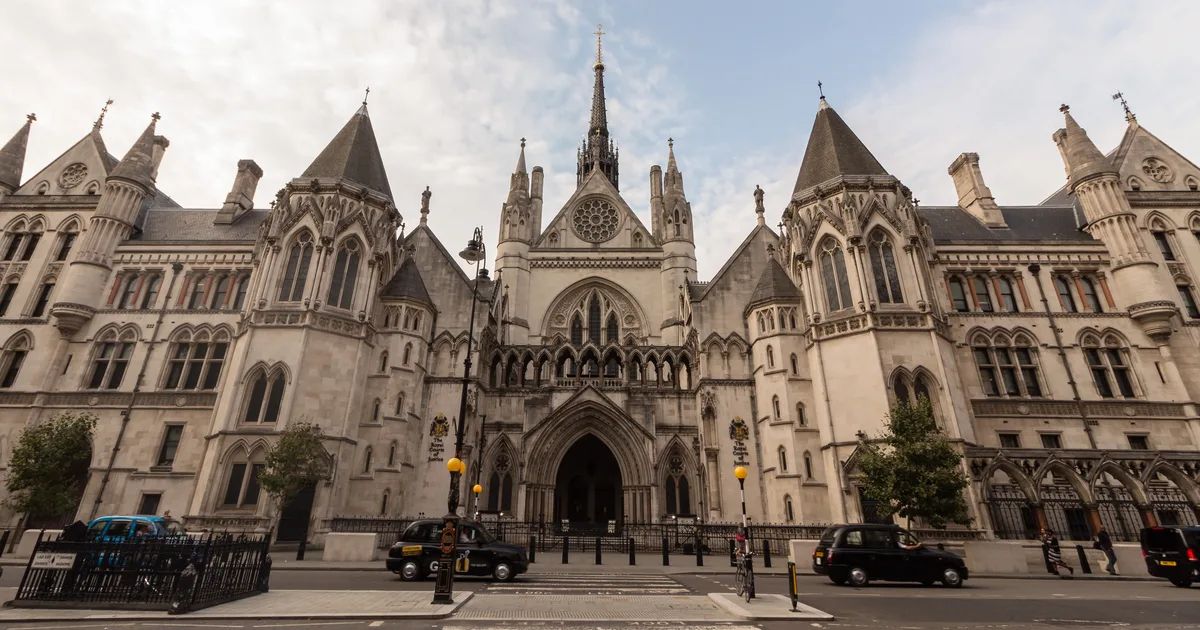

In short. The Ministry of Justice's press release says victims, whistleblowers, journalists and academics "will be better protected from powerful individuals using abusive legal action to silence scrutiny, under new legislation backed by the Government today" [1]. It does not mention that a nearly identical bill already reached Committee stage in 2024 before dying when Parliament was dissolved for the general election, a history its own sponsor volunteered to MPs the same day [4]. Another MP told the Commons it is "starting to feel like a film franchise", with "the original, the sequel and a spin-off in the Lords" [4]. The Bill also goes forward to a Public Bill Committee with no sitting date set, after several MPs, including the Chair of the Justice Committee, said it is "too complicated" to work as drafted, a concern the Minister agreed to keep discussing [4]. Two documented mistakes: four stars.
On Friday 27 November 2026 the Ministry of Justice published a press release welcoming the Second Reading of the Strategic Litigation Against Public Participation (No. 2) Bill, sponsored by Sir John Whittingdale MP [1] [2]. A SLAPP, a strategic lawsuit against public participation, is litigation brought not to win but to exhaust a defendant's money and nerve until they stop speaking [1]. The Bill would let courts dismiss such claims earlier and shield defendants from the claimant's legal costs where the claim cannot be shown likely to succeed [1]. Existing protection, under the Economic Crime and Corporate Transparency Act 2023, covers only SLAPPs tied to economic crime; this Bill would extend it to any public interest reporting, including sexual misconduct and corruption [1].
The press release's own "Further information" section says only that "the Bill received its Second Reading in the House of Commons on 27 November 2026" [1]. Parliament's own record of that same day's debate tells a longer story.
The claims, tested
| The press release's own words | What Parliament's own record shows | Verdict |
|---|---|---|
| "Victims of abuse, campaigners, whistleblowers, journalists and academics will be better protected... under new legislation backed by the Government today" [1] | Moving Second Reading, Sir John Whittingdale told the Commons the Bill builds on "a private Member's bill by Wayne David" that "made good progress through this House... when, to everyone's surprise, and horror in some places, a general election was called. As a consequence, the Bill got no further" [4]. Parliament's own Bills API confirms that bill, 3544, reached Committee stage on 8 May 2024 and records no later stage [5]; Parliament was dissolved for the general election three weeks later. Labour MP Graeme Downie went further: "Since the election, this Bill has been brought back, rewritten and brought back again... it is starting to feel like a film franchise. We have now had the original, the sequel and a spin-off in the Lords" [4] | "New legislation" is the sponsor's own description of a third attempt at the same reform, by the sponsor's own account on the same day |
| The press release's "Further information" states only that the Bill "received its Second Reading in the House of Commons on 27 November 2026" [1] | A separate, twin Bill with almost the same purpose, sponsored by Baroness Stowell in the Lords, was introduced on 16 June 2026 and remains stuck at first reading, with no second reading date set even today [7]. Whittingdale's own Bill took over five months to move from its first reading, on 17 June 2026, to its second reading today [3]. A still earlier Commons attempt, Bill 3815, was introduced on 21 October 2024 and never reached a second reading at all before its parliamentary session ended [6] | Two prior Commons bills and one still-stalled Lords bill are absent from the press release's own account of "further information" |
| "Measures in the Bill include: a statutory definition of a SLAPP claim, providing courts with a clear test for identifying litigation intended to restrain, harass, intimidate or silence participation in public interest matters" [1] | In the same debate, the Chair of the Justice Committee, Catherine Atkinson, and other MPs raised concern that the Bill "is too complicated and will be difficult to implement and use effectively" [4]. Closing the debate, Whittingdale said he "strongly welcome[d] the Minister's agreement that she will continue to discuss the concerns with those who have raised them, and that she will look to simplify the Bill, if it is possible to do so" [4] | The "clear test" the press release describes is, by the sponsor's own closing words the same day, a draft the government has committed to revisiting, not a settled definition |
The mistakes, counted
"New legislation" omits that the same reform has already failed twice in the Commons alone (1). The press release's "Further information" names no prior bill [1]. Parliament's own record shows Wayne David's bill (3544) reached Committee stage on 8 May 2024 before Parliament's dissolution for the general election ended it [5], a second Commons bill (3815) was introduced in October 2024 and never reached Second Reading [6], and a twin Lords bill introduced in June 2026 remains stuck at first reading today [7]. The sponsor and another MP told the Commons this history themselves, in the same debate the press release reports [4]. The Bill reaching Second Reading is real; presenting it as "new legislation" without that history is not an accurate account of where it stands.
The press release's "clear test" is, by the same day's record, still contested (2). The claim that the statutory definition gives courts "a clear test" appears in the press release's own list of the Bill's measures [1]. In the same Second Reading debate, MPs including the Justice Committee's own Chair said the drafting was too complicated to work in practice, and the Minister agreed to keep discussing changes before the Bill reaches its Public Bill Committee, for which no sitting date has yet been set [4]. A test the government has agreed to keep revising is not the same as a clear test already delivered.
Credit where due
The Bill is a genuine expansion of protection against SLAPPs, not a cosmetic repeat: existing law under the Economic Crime and Corporate Transparency Act 2023 covers only economic crime, and this Bill would extend early dismissal and cost protection to any public interest claim, including sexual misconduct and whistleblowing cases the 2023 Act does not reach [1]. The press release is also accurate, and not misleading, in calling this a Private Member's Bill rather than dressing it up as a Government Bill; "backed by the Government" is a fair description of the Minister's public support, not a claim of government authorship [1] [4]. And the Minister's on-the-record commitment to keep working on the drafting concerns, rather than wave them away, is the kind of candour this site can only welcome [4].
Verdict
Four stars, two documented mistakes. Everything the press release says happened is true. What it leaves out is the context that determines whether it matters: this is at least the third attempt at this exact reform since 2022, the nearest predecessor died at Committee stage when an election was called, a twin Lords bill has gone nowhere in five months, and the government's own Minister has already agreed the current drafting needs more work before it reaches committee. None of that makes today's vote meaningless. It does make "new legislation" an incomplete description of what MPs themselves, in the same debate, called a sequel with an uncertain ending.
The star score counts two documented mistakes. First, the press release calls the Bill "new legislation" without disclosing that a near-identical predecessor bill (3544) reached Committee stage in 2024 before dying at the dissolution of Parliament, that a second Commons attempt (3815) never reached Second Reading, and that a twin Lords bill (4155) remains stuck at first reading today, a history the Bill's own sponsor and another MP described on the record in the same debate the press release reports. Second, the press release's claim that the Bill's statutory definition gives courts "a clear test" is contradicted by the same day's debate, in which the Chair of the Justice Committee and other MPs said the Bill is too complicated to work as drafted, and the Minister agreed to keep revising it before the Bill reaches its Public Bill Committee. Two mistakes in the 1 to 3 band: four stars; the bands are on the ratings page. This piece makes no finding about the conduct of any named individual; every mistake counted is a property of the press release's own text, tested against Parliament's own public record of the same day's proceedings. All sources below were fetched directly on 28 November 2026 and returned HTTP 200.
Sources
- New protections will stop powerful figures silencing scrutiny, GOV.UK, Ministry of Justice, published 27 November 2026
- Strategic Litigation Against Public Participation (No. 2) Bill, UK Parliament Bills API, bill record
- Bill 4163 stages, UK Parliament Bills API, showing First Reading 17 June 2026 and Second Reading 27 November 2026
- Strategic Litigation Against Public Participation (No. 2) Bill, Second Reading debate, Hansard, House of Commons, 27 November 2026
- Bill 3544 stages, UK Parliament Bills API, the predecessor Commons bill reaching Committee stage 8 May 2024
- Bill 3815 stages, UK Parliament Bills API, the second predecessor Commons bill, introduced 21 October 2024, never reaching Second Reading
- Strategic Litigation Against Public Participation Bill [HL], UK Parliament Bills API, the twin Lords bill, introduced 16 June 2026, still at First Reading