A government standard requires a gate review before any major project can begin its next stage. HS2 Phase I has failed that check three years running, and its own record still will not say what it costs.
Estimated reading time: 6 minutes

In short. GovS 002: Project Delivery is the cross-government rulebook for how major projects are run. It makes stage gates and annual assurance reviews mandatory, in its own words so that problems get caught early. But the standard hands responsibility for actually enforcing that mandate to the same organisation delivering the project, as a "should" rather than a "shall", with no outside sanction described anywhere in its 51 pages. Government's own figures show what that produces: the Red-rated share of the major projects portfolio has grown for two straight annual reports, and matching the two most recent official project datasets by their own reference numbers turns up 16 named projects that were Red in both. HS2 Phase I is one of them, on a third consecutive annual Red rating, still recorded as unable to report its own cost, schedule or benefits. Four documented mistakes: three stars.
Every year, government tells Parliament and the public how its biggest projects are doing, using a single word: Red, Amber or Green. The rulebook behind that traffic light is GovS 002: Project Delivery, a Cabinet Office functional standard now in its third major version, and it does not treat the gate between one project stage and the next as optional. The National Infrastructure and Service Transformation Authority, NISTA, publishes the resulting ratings every summer. Two years of that published data, read together, show what happens when a mandatory checkpoint meets a project that keeps failing it.
What the standard requires
GovS 002 is explicit about the mechanism. On life cycles, it states plainly: "A project shall comprise stages, each of which shall be preceded by a gate (decision point) to authorise the start of the next stage and commit resources and funding" [1] (page 21). Assurance is meant to sit alongside those gates: "Assurance reviews shall be scheduled prior to significant decisions (such as contractual commitments and gates)... The time lapse between assurance reviews of the entire programme or project should not be scheduled to exceed one year" [1] (page 12). For government major projects specifically, reporting through NISTA's Government Major Projects Portfolio, the GMPP, is itself mandatory: "Government major projects shall be reported through the Government Major Projects Portfolio" [1] (page 12).
NISTA's own framing of why this matters is unambiguous. Its 2025-26 annual report on the GMPP states that "NISTA's five stage gate approach promotes the identification of potential issues early and the interventions needed to achieve successful delivery" [2] (section 8.2). The mechanism exists to stop problems festering. The question is what happens when a project goes through a full annual cycle of gates and reviews and comes out the other side no better rated than it went in.
The claims, tested
| The standard's own words | What the record actually shows | Verdict |
|---|---|---|
| "A project shall comprise stages, each of which shall be preceded by a gate... to authorise the start of the next stage" [1] (page 21); assurance reviews "shall be scheduled prior to significant decisions" at least annually [1] (page 12) | The duty to ensure the whole standard is actually followed sits with "the senior officer accountable for project delivery in an organisation", who "should... ensure the implementation of relevant policies and compliance with this standard" [1] (page 14) | The gates themselves are mandatory ("shall"). Making sure they are actually complied with is only a "should", assigned to the organisation running the project, not to an outside checker |
| NISTA's 2024-25 annual report: "the number of projects rated as Red in the annual report has increased by four" on the year before, with "£198 billion of whole life costs associated with projects rated Red, which is up from last year's £97 billion" [3] (section 5) | NISTA's 2025-26 annual report, one full mandatory review cycle later: "the number of projects rated as Red in the annual report has increased by three this year", to 34 of 189 projects (18%) [2] (section 8) | Two consecutive annual cycles of mandatory gates and reviews, and the Red-rated share of the portfolio has grown both times, not shrunk |
| NISTA's own account of what a Red rating leaving the portfolio should look like over a year of assurance: "some projects... [are] guid[ed]... from a Red to Amber or Green DCA" [2] (section 8.2) | Matching the government's own project-level datasets for 2024-25 and 2025-26 by each project's own Major Projects ID (not a summary, the underlying records) finds 16 named projects rated Red in both years [4] [5] | For those 16 projects, a full cycle of the standard's own mandatory gate and review process produced no change in rating at all |
The mistakes, counted
The standard's central mandate has no compliance mechanism of its own (1). Gates and annual assurance reviews are written as "shall" requirements [1] (pages 12, 21). But the job of making sure an organisation actually follows the standard is written as a "should", and given to "the senior officer accountable for project delivery in an organisation" [1] (page 14), the same management chain running the project the gate is meant to test. Nowhere in the standard's 51 pages is there a described consequence for a missed or ignored gate.
The predictable result shows up in NISTA's own numbers, two years running (2). The 2024-25 annual report recorded the Red-rated share of the portfolio rising, with Red-project whole life costs almost doubling to £198 billion [3] (section 5). The 2025-26 report, published after another full year of the mandatory review cycle, recorded it rising again, to 34 of 189 projects (18%) [2] (section 8).
That is not just a drift in the aggregate figures (3). Matching the two most recent years of official project-level data by each project's own government reference number, rather than relying on the summary totals, identifies 16 specific projects, spanning the Ministry of Defence, the Department for Transport, DEFRA, the Ministry of Justice, HM Treasury and the Ministry of Housing, Communities and Local Government, that were rated Red in both the 2024-25 and 2025-26 snapshots [4] [5]. For each of them, a full year under the standard's own gate and review regime produced the same rating at the end as at the start.
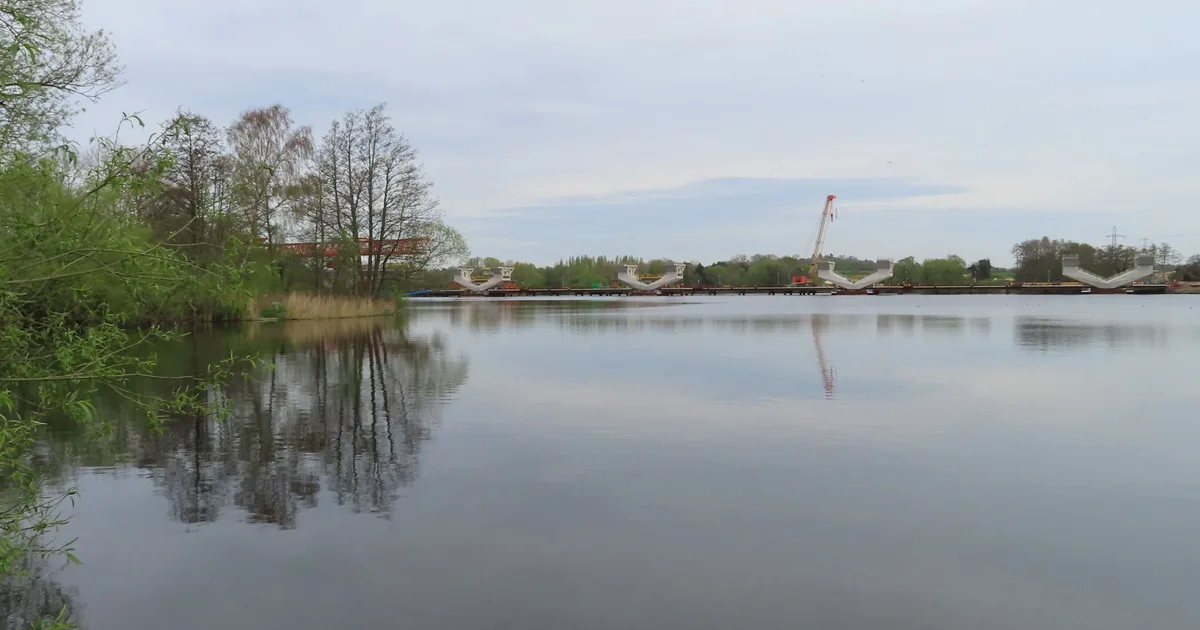
HS2 Phase I shows what "still at the planning stage" can mean under this system (4). Its own departmental commentary in the 2025-26 report records a third consecutive annual Red rating, confirming that delivery is "unachievable against Baseline 7.1 (approved at Notice to Proceed in April 2020)" [5]. Its 2024-25 commentary confirms the rating had "remained at RED" compared with the year before that too, citing HS2 Ltd being "in Performance Default due to forecasts irrecoverably exceeding the Funding Envelope (£44.6bn - 2019 prices)" [4]. Through all three of those annual snapshots, the same official record has described HS2 Phase I's end date, whole life cost and benefits fields identically: "the GMPP project is still at the planning stage (Pre-SOC or equivalent) and is not yet in a position to provide cost/schedule information" [4] [5], a description that has applied for at least three annual reporting cycles to a project whose own recorded start date is January 2009 and whose construction notice to proceed was issued in April 2020.
Credit where due
None of this is hidden. NISTA publishes the underlying project-by-project data openly enough that this piece could match two years of it by reference number, and its own report says outright, in section 8.4, that "there are a number of complex projects that have remained Red since last year" [2], rather than dressing up a static picture as progress. The system is not inert either: 18 projects moved from Amber to Green this year and one moved directly from Red to Green [2] (section 8), and NISTA has launched a new Early Warning System intended to flag projects heading towards Red before they get there. Separately, the Holocaust Memorial Bill, once the main obstacle cited for the UK Holocaust Memorial and Learning Centre's own Red rating, has since received Royal Assent, clearing a real legislative blockage even though the project's planning decision remains outstanding [4] [5].
Verdict
Three stars, from four documented mistakes. GovS 002 is not a document that dodges its own subject matter: it names gates, sets an annual clock for reviews and requires major projects to report through a single portfolio that anyone can check. The gap is what happens when that clock runs out and a project has still not moved. The standard leaves compliance with itself to the same people running the project, as a should rather than a shall, and two years of the government's own figures show the effect: more projects Red, not fewer, and a named group of 16 that a full mandatory review cycle did not shift at all. HS2 Phase I did not fail this system once. Its own record shows it failing the same check three years running, while still telling the public it cannot yet say what the project will cost.
Sources
- Government Functional Standard GovS 002: Project Delivery (v2.1, 1 September 2025), Government Project Delivery / Cabinet Office
- NISTA Major Projects Annual Report 2025-26 (HTML), GOV.UK / NISTA, 13 July 2026
- NISTA Annual Report 2024-25 (HTML), GOV.UK / NISTA, 11 August 2025
- NISTA Annual Report 2024-25, project-level data (CSV), GOV.UK / NISTA
- NISTA Major Projects Annual Report 2025-26, project-level data (CSV), GOV.UK / NISTA