The Home Office updated its guidance on refusing entry over unpaid NHS bills this week, three years after a court ruled an earlier version unlawful. It fixes exactly what the court ordered; for travellers refused entry outright, there is still no right of appeal.
Estimated reading time: 7 minutes
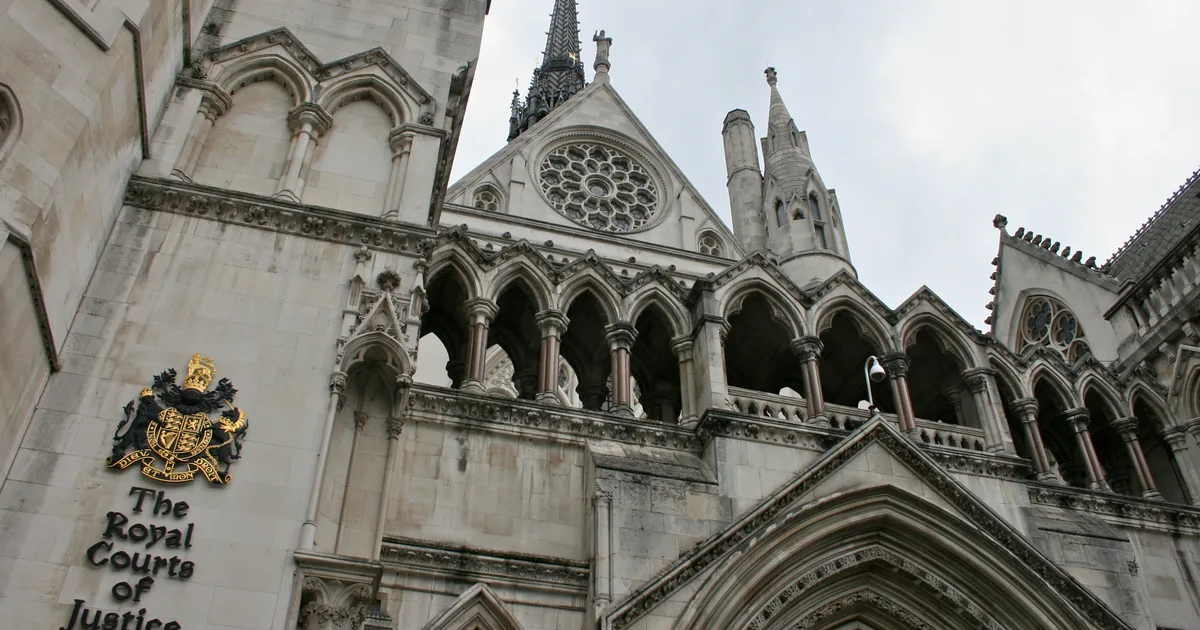

In short. On 13 November 2026 the Home Office published version 8.0 of "NHS debtors", the guidance that tells Border Force officers how to refuse entry to travellers who owe money to the NHS [1] [2]. Its own changelog says the update publishes "previously redacted sections... to provide clarity" for two groups: travellers who already hold leave to stay, and travellers seeking permission to enter for the first time [2]. Three years earlier, in May 2023, a High Court judge ruled an earlier version of this same guidance unlawful for giving officers a misleadingly broad impression of their power to stop and question travellers with continuing leave over NHS debt [4]. The new text for that group matches the judge's ruling almost word for word. The text for the second group, people refused entry outright, states plainly that "the NHS debtor rule creates no additional rights of appeal" [2]. Two documented mistakes: four stars.
Anyone who has run up an NHS bill of £500 or more for hospital treatment they were not entitled to receive free, and left it unpaid for more than two months, can be flagged to the Home Office as an NHS debtor [2]. What happens next depends entirely on which of two categories they fall into at the border, and this week's update treats those categories very differently.
The claims, tested
| The document's own words | What the guidance actually sets out | Verdict |
|---|---|---|
| Version 8.0 was published "to provide clarity in respect of how Border Force officers should deal with NHS debtor cases, for passengers who hold extant permission to stay in the UK and those who are seeking permission to enter" [2] | For travellers with continuing leave, the new text states they "cannot have their immigration permission cancelled solely on the basis that they have incurred an NHS debt" and that officers "must not request contact details from the passenger, to be passed to the NHS body" [2], matching what a 2023 judgment required almost verbatim [4]. For travellers seeking entry, the refusal section is unchanged in substance: a single officer judges "compelling or compassionate circumstances", and "the NHS debtor rule creates no additional rights of appeal" [2] | The "clarity" claim covers both groups equally in the changelog; in the text itself, one group gets court-tested specificity and the other gets an unadorned statement that there is no further appeal |
| "Refusal of permission to enter on the basis that the individual has a qualifying NHS debt is discretionary, not mandatory. You must be satisfied that there are no compelling or compassionate circumstances (including human rights considerations) that would make refusal disproportionate" [2] | Two sentences later, in the same section: "The NHS debtor rule creates no additional rights of appeal" [2]. Neither this guidance nor the companion caseworker guidance mentions administrative review as an alternative check [2] [3] | The human rights and proportionality judgment is made, on the spot, by the same officer who decides to refuse, with no named route to have that judgment checked |
What a 2023 ruling found
The case was brought by MXK, SXB and their children, who had each been stopped, detained and questioned on returning to the UK about outstanding NHS debts, under an unpublished Home Office policy [4]. That policy told officers that "passengers with continuing leave would not normally be refused entry for an outstanding NHS debt", but that "officers should take up-to-date contact details for the passenger and pass these on to the NHS trust", and that the passenger "can be reminded that the outstanding debt may prevent any further leave being granted" [4]. Mr Justice Chamberlain found the legal position was narrower than the policy implied: failing to pay an NHS debt "is a ground for refusing an application for entry clearance, permission to enter or permission to stay... but is not (in and of itself) a ground for cancelling any of these, once granted" [4]. His conclusion was direct: the policy "is, at best, misleading in that it fails to identify the sole purposes for which they may examine and detain a person with limited leave to enter or remain in relation to an NHS debt... In my judgment, the policy is therefore unlawful" [4]. He added that the policy being unpublished was "a further reason why it is unlawful", citing the principle that powers affecting a person's liberty must be publicly stated, not applied from guidance nobody outside the Home Office can read [4].
The fix that happened, and the one that did not
Measured against that judgment, version 8.0 corrects exactly what was found unlawful for travellers with continuing leave. The instruction to collect contact details for the NHS trust is now reversed outright: officers "must not request contact details from the passenger, to be passed to the NHS body" [2]. The misleading impression about cancellation is also closed off in terms close to the judge's own: permission "cannot" be cancelled "solely on the basis" of NHS debt [2], against the judgment's "not (in and of itself) a ground for cancelling" [4]. The reminder that debt may affect a future application survives, because the judge found nothing unlawful about a reminder on its own, only about the detention and data-collection built around it [4].
For travellers seeking permission to enter for the first time, a different and older part of the document governs the decision, and it was not reshaped by the same ruling, because MXK's case was about people who already held leave, not first-time entrants [4]. Here, the guidance requires the officer to decide the same day: "you must not defer refusal of entry simply to allow a passenger to settle their debts, you must progress cases as normal" [2]. Evidence that the debt has been paid is only accepted if it "originated from the NHS body which levied the debt"; a bank statement showing the same payment "cannot be accepted in isolation" [2]. The companion caseworker guidance confirms the Home Office will not chase that paperwork for the traveller: "the Home Office cannot request or provide a copy of the invoice or any document pertaining to repayment plans from the NHS body, the onus is on the applicant to request copies of any documentation from the NHS body" [3]. A traveller arriving from abroad, refused on the spot, bears the burden of obtaining NHS-issued proof, on the same day, with no right of appeal against the refusal.
Credit where due
The sections that were rewritten here are a genuine, specific correction, not a cosmetic one. The guidance does not merely gesture at the 2023 ruling; it reverses the exact instruction the judge criticised and restates the exact legal limit he set out. Elsewhere, the document protects a traveller's medical privacy without qualification: officers must not ask for or record the condition or treatment behind a debt, "even if the passenger offers this information" [2]. A debt paid, or placed on an agreed repayment plan, removes the grounds for refusal, and the rule is not retrospective: treatment before 1 November 2011 does not count towards the threshold at all [2].
Verdict
Four stars, from two documented mistakes. A government department that rewrites its own guidance to match a court's reasoning, in close detail and three years after the judgment, deserves credit for doing so properly rather than grudgingly. What this update does not do is extend the same scrutiny to the other half of the document it says it clarified. A traveller refused entry outright on arrival still faces a same-day decision, an evidential burden the Home Office will not help them meet, and, in the document's own words, no additional right of appeal.
The star score counts two documented mistakes: first, the changelog's claim to provide "clarity" covers both continuing-leave holders and first-time entrants equally, while the text itself gives one group court-tested, specific protections and leaves the other with an unadorned statement that there is no further appeal; second, the entry-refusal process requires a same-day decision with no deferral, accepts only NHS-issued evidence the Home Office says it will not help a traveller obtain, and names no route to challenge the outcome. Two falls in the 1 to 3 band: four stars; the bands are on the ratings page. This piece makes no finding that any individual officer has acted improperly, or that the NHS debtor rule itself is unlawful; the 2023 finding of unlawfulness concerned a different, earlier version of the policy, since withdrawn, and the finding here is narrower, that the current text's own "clarity" claim is not applied evenly between the two groups it names. All four sources below were fetched directly on 19 November 2026 and returned HTTP 200.
Sources
- Debt to the NHS: Border Force officer guidance, Home Office and Border Force, published 1 August 2023, updated 18 November 2026
- NHS debtors (accessible version), version 8.0, Home Office and Border Force, published for staff 13 November 2026
- Suitability: Debt to the NHS caseworker guidance (accessible version), version 4.0, UK Visas and Immigration, published for staff 18 March 2026
- MXK & Ors, R (On the application of) v Secretary of State for the Home Department [2023] EWHC 1272 (Admin), High Court (King's Bench Division, Administrative Court), judgment of Mr Justice Chamberlain, 26 May 2023