A new government playbook holds up the pandemic's Ventilator Challenge as proof that speed and risk pay off. Its own auditor found 41 percent of that programme's budget paid for designs it never bought.
Estimated reading time: 6 minutes
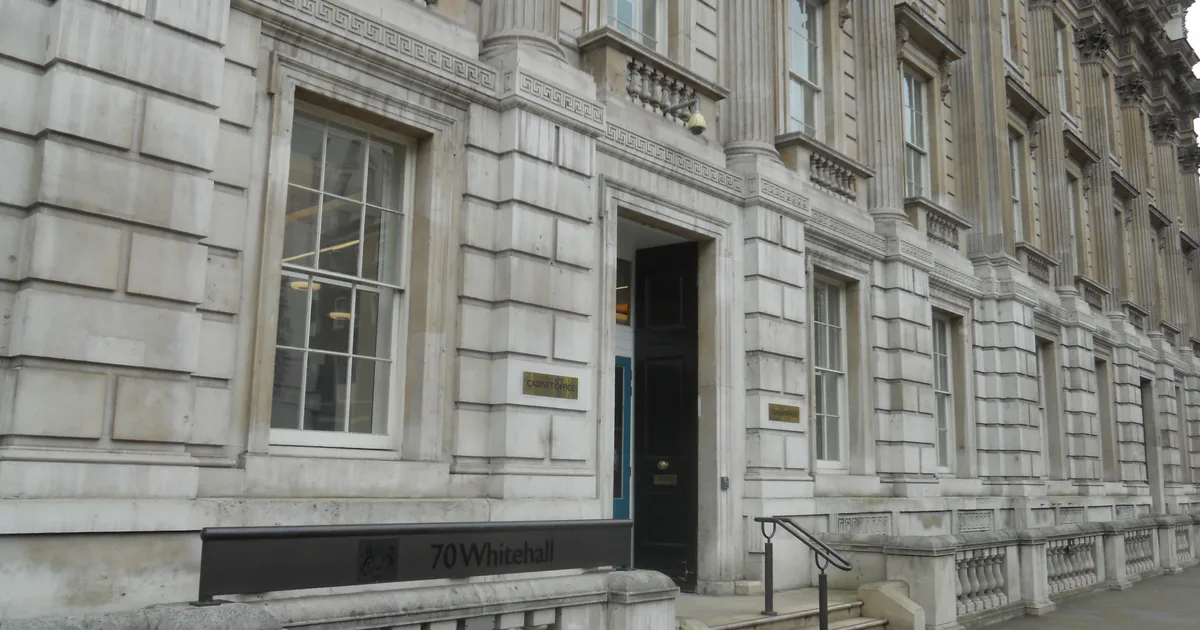

In short. The Procurement for Innovation Playbook, added to the Cabinet Office's Sourcing Playbook collection on 5 November 2026, tells commercial teams the 2020 Ventilator Challenge is a model worth repeating: "a proven, safe, and effective ventilator supply ahead of schedule and within budget", built "at 20% lower cost than the open market" [1]. The National Audit Office investigated the same programme in September 2020. It found the Cabinet Office spent 277 million pounds on the Ventilator Challenge, of which 113 million pounds, 41 percent, paid for designs it never bought because they were not viable or not needed [2]. It found that across both government ventilator programmes combined, only around 2,150 of the mechanical ventilators acquired had reached the NHS by the following September, with most of the rest sitting in reserve because the demand the Challenge was built to meet never arrived [2]. And the 90,000-ventilator figure the Playbook's background section uses to justify the urgency was never an order target: it was an early-March worst-case bed estimate, built on assumptions the NHS had already revised down by the time formal targets were set weeks later [2]. Three documented mistakes: four stars.
Government commercial teams spend upwards of 400 billion pounds a year, and the new Playbook wants more of it to go through fast, risk-tolerant routes like the Competitive Flexible Procedure, with the pandemic's Ventilator Challenge held up as the proof it works [1]. The National Audit Office already investigated that exact programme, in detail, five years ago. Its findings did not make it into the case study.
What the Playbook says happened
Annex B, Case Study #3, "The Ventilator Challenge", opens with the claim that "the government identified that approximately 90,000 ventilators were required within a short timeframe" in March 2020, against standard manufacturing timescales of "three to five years" [1]. It describes a 48-hour team standing up a "call to arms" that drew over 5,000 supplier responses, a shortlist of 17 designs selected for speed over cost, and a result: "The project delivered a proven, safe, and effective ventilator supply ahead of schedule and within budget. The streamlined process prioritised speed and success, not cost, resulting in ventilators built at 20% lower cost than the open market" [1]. Its lessons-learned section tells readers that "embracing high risk at the outset is justified when the goal is urgent and high impact" [1]. No caveat, no footnote, no reference to any outside review of the programme.
The 90,000 figure was never an order target
The Playbook's own background sentence treats 90,000 as the number of ventilators the government set out to acquire. The NAO's investigation shows where that figure actually came from: by the beginning of March 2020, "NHS England and NHS Improvement (NHSE&I) modelling, based on reasonable worst-case planning assumptions assured by the Scientific Advisory Group for Emergencies (SAGE), indicated that the NHS could need up to 90,000 beds with ventilators to care for COVID-19 patients" [2], a planning scenario, not a procurement order. By 24 March, NHSE&I had already revised its estimate down to 17,500 for the mid-April peak [2]. The government's actual formal targets, adopted on 15 April, were 18,000 ventilators by the end of that month and 30,000 by the end of June, and the NAO records that government "deliberately set targets that were substantially higher than demand at that point", to build in a safety margin [2]. A worst-case planning number from the first week of the crisis is not the same thing as a requirement, and by the time anyone set a real target, it was a third of the Playbook's figure.
"Within budget" skips the part where 41 percent bought nothing
The NAO breaks down exactly what the Cabinet Office's 277 million pounds Ventilator Challenge spend bought: 116 million pounds for about 11,700 Penlon ventilators, 26 million pounds for about 1,500 Smiths Parapac ventilators, 8 million pounds for 2,000 Breas devices, and 14 million pounds on programme costs. The remaining 113 million pounds, 41 percent of the total, went on "design costs, components and factory capacity for ventilators it did not buy because the design was not viable or not needed to meet the government's targets", including 11 million pounds for an order of 15,000 additional Penlon devices that was later cancelled outright [2]. The Playbook's own "over 15,000 ventilators in 4.5 months" figure is consistent with the units the Challenge actually delivered. "Within budget" says nothing about the proportion of that budget that bought nothing at all.
What happened to the units that were delivered matters just as much. The NAO found that across both the Cabinet Office's Challenge and the Department of Health and Social Care's separate ventilator-buying programme, "as at 16 September only around 2,150 mechanical ventilator units acquired through the programmes had been dispatched to the NHS", because "the anticipated demand did not materialise"; the rest were held in reserve warehouses, including a Ministry of Defence facility at Donnington [2]. The Playbook's "proven, safe, and effective ventilator supply" describes a product built to a scale the NHS did not go on to need.
The "20 percent cheaper" figure has no source, and the NAO's own numbers cut the other way
The Playbook does not cite a source for its claim that Ventilator Challenge units were built "at 20% lower cost than the open market" [1]. The NAO's own cost analysis is explicit about why that kind of comparison is hard to stand behind: "the cost of the mechanical ventilators acquired varied significantly" and "it is difficult to compare the costs of different machines within or across the programmes" because of how widely they differed "in their type, functionality and clinical utility" [2]. Where the NAO does compare new entrants against established suppliers elsewhere in the same national effort, the new entrants cost more, not less: intensive care ventilators bought from new suppliers averaged around 30,100 pounds each, against around 20,000 pounds from existing suppliers [2]. The Ventilator Challenge's own blended average of 18,300 pounds per unit already has the 113 million pounds of abandoned design spend baked into it [2]. A reader taking the Playbook's figure at face value has no way to check it against anything the document itself provides.
The claims, tested
| The Playbook's own words | What the record shows | Verdict |
|---|---|---|
| "The government identified that approximately 90,000 ventilators were required within a short timeframe" [1] | 90,000 was NHSE&I's early-March worst-case bed-modelling figure, already revised down to 17,500 by 24 March; the government's actual formal target, set 15 April, was 30,000 by end of June [2] | Conflates a planning scenario with a procurement requirement |
| "A proven, safe, and effective ventilator supply ahead of schedule and within budget" [1] | 41 percent of the 277 million pounds Ventilator Challenge budget (113 million pounds) paid for designs never bought; across both government programmes only around 2,150 of the ventilators acquired had reached the NHS by the following September [2] | "Within budget" omits what the budget was actually spent on and whether the output was used |
| "Ventilators built at 20% lower cost than the open market" [1] | No source given. The NAO calls cross-programme cost comparisons unreliable, and found new-supplier ventilators cost more than established-supplier ones elsewhere in the same response (30,100 pounds against 20,000 pounds) [2] | Unsourced, and the nearest available public comparison points the other way |
Credit where due
The Ventilator Challenge did deliver: over 15,000 working, certified ventilators inside the 4.5-month window the Playbook describes, a genuine manufacturing achievement under emergency conditions, and the NAO is clear that no patient who needed a ventilator went without one [2]. The Cabinet Office also took some care over the cost of its own risk-taking: it recovered around 36.3 million pounds by cancelling unneeded orders early and selling components back into the supply chain, and it secured indemnities to protect suppliers rather than leaving the state exposed to open-ended liability [2]. A playbook built to encourage risk-tolerant procurement in a crisis is not wrong to use this programme as an example of speed. It is wrong to present it as a programme that also nailed the budget and the price.
Verdict
Four stars, from three documented mistakes. The Playbook's headline case study for its central argument, that government should take on more risk and move faster, rests on a figure that was never a target, a budget outcome that left out the two-fifths that bought nothing, and a cost comparison with no source that the government's own auditor's adjacent figures contradict. None of that means the underlying argument for faster, more flexible procurement is wrong. It means commercial teams reading this specific case study are being shown the ventilator supply chain the Cabinet Office wanted to describe, not the one the National Audit Office actually counted.
The star score counts three documented mistakes: the Playbook's "approximately 90,000 ventilators were required" background claim, which conflates an early-March worst-case bed-modelling scenario with an actual procurement target set five weeks later at a third of that figure; the "ahead of schedule and within budget" framing, which omits that 41 percent of the Ventilator Challenge's 277 million pound budget paid for ventilator designs never bought, and that most ventilators acquired across both government programmes were never dispatched to the NHS; and the unsourced "20% lower cost than the open market" figure, which the National Audit Office's own published cost analysis gives no support for and partially contradicts. Three mistakes in the 1-to-3 band: four stars; the bands are on the ratings page. This piece makes no finding about the safety or clinical performance of the ventilators actually delivered, which the National Audit Office's report does not criticise; the finding is narrower, that a 2026 procurement playbook's own account of a 2020 programme omits figures its own department's auditor already published. Checked directly against the Playbook (fetched 6 November 2026) and the National Audit Office's press release and underlying report (fetched 6 November 2026).
Sources
- The Procurement for Innovation Playbook, Government Commercial Agency, Cabinet Office, added to the Sourcing and Consultancy Playbooks collection 5 November 2026
- Investigation into how government increased the number of ventilators available to the NHS in response to COVID-19, National Audit Office, published 25 September 2020