The government has been helping build Universal's Bedford resort while one of its own departments alone decides whether the resort meets its planning conditions. The rulebook meant to keep those two roles apart names no complaints process, no audit and no penalty for breaking it.
Estimated reading time: 7 minutes

In short. Universal's theme park at Kempston Hardwick, Bedford, was granted planning permission not by a council but by the Secretary of State, using a Special Development Order [3]. The order names Universal City Studios LLC directly: no development may begin "until Universal City Studios LLC has given a notice to the Secretary of State" designating a site controller (condition 3(1)) [3]. Because the same department both brought forward and now judges this proposal, the law requires "appropriate administrative arrangements... to ensure that there is a functional separation" between promoters and decision-makers (regulation 64(2), Objectivity and bias) [4]. MHCLG's own document delivering that separation, the Handling Arrangements, states plainly that other departments, including the Department for Culture, Media and Sport, the Office for Investment and the Department for Transport, have been "supporting the Promoter" and "coordinating activity across government" [2], on a project the government's own announcement said would bring "an estimated £50bn boost for the economy and create around 28,000 jobs" [5]. Nowhere in the Handling Arrangements' full text does the word "breach", "sanction", "complaint", "appeal", "audit", "independent" or "oversight" appear. Four documented mistakes: three stars.
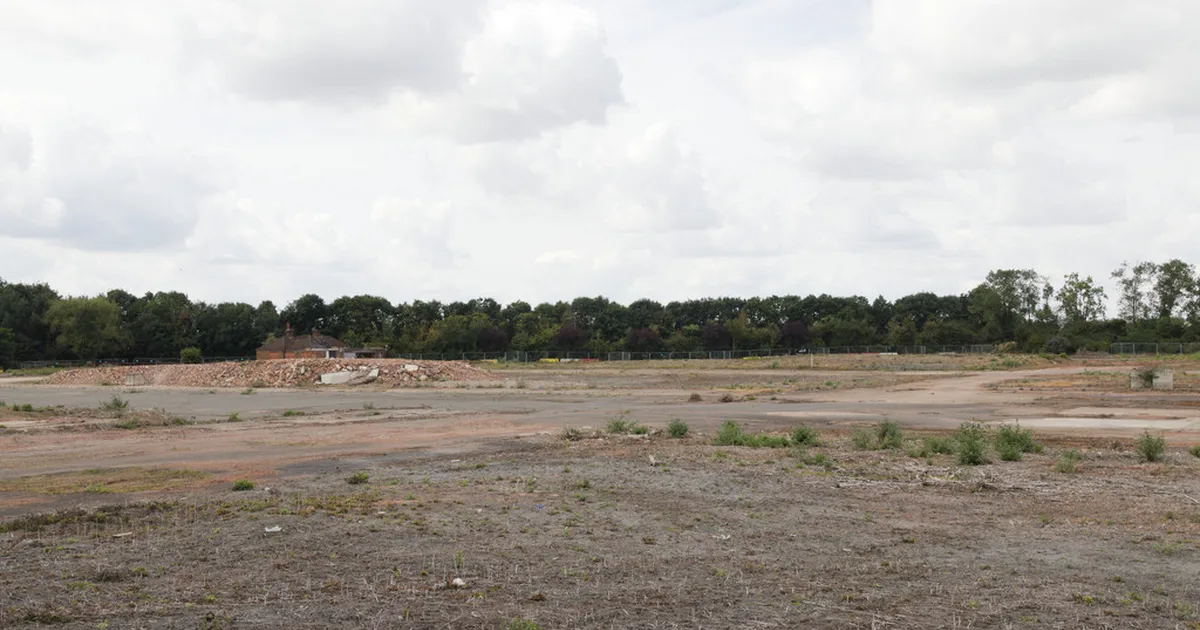
Kempston Hardwick, on the western edge of Bedford, was until recently a derelict brickworks. Under a Special Development Order made on 15 December 2025, it is now the site of an Entertainment Resort Complex: theme parks, hotels, retail and transport infrastructure spread across roughly 90 planning conditions and four schedules [3]. A Special Development Order is a rare mechanism: instead of a council or an independent Planning Inspectorate examining the application, the Secretary of State for Housing, Communities and Local Government grants planning permission directly, by statutory instrument. That is what happened here, and MHCLG has continuing power over the project: the order's conditions require documents to be "submitted for approval or validation by" the Secretary of State before large parts of construction can proceed [2]. The same department that chose to grant the permission is the department that keeps deciding, case by case, whether the project is complying with it.
The law anticipated this exact problem. Regulation 64 of the Town and Country Planning (Environmental Impact Assessment) Regulations 2017, titled "Objectivity and bias", says that where the Secretary of State "is bringing forward a proposal for development and... will also be responsible for determining its own proposal", there must be "appropriate administrative arrangements... to ensure that there is a functional separation... between the persons bringing forward a proposal for development and the persons responsible for determining that proposal" [4]. MHCLG's answer is the Handling Arrangements, a document naming which officials may see planning material, which may not, and how they are to communicate [2]. It is detailed and specific: named grades from the Chief Planner down to the Planning Response Unit, a requirement to mark documents "ERC Bedford Team - No other Ministers or officials must see this", and Microsoft data-loss-prevention tagging for emails [2]. What it does not contain is any way for anyone outside that chain of named officials to check that it is being followed.
A wall with no one watching from outside
The document is explicit that other parts of government have been actively helping the project it must stay separate from. DCMS "is supporting the Promoter to connect with relevant stakeholders", DfT officials are "supporting coordination... and the Promoter regarding the delivery of transport solutions", and the Office for Investment "has worked with DCMS to assist the Promoter" on regulation and investment [2]. The Handling Arrangements' fix for the conflict this creates is entirely internal: those departments' officials "will have no role in planning decision-making", advice on the merits of the development is restricted to a named list of MHCLG posts, and "reports will be made to the Chief Planner on propriety and handling at key stages of decision-making or on request" [2]. A search of the document's full text for the words that would show an outside check finds none: no "breach", no "sanction", no "complaint", no "appeal", no "audit", no "independent", no "oversight", no "monitor" [2]. The only record kept if an official is given access outside the normal list is a "written record of any express authorisations given by the Chief Planner" [2] - a record the Chief Planner keeps on the Chief Planner's own decision to grant an exception, checked by no one else.
The normal check on ministers is switched off for this decision
The document does not just leave out an external check. It removes an internal one that would otherwise apply. It states that the Secretary of State "will not be subject to paragraph 1.6 of the Ministerial Code nor to 'collective ministerial responsibility' in relation to planning decisions in respect of the Order" [2]. Collective responsibility is the mechanism by which a Cabinet decision is shared and answerable across government; the Handling Arrangements switch it off specifically for this project's planning decisions, and add that "other ministers and their special advisors will not be able to require" disclosure of anything beyond "factual information and an indication of any timetable" [2]. The document explains why the separation is needed. It does not explain what, if anything, stands in for the safeguard it removes.
Three rewrites, and no changelog
The Handling Arrangements have already been rewritten twice since they were first published on 26 June 2025: once on 17 October 2025, and again on 29 September 2026 [1]. GOV.UK's own change log for the page records only "Handling Arrangements updated" against each date, with no description of what moved between versions [1]. A document whose entire purpose is public assurance that conflicts of interest are being managed has changed three times in fifteen months without ever telling the public which safeguards, if any, were tightened or loosened.
The current version itself carries a further gap between being written and being seen. Its own closing line dates it "20 August 2026" [2], but GOV.UK's metadata records the page as last updated on 29 September 2026 [1] - forty days later. For those forty days, the only public version of the rules governing who in government could discuss the UK's largest live planning decision was the one dated 17 October 2025, already superseded inside MHCLG. Nothing on the page explains the gap.
The claims, tested
| The claim | What the evidence shows | Verdict |
|---|---|---|
| The Handling Arrangements "ensure a functional separation" between promoters and decision-makers, as regulation 64(2) requires [2] [4] | The document names no external audit, complaints route, appeals process or sanction for a breach; compliance is checked and recorded only within the same chain of officials it is meant to constrain | Separation by internal instruction, not by independent check |
| Departments coordinating the project have "no role in planning decision-making" [2] | DCMS, the Office for Investment and DfT are simultaneously described as actively "supporting the Promoter" on the same project MHCLG alone is judging | The wall is a rule about who may talk to whom, not a rule about who has a stake in the outcome |
| The public record shows how the government's propriety arrangements have evolved [1] | Three versions since June 2025 are logged only as "updated", with no changelog, and the current version's own internal date is forty days earlier than its publication date | A safeguard document that cannot itself be checked for whether it got weaker |
Four documented mistakes. First, the Handling Arrangements' propriety safeguards rely entirely on internal reporting to the Chief Planner, with no audit, complaints process, appeals route or named sanction anywhere in the document, confirmed by a full-text search returning zero hits for "breach", "sanction", "complaint", "appeal", "audit", "independent", "oversight" or "monitor". Second, the document exempts the Secretary of State from paragraph 1.6 of the Ministerial Code and from collective ministerial responsibility for this decision, without stating what replaces that safeguard. Third, the document has been rewritten three times since June 2025 with GOV.UK's own change log recording only "Handling Arrangements updated" each time, no description of substance. Fourth, the current version is dated 20 August 2026 in its own text but was not published until 29 September 2026, a forty-day gap during which a superseded version remained the only public record, unexplained. Rated three stars out of five.
Credit where due
The Handling Arrangements are more specific than a boilerplate conflict-of-interest clause. They name individual posts, not just departments: the Director General for Regeneration, Housing and Planning, the Chief Planner, named Deputy Directors and the Planning Response Unit are each confirmed to have had no role in promoting the development, and delegation between them is set out in enough detail to be checked against future decisions [2]. Legal advice is confirmed to come from advisers, the Government Legal Department and Dentons UK and Middle East LLP, who have "no role in promoting the Development... and have no conflict of interest in providing any such advice" [2]. Freedom of Information and Environmental Information Regulations requests about the planning decisions are explicitly carved out of the normal special-adviser clearance route [2], which is a genuine, if narrow, opening for outside scrutiny that the rest of the document does not otherwise provide.
Verdict
Three stars, from four documented mistakes. The law recognised, in regulation 64, that a government department cannot both bring forward a development and judge it without an arrangement to keep those roles apart. MHCLG's Handling Arrangements are a real attempt at that arrangement, detailed enough to name individual posts and communication channels. But every one of the safeguards they describe is enforced by the same department whose conduct is in question, checked by no outside body, and disclosed to the public in a form that cannot itself be audited for change. On a project the government's own figures put at close to £50 billion in economic benefit, the assurance that its planning decisions are being kept honest currently rests on MHCLG's word that MHCLG is doing so.
Sources
- Ministry of Housing, Communities and Local Government, "Entertainment Resort Complex, Bedford: Handling Arrangements" (publication landing page, first published 26 June 2025, last updated 29 September 2026, checked 30 September 2026). https://www.gov.uk/government/publications/bedford-entertainment-resort-complex-handling-arrangements
- Ministry of Housing, Communities and Local Government, "Entertainment Resort Complex, Bedford: Handling Arrangements" (guidance document, dated 20 August 2026, published 29 September 2026, checked 30 September 2026). https://www.gov.uk/government/publications/bedford-entertainment-resort-complex-handling-arrangements/bedford-entertainment-resort-complex-handling-arrangements
- "The Town and Country Planning (Entertainment Resort Complex, Bedford) Special Development (No. 2) Order 2025" (SI 2025/1322, made 15 December 2025, checked 30 September 2026). https://www.legislation.gov.uk/uksi/2025/1322/made
- "The Town and Country Planning (Environmental Impact Assessment) Regulations 2017", regulation 64, "Objectivity and bias" (SI 2017/571, checked 30 September 2026). https://www.legislation.gov.uk/uksi/2017/571/regulation/64
- Prime Minister's Office, 10 Downing Street, "Multi-billion-pound investment secured as Universal theme park and resort set to be built in Bedford, bringing thousands of jobs" (press release, published 9 April 2025, checked 30 September 2026). https://www.gov.uk/government/news/multi-billion-pound-investment-secured-as-universal-theme-park-and-resort-set-to-be-built-in-bedford-bringing-thousands-of-jobs