A new NATO satellite launch pact names a Shetland spaceport that defaulted on a loan last year. The government's announcement skips that and overstates how new its £7.8 billion backing really is.
Estimated reading time: 6 minutes
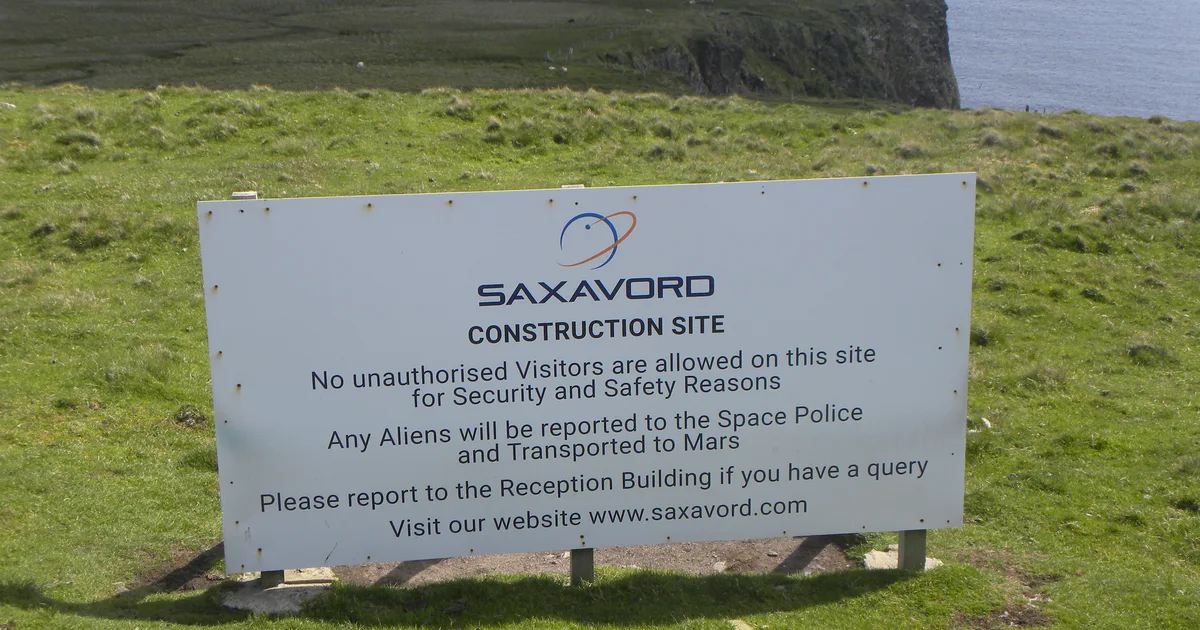

In short. The Ministry of Defence and the Department for Business, Innovation, Science and Trade announced on 22 November 2026 that the UK had signed STARLIFT, a NATO initiative with ten allies to develop shared satellite launch sites [[1]]. The release leans on two things to make its case: the UK Space Strategy's "more than £7.8 billion" [[1]][[2]] and "the Government's investment in SaxaVord Spaceport", the Shetland site it calls "the UK's only fully licensed vertical orbital launch spaceport" [[1]]. The licensing claim checks out. The rest does not hold up as cleanly. The Strategy's own biggest single commitment, £2.8 billion for satellite communications, includes a programme, C-LEO, that had already run two public funding rounds before the Strategy existed [[2]][[4]]. And the release's "investment" in SaxaVord does not mention that the government is now a part owner of the company that runs it, seven months after that company's own auditors warned of a "significant doubt" over its ability to continue as a going concern [[3]][[5]][[6]]. Three documented mistakes: four stars.
Satellites keep ordinary life running more than most people notice: card payments, weather forecasts, sat-nav. The Ministry of Defence's press release makes exactly that case, and on 22 November 2026 it announced that the UK had signed up to STARLIFT, a new NATO scheme in which the UK, Belgium, Canada, Finland, Germany, Italy, the Netherlands, Norway, Turkiye, Sweden and the Republic of Korea will develop shared launch sites across the alliance, aiming for faster, more resilient access to orbit [[1]].
Defence Secretary Wes Streeting called satellites "critical for our national security and military operations" and said STARLIFT "will pool our strengths" against "hostile states" threatening the UK "from space" [[1]]. Space Minister Liz Lloyd, Baroness Lloyd of Effra, tied the announcement directly to a specific place: "following our investment in SaxaVord spaceport, STARLIFT further boosts the UK's launch capabilities" [[1]]. The release backs both of them with a number: the UK Space Strategy, published in September, "sets out more than £7.8 billion for securing the UK's interests and driving growth through space" [[1]].
The claims, tested
| What the announcement says | What the evidence shows | Verdict |
|---|---|---|
| SaxaVord Spaceport is "the UK's only fully licensed vertical orbital launch spaceport" and "is approved for up to 30 launches a year" [[1]] | The UK Civil Aviation Authority's licence for SaxaVord does permit up to 30 launches a year, and no rival UK site (Sutherland, Prestwick) holds an equivalent vertical-launch licence as of this announcement | Accurate. CLEARED on this point. |
| STARLIFT "builds on the recent publication of the UK Space Strategy, which sets out more than £7.8 billion" [[1]], a figure the Strategy itself repeats: "backed by more than £7.8 billion in funding to 2029/30" [[2]] | The Strategy's single largest line within that total is "£2.8 billion in funding between 26/27 to 29/30" for satellite communications [[2]]. One of the programmes under that heading, the UK Space Agency's Connectivity in Low Earth Orbit (C-LEO) call, had already run a first funding round of £18 million in January 2025 and a second round of £30 million in March 2026, months before the Strategy that "sets out" the money was published in September [[4]] | The £7.8 billion presented as new backing for this week's NATO commitment includes a programme with a public funding history that predates the Strategy itself |
| The release says the agreement "follows the Government's investment in SaxaVord Spaceport", and that "in September, the Government announced plans to invest £30 million to accelerate the operational readiness" of the site [[1]] | Companies House records show the Department for Science, Innovation and Technology was notified on 27 October 2026 as a "person with significant control" of Shetland Space Centre Limited, SaxaVord's operating company, owning "more than 25% but not more than 50%" of its shares [[3]] | "Investment" understates it. The government is now a part owner of the private company whose spaceport the release names as proof of Britain's launch capability, and does not say so |
| The release frames the £30 million as money "to accelerate the operational readiness of the infrastructure needed for regular orbital launch activity" [[1]], a routine description of infrastructure spending | Seven months earlier, Shetland Space Centre Limited disclosed a technical default on a £10 million loan, and its auditors warned the default raised "material uncertainties" casting "significant doubt" on the company's ability to continue as a going concern, alongside a £5.4 million pre-tax loss on just £2.5 million of revenue in 2024 [[5]][[6]] | The release's neutral framing omits that the money it calls an investment followed public disclosure of serious financial distress at the company receiving it |
A spaceport doing a lot of work
SaxaVord is not incidental to this announcement. It is the only UK site STARLIFT can point to as evidence that Britain already has something to offer the alliance, which is why the Space Minister linked the two directly [[1]]. That makes what the release leaves out about SaxaVord's recent history more than a footnote.
Shetland Space Centre Limited, the company that owns and runs SaxaVord, told its lenders in April 2026 that it had hit a "technical event of default" on a £10 million loan, a breach severe enough on paper to let the lender call in the debt, though the company said it was a "minor technical matter" the lender was willing to waive [[5]]. Its 2024 accounts, filed around the same time, showed a pre-tax loss of £5.4 million against £2.5 million in revenue, and its auditors flagged the default as creating "significant doubt" about the company's future as a going concern [[5]][[6]]. Five months later, the government announced the £30 million that this week's STARLIFT release calls an investment in operational readiness [[1]]. By 27 October, that money and a matching private contribution had made the Department for Science, Innovation and Technology a registered part owner of the company, holding more than a quarter of its shares [[3]].
None of that sequence appears in the 22 November release. A reader is told the government invested in a spaceport; a reader is not told the spaceport had disclosed a loan default and a going-concern warning months before that money arrived, or that the investment came with an equity stake rather than a grant.
Credit where due
The release is specific where it could have been vague, and that specificity is what made it possible to check. It names all ten allied nations rather than gesturing at "partners" [[1]]. It lists four concrete initial STARLIFT projects, developing shared ways to contract launch capacity, testing responsive launch operations, strengthening launch logistics and addressing air, maritime and space traffic rules, rather than a single vague pledge to "cooperate" [[1]]. Its claim about SaxaVord's licensing status is accurate and does not oversell the site. And its closing claim, that the UK "recently launched Titania, the second satellite to reach space as part of Programme ISTARI" [[1]], matches independent reporting on the programme: Tyche launched first in 2024, Titania second, with Juno and two Oberon satellites still to follow. A modest, checkable claim, correctly stated.
Three documented mistakes. (1) The release credits the UK Space Strategy's "more than £7.8 billion" as backing for this week's NATO agreement, but the Strategy's largest single commitment, £2.8 billion for satellite communications, includes the C-LEO programme, which had already run two public funding rounds totalling £48 million before the Strategy that "sets out" the money was even published. (2) The release calls the government's money at SaxaVord an "investment", but Companies House confirms it made the Department for Science, Innovation and Technology a part owner of the spaceport's operating company, holding more than a quarter of its shares, a fact the release does not mention. (3) The release frames that money as routine infrastructure spending "to accelerate operational readiness", without disclosing that the same company had disclosed a loan default and an auditors' going-concern warning seven months earlier. Rating: four stars.
Sources
- Ministry of Defence / Department for Business, Innovation, Science and Trade, "UK reaches for stars with NATO space launch plan", 22 November 2026
- Ministry of Defence / Department for Business, Innovation, Science and Trade / UK Space Agency, "UK Space Strategy", 8 September 2026
- Companies House, "Shetland Space Centre Limited: persons with significant control"
- Government Technology, "£30 million for satellite communications", 5 March 2026
- Shetland Times, "Spaceport dismisses technical event of default over £10m loan", 16 April 2026
- Scottish Financial News, "Shetland spaceport losses rise to £5.4m", 13 April 2026