A duty to help children raised by relatives has covered every council in England since June. The guidance explaining how to meet it took four months, sets no deadline or inspection, and the only new money reaches 5,000 children in seven councils.
Estimated reading time: 7 minutes
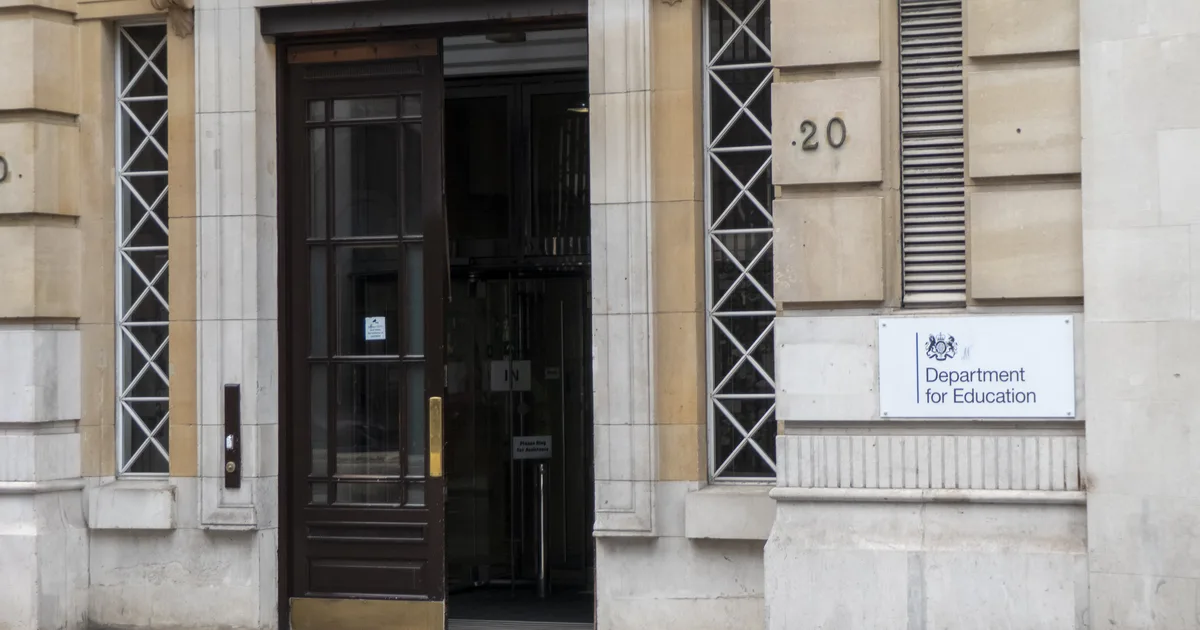

In short. Section 5 of the Children's Wellbeing and Schools Act 2026 inserts a new duty, section 22H of the Children Act 1989, requiring every council in England to publish a "kinship local offer" for children raised by relatives [3]. It commenced automatically on 29 June 2026, two months after Royal Assent, under the Act's own commencement schedule, with no separate order needed [4]. The Department for Education's statutory guidance explaining what a council actually has to do was not updated to reflect it until 2 October 2026 [1] [2], and even then sets no deadline for first publishing an offer, no inspection regime, and states plainly that there is "no requirement for a dedicated post" to run it [2]. The only new money announced for kinship care this year, a 126 million pound pilot, reaches around 5,000 children in seven of England's 153 local authorities; the legal duty covering the other 146 comes with none [5] [6]. Three documented mistakes: four stars.
A grandmother in Medway who takes in her grandchildren when their mother cannot cope is doing something the law has quietly started calling "kinship care." A grandmother in Rotherham doing the exact same thing is doing the same thing, under the same law. From 29 June 2026, both of their councils owed them a published account of what help is on offer. Only one of their councils has, this year, had any new government money attached to that duty.
A duty that switched itself on
Section 5 of the Children's Wellbeing and Schools Act 2026 inserts a new section, 22H, into the Children Act 1989. Its first subsection is a plain "must": "A local authority must publish information about the authority's general approach to supporting children living in the authority's area who live in kinship care" [3], together with information about financial support and about services covering health and wellbeing, relationships, education and training, and accommodation [3]. Subsection 8 adds a second duty: before publishing the offer, or any updated version of it, "a local authority must consult relevant persons about any services that are offered, or may be offered" and "publish a report on the consultation" [3].
The Act received Royal Assent on 29 April 2026. Unlike several of its other provisions, section 5 needed no commencement order to take effect. Section 78(2)(a) of the Act lists section 5 among the provisions that come into force automatically "at the end of the period of two months beginning with the day on which this Act is passed" [4], which put the duty in force from 29 June 2026, legislation.gov.uk's own commencement record confirms, with nothing further for ministers to sign.
Four months with nothing but the statute
A duty that commences itself still needs explaining to the people who must deliver it. The Department for Education's guidance for this area, "Kinship care: guidance for local authorities," last carried a substantive update in 2024 [1]. Its page on GOV.UK records the next update as 2 October 2026 [1], and the guidance document itself, headed "Kinship care, Statutory guidance for local authorities, October 2026," says it was "updated to reflect new duties on local authorities contained in the Children's Wellbeing and Schools Act 2026 and new national kinship standards" [2]. From 29 June to 2 October, just over three months, the 153 councils now bound by section 22H had the bare words of the Act and nothing from the department on what a compliant "kinship local offer" should contain, how to run the consultation, or what the consultation report should say.
No deadline, no inspector, no named job
The guidance that finally arrived does not fix the gap it describes. Section 22H itself sets only an ongoing, self-timed obligation: "A local authority must review and update its kinship local offer from time to time, as appropriate" [3]. Neither the Act nor the 79-page guidance sets a date by which a council's first kinship local offer must actually exist. The word "Ofsted" does not appear anywhere in the guidance, and nor does "inspection"; the document checked directly, page by page, contains no inspection regime, no reporting return to the department, and no consequence spelled out for a council that never gets round to publishing one. On staffing, the guidance goes further than silence: "Whilst there is no requirement for a dedicated post for this purpose, local authorities may want to consider whether this is beneficial to ensure sufficient oversight of the kinship local offer" [2], page 49. A duty that applies to every council in the country, created by an Act of Parliament, is administered, by the department's own description, as something a council might want to assign to someone.
The claims, tested
| The document's own words | What the record shows | Verdict |
|---|---|---|
| "A local authority must publish information about the authority's general approach to supporting... children... who live in kinship care" [3], commenced automatically under section 78(2)(a) on 29 June 2026 [4] | DfE's own statutory guidance explaining how to comply was not updated until 2 October 2026 [1] [2], over three months later | For more than three months every one of the 153 councils bound by this duty had the bare statute to work from, and nothing else from the department that wrote it |
| "A local authority must review and update its kinship local offer from time to time, as appropriate" [3]; the guidance states there is "no requirement for a dedicated post" [2] | No deadline for first publication appears anywhere in the Act or the 79-page guidance; neither "Ofsted" nor "inspection" appears in the guidance at all | A sector-wide legal duty with no date it must be met by, no inspector checking it, and no requirement that any specific person is responsible for it |
| "Across England, 153 local authorities are responsible for ensuring and overseeing the effective delivery of social care services for children" [6]; the government's 126 million pound kinship investment "will support around 5,000 kinship children" [5] | That funding is restricted to seven named council areas, Bexley, Bolton, Newcastle, North East Lincolnshire, Medway, Thurrock and Wiltshire [5] | The only new money for kinship care announced this year reaches 5,000 children in 7 councils; the publishing duty that reaches every kinship family in the country comes with none |
Credit where due
The guidance itself, once it arrived, is not thin. Its 79 pages work through immigration status and No Recourse to Public Funds, culturally diverse family structures, housing priority for overcrowded kinship households, and the specific support needs of children who have never been looked after but are still being raised by a grandparent or aunt, territory earlier versions of this guidance barely touched. The duty to consult before publishing, and to publish a report on that consultation, is a genuine procedural right that did not exist in statute before this Act: kinship carers and the children in their care now have a guaranteed route to be asked, and a public record that they were. The Kinship Zones pilot, narrow as its reach is, is also real: a specific allowance set at the same rate as the fostering allowance, not a one-off grant, backed by over 126 million pounds of confirmed funding for its first two years [5]. Previous national strategies for kinship care committed to warm words; this is money, even if it is money for 5,000 children rather than for however many are actually raising a relative's child across England.
Verdict
Four stars, from three documented mistakes. The underlying duty is real and the guidance explaining it is detailed once it exists. But a council was legally required to publish a kinship local offer for more than three months before the department explained what that meant; nothing in the Act or the guidance says when a council's first offer must appear, or who checks that it ever does; and the only new government money for kinship care this year is fenced off to seven of England's 153 councils while the publishing duty itself was handed to all of them.
The star score counts three documented mistakes. First, section 22H of the Children Act 1989, inserted by section 5 of the Children's Wellbeing and Schools Act 2026, commenced automatically on 29 June 2026 under the Act's own two-month commencement rule, but the Department for Education's statutory guidance explaining how to comply was not updated until 2 October 2026, over three months later. Second, neither the Act nor that guidance sets a deadline for when a council must first publish its kinship local offer, and the guidance contains no inspection regime and states there is "no requirement for a dedicated post" to administer it. Third, the only new funding announced for kinship care this year, over 126 million pounds, is restricted to seven named local authority areas reaching around 5,000 children, while the publishing duty itself applies to all 153 English local authorities with children's services responsibilities, with no comparable funding attached. Three falls in the 1 to 3 band: four stars; the bands are on the ratings page. This piece makes no finding about the conduct of any named official; the drafting and sequencing of legislation and guidance is institutional, not any one person's decision. All six sources below were fetched directly on 28 October 2026; none returned an error.
Sources
- Kinship care: guidance for local authorities, GOV.UK / Department for Education, last updated 2 October 2026
- Kinship care: Statutory guidance for local authorities, October 2026 (PDF), Department for Education
- Children's Wellbeing and Schools Act 2026, section 5 (as enacted), legislation.gov.uk, Royal Assent 29 April 2026
- Children's Wellbeing and Schools Act 2026, section 78 (as enacted), legislation.gov.uk
- Government launches investment in support for kinship carers, GOV.UK / Department for Education, published 27 February 2026
- Main findings: local authority inspection outcomes as at 31 March 2025, GOV.UK / Department for Education, published 25 September 2025