Every primary school in England has to report how many Year 6 pupils can swim 25 metres. The Department for Education collects that same figure itself every year and has never published a national total.
Estimated reading time: 6 minutes
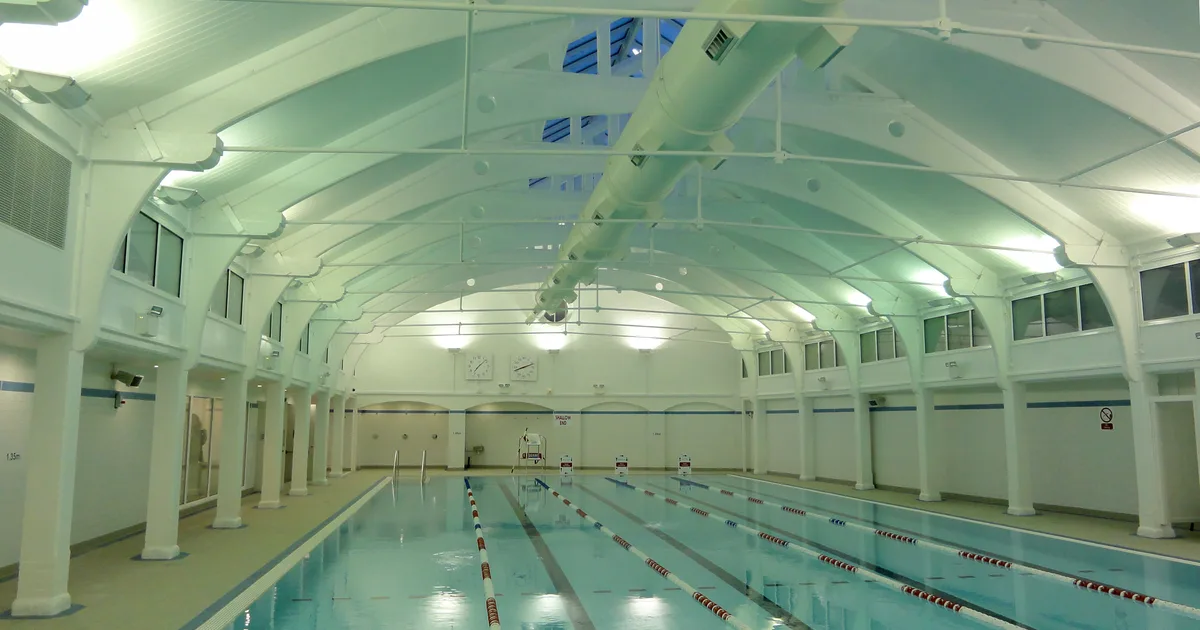

In short. The PE and sport premium conditions of grant for 2026 to 2027 require every state primary school to publish, by 31 July 2027, "the percentage of pupils in year 6 who have met the national curriculum requirements" to swim 25 metres, use a range of strokes and perform safe self-rescue [1]. The Department for Education already asks every school for that same figure itself, every year, through its own sign-in digital reporting form, which has a dedicated section asking schools to "enter your answers in percentage for attainment, stroke range and self-rescue" [3]. No current DfE statistics release aggregates that data anywhere: a GOV.UK search of Research and statistics for "swimming attainment" returns nothing on the subject [4], and the department's own School Games Indicator, its last dedicated national release on school sport participation, was published for the 2014 to 2015 academic year and not repeated since [5]. The only public national figure comes from a charity's sample survey: Sport England's Active Lives Children and Young People Survey for 2024 to 2025 found that just 73% of children can swim the statutory 25 metres by the time they leave primary school, meaning 27%, more than one in four, cannot [6]. Three documented mistakes: four stars.
Every summer, thousands of state primary schools in England write a report that almost nobody outside their own school gate will ever read. The PE and sport premium conditions of grant, reissued for the 2026 to 2027 academic year, requires it: schools "must publish on its website a report detailing how it has spent its premium" by 31 July, covering the amount received, a full breakdown of spending, and "the impact seen by the school on pupils' participation and attainment in PE and sport" [1]. One line item is specific and testable in a way the rest of the report is not: the percentage of the school's own Year 6 cohort who can swim 25 metres, the ability the National Curriculum has required every primary school to teach since 2013 [2]. It is framed as public accountability. It produces roughly sixteen thousand separate disclosures, scattered across sixteen thousand separate websites, that nobody is required to add together.
A number the department already holds
The premium's purpose, in the conditions of grant's own words, is "for schools to make additional and sustainable improvements to the provision of PE and sport for the benefit of all primary-aged pupils" [1]. Swimming is named specifically among the eligible uses: schools may spend the grant on "top-up swimming and water safety lessons after pupils' completion of core lessons," one of the few carve-outs to the rule that the premium cannot fund the core curriculum [1].
Alongside the website report, every school must also complete a separate return direct to the department: a sign-in digital form, the "PE and sport grant spending assurance" return, which asks for total spending by category and, in its own dedicated section, "swimming attainment, self rescue, spending and impact" [3]. Schools are told to "enter your answers in percentage for attainment, stroke range and self-rescue," a number between zero and 100 [3]. That means the department is not relying on the scattered website reports at all for its own copy of the data. It collects the identical figure, from every state primary school, centrally, every year, through an authenticated form of its own design.
The figure it does not add up
What happens to that centrally collected number after submission is, on the department's own published guidance, unaddressed beyond confirming a submission reference and a downloadable copy for the school itself [3]. It is not published as a national figure. Searching GOV.UK's own Research and statistics section, the department's dedicated home for exactly this kind of data, for the phrase "swimming attainment" returns nothing addressing school swimming outcomes at all [4]. The department did once publish this kind of measure: the School Games Indicator, a national release tracking school sport participation, most recently covered the 2014 to 2015 academic year [5]. Eleven years and several redesigns of the premium later, nothing has replaced it, even as the underlying swimming-specific data collection has, if anything, grown more detailed.
The gap the public has to find elsewhere
Because the department does not publish its own number, the only national picture of how children are actually doing comes from outside government: Sport England's Active Lives Children and Young People Survey, an annual sample survey run for Sport England rather than a census of every school. Its most recent report, covering the 2024 to 2025 academic year, states plainly: "Just 73% of children in school Year 7 (first year of secondary school, ages 11-12) meet the guidelines that children should be able to swim competently, confidently and proficiently over a distance of at least 25m by the time they leave primary school" [6]. The equivalent figure a year earlier was 70% [7]. Read the other way round, that is a recovery from 30% of children falling short of a legal requirement to 27%: real progress, and still more than one in four children leaving primary school without a skill the National Curriculum has mandated for over a decade [2].
The claims, tested
| The scheme's own words | What checking the citation shows | Verdict |
|---|---|---|
| Schools must publish the percentage of Year 6 pupils meeting the swim, stroke and self-rescue requirements, framed as transparency on the grant's impact [1] | No threshold, target or benchmark appears anywhere in the conditions of grant against which a school's reported percentage is judged [1] | Undefined success criteria: publishing the number is the requirement, not any particular number |
| The department separately collects "swimming attainment, self rescue" data from every school through its own digital form [3] | No current DfE statistics release aggregates it; the last comparable national release covers 2014 to 2015 [4] [5] | Data collected centrally, never published centrally |
| The premium's purpose is "additional and sustainable improvements" to PE and sport provision, swimming named specifically [1] | The only public national measure, a third-party survey, puts 27% of children still short of the statutory swim requirement [6] | A real and improving trend, tracked only because a charity happens to survey it |
The mistakes, counted
Undefined success criteria (1). The conditions of grant require every school to publish its Year 6 swimming attainment percentage but set no national target, threshold or benchmark anywhere in the document. Compliance means publishing a number; it does not mean the number is good.
Data collected centrally, never published centrally (2). The department's own digital reporting form asks every state primary school for its swimming attainment, stroke range and self-rescue percentages every year. No current DfE statistics release turns that administrative data into a national figure; the department's last comparable release, the School Games Indicator, stopped after the 2014 to 2015 academic year.
The outcome the grant is meant to fix is tracked only by a charity, not the department funding it (3). More than a quarter of children still cannot swim the statutory 25 metres by the end of primary school, on Sport England's most recent survey. That is the only public national figure. It does not come from the department that collects the equivalent number from every school itself.
Credit where due
The trend is real and it is moving the right way. Sport England's own data shows the proportion of children meeting the 25 metre standard by the end of primary school rising from 70% to 73% in a single year, a genuine recovery from the pandemic-era low [6] [7]. The conditions of grant are specific about eligible swimming spend, naming exactly the kind of top-up lesson most likely to close the gap [1]. The grant also carries real financial teeth: the Comptroller and Auditor General can examine how a school has used its funding, and the Secretary of State can recover grant money from a school or local authority that fails to comply [1]. None of that is nothing. What is missing is not enforcement against fraud, which the scheme takes seriously, but a public, national answer to the question its own paperwork exists to ask: is the money working.
Verdict
Four stars, from three documented mistakes. A grant that specifically funds swimming provision, requires every school to report its own swimming outcomes, and separately collects the identical figure itself every year, still leaves the national picture to a charity's sample survey. The department is not hiding a bad number. It simply is not publishing the good one it already has.
Sources
- Department for Education, "Primary PE and sport premium conditions of grant for the academic year 2026 to 2027" (guidance, checked 24 September 2026). https://www.gov.uk/government/publications/pe-and-sport-premium-conditions-of-grant-2026-to-2027/primary-pe-and-sport-premium-conditions-of-grant-for-the-academic-year-2026-to-2027 - landing page: https://www.gov.uk/government/publications/pe-and-sport-premium-conditions-of-grant-2026-to-2027
- Department for Education, "National curriculum in England: physical education programmes of study" (statutory guidance, first published 11 September 2013, checked 24 September 2026). https://www.gov.uk/government/publications/national-curriculum-in-england-physical-education-programmes-of-study/national-curriculum-in-england-physical-education-programmes-of-study
- Department for Education, "Primary PE and sport premium grant expenditure: instructions for completing the reporting and assurance form" (guidance, checked 24 September 2026). https://www.gov.uk/government/publications/pe-and-sport-premium-for-primary-schools/primary-pe-and-sport-premium-grant-expenditure-instructions-for-completing-the-reporting-and-assurance-form
- GOV.UK, Research and statistics search results for "swimming attainment" (checked 24 September 2026). https://www.gov.uk/search/research-and-statistics?keywords=swimming+attainment&order=relevance
- Department for Education, "School Games Indicator 2014-2015" (national statistics, published 24 September 2015, checked 24 September 2026). https://www.gov.uk/government/statistics/school-games-indicator-2014-2015
- Sport England, "Active Lives Children and Young People Survey, academic year 2024-25" (report, PDF, published December 2025, checked 24 September 2026), page 52.
- Sport England, "Active Lives Children and Young People Survey, academic year 2023-24" (report, PDF, published December 2024, checked 24 September 2026), page 51.