Anglian Water was fined £1.6m for sewage pollution the Environment Agency calls organisational failure. Its own guideline and its own prosecution record both suggest the number should have been bigger.
Estimated reading time: 6 minutes

In short. The Environment Agency fined Anglian Water £1.6m on 14 October 2026 for sewage pollution of the River Brain, and its own quoted language describes the conduct as "organisational failure... to recognise risk and act on the warning signs" [1], after alarms were "ignored" [1]. That reads closer to the Sentencing Council's own definition of "reckless" culpability than the lower "negligent" band, and Anglian Water's turnover is 35 to 40 times the guideline's threshold for a "large organisation", a size at which the guideline itself says courts should consider moving outside the standard range [2]. Separately, the same press release discloses that water companies have been prosecuted "more than 70 times since 2015, securing £169m in fines" [1] - an average of about £2.4m a case, well above this one. Two documented mistakes: four stars.
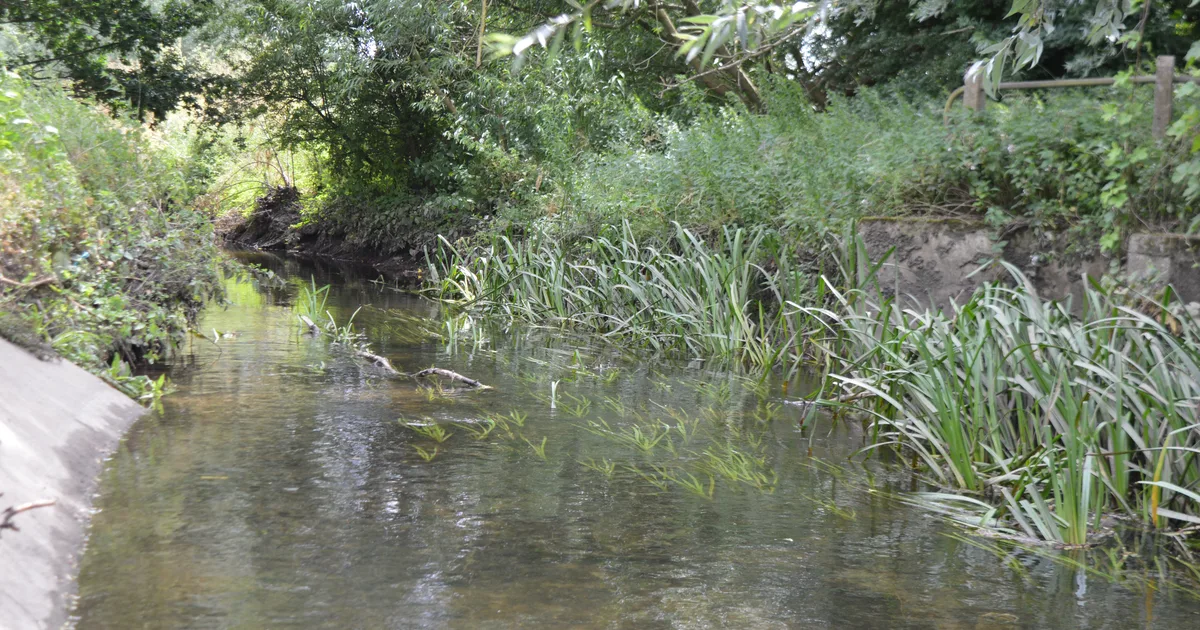
Between 13 April and 2 June 2022, a faulty valve at Anglian Water's Braintree water recycling centre let semi-solid sludge reach the River Brain [1]. Environment Agency monitors picked up ammonia levels the highest recorded in the river in ten years, and the pollution stretched nearly 14km downstream to Witham [1]. The agency's investigation found the valve had been broken for a week before the first incident, that staff "didn't talk to each other" about it, and that a second, similar discharge followed in late May [1]. Cambridge magistrates' court fined the company £1.6m on 14 October, plus £27,334 costs and a £190 surcharge, a total of £1,627,524 [1]. Anglian Water's own statement to the local press accepted the facts: "our procedures fell well below the high standard we set for ourselves" [3]. The question this piece tests is not whether Anglian Water was at fault. It is whether the figure the Environment Agency announced, and the language it used to announce it, line up with the sentencing framework and the agency's own historical record.
The claims, tested
| The claim | What we found | Verdict |
|---|---|---|
| Marcus Sibley, the Environment Agency's water industry regulatory manager for East Anglia, said the pollution was "the result of organisational failure by Anglian Water to recognise risk and act on the warning signs" [1], after the agency found the company "ignored alarms telling them that poorly-treated sewage was being discharged" [1] | The Sentencing Council's Environmental Offences Definitive Guideline defines "reckless" culpability, for organisations, as "actual foresight of, or wilful blindness to, risk of offending but risk nevertheless taken" [2] - closer to "ignored alarms" than to the lower "negligent" band, defined only as "failure... to take reasonable care" [2]. For a large organisation (turnover £50m and over) at reckless culpability and the guideline's top harm category, the starting point is £550,000 and the range £250,000 to £1,500,000 [2]. Anglian Water Services Limited reported revenue of £1,749.3m for the year to March 2025 [4], rising 21.1% to £1,090.2m in the first half of this financial year alone [5] - 35 to 40 times the guideline's large-organisation floor. The guideline's own text addresses exactly this: where turnover "very greatly exceeds" that threshold, "courts should consider fines outside the range for large companies" because "it may be necessary to move outside the suggested range to achieve a proportionate sentence" [2] | Nothing in the press release, or in the contemporary court reporting checked for this piece, states what culpability or harm category the magistrates applied, whether a guilty plea reduced the figure, or whether the guideline's own large-organisation uplift was considered for a company this size |
| Sibley also said: "We have significantly ramped up our scrutiny of the water industry, and will take enforcement action where we find performance doesn't meet the standards that communities deserve" [1] | The same release states that water companies in England "have been successfully prosecuted by the Environment Agency more than 70 times since 2015, securing £169m in fines" [1] - an average of roughly £2.4m per case over eleven years. This single fine, at £1.6m, sits around a third below that self-reported average, for a company whose turnover is far above the typical defendant in a set that includes small regional operators as well as the nine large water and sewerage companies | The agency's own disclosed numbers undercut the "ramped up" framing applied to this specific case |
The mistakes, counted
A fine that may not reflect its own guideline's largest-organisation rule (1). The Environment Agency's quoted description of the conduct, ignored alarms and a failure "to recognise risk and act on the warning signs" [1], reads as reckless rather than merely negligent under the Sentencing Council's own definitions [2]. Anglian Water's turnover is many multiples beyond the £50m ceiling the guideline uses to define a "large organisation", which is precisely the scenario in which the guideline tells courts to look past the standard range [2]. The magistrates were not capped: regulation 39 of the Environmental Permitting (England and Wales) Regulations 2016 sets no upper limit on a summary fine, only "a fine or imprisonment for a term not exceeding the general limit in a magistrates' court" [6]. None of that proves the fine was too low; a guilty plea, mitigation or a lower harm category could all justify it. But the Environment Agency's own press release does not say which applied, leaving the public unable to check the one thing its own guideline asks a court to weigh for a company this size.
"Ramped up scrutiny" undercut by the agency's own record (2). Sibley's statement frames this case as part of intensifying enforcement [1]. The same release's own disclosed figures, more than 70 prosecutions since 2015 totalling £169m, put the historical average fine at roughly £2.4m [1] - meaning this £1.6m fine sits below the agency's own stated track record, not above it, in the same release that announces it as evidence of tougher action.
Credit where due
The agency's own transparency is what made this check possible: the 70-case, £169m figure is disclosed voluntarily, not extracted. The investigation itself is precise, naming the specific valve, the exact six-week window and the 14km extent, traced through the agency's own monitoring data [1]. Environment Secretary Angela Eagle's quoted language does not soften the criticism: "Anglian Water have clearly been too slow to act in this case and the environment has paid the price" [1]. And the agency used the fine power available to it in full: regulation 39 has carried no statutory cap on a magistrates' court fine for this offence since March 2015, so nothing in the law forced a lower number [6]. Anglian Water, for its part, did not contest the facts publicly: "our procedures fell well below the high standard we set for ourselves" [3].
Verdict
Four stars, from two documented mistakes. Neither is a claim that the court erred; this piece has no sentencing remarks to check that against, and none were published alongside the fine. The mistake is in the gap between what the Environment Agency's own language and own guideline point toward, and what its own press release lets the public verify. A statement built around "organisational failure" and "ramped up scrutiny" invites the reader to test the number against the standards the agency itself set out, in its sentencing guideline and in its own enforcement record. Tested against both, £1.6m reads as the lower, not the upper, end of what the agency's own words suggest.
The star score counts two documented mistakes. First, the Environment Agency's quoted description of Anglian Water's conduct, ignored alarms and a failure to act on warning signs, reads closer to the Sentencing Council's definition of "reckless" than "negligent" culpability, and Anglian Water's turnover is 35 to 40 times the guideline's threshold for a "large organisation", the point at which the guideline itself tells courts to consider moving outside the standard range; neither the press release nor contemporary court reporting states whether this was applied. Second, the press release frames the fine as "ramped up scrutiny" while its own disclosed figures put the historical average water-company fine at roughly £2.4m, above this £1.6m case. Two falls in the 1 to 3 band: four stars; the bands are on the ratings page. This piece makes no finding about the conduct of the sentencing court; the guideline comparison is drawn from the Environment Agency's own published quotes and Anglian Water's own published accounts. Checked directly against the Environment Agency press release, the Sentencing Council's Environmental Offences Definitive Guideline, the Environmental Permitting (England and Wales) Regulations 2016 and Anglian Water Services Limited's published financial results, all fetched 19 October 2026.
Sources
- £1.6m fine for Anglian Water's pollution of Essex river, Environment Agency and Defra, published 16 October 2026
- Organisations: Unauthorised or harmful deposit, treatment or disposal etc of waste / Illegal discharges to air, land and water, Sentencing Council, Environmental Offences Definitive Guideline
- Anglian Water fined £1.6 million over River Brain pollution, Gazette-News (Essex)
- Anglian Water Services Limited: Full year results for the year ended 31 March 2025, 13 June 2025
- Anglian Water Services Limited: Half-yearly results for the six months ended 30 September 2025, 3 December 2025
- Environmental Permitting (England and Wales) Regulations 2016, regulation 39, legislation.gov.uk