Immigration Enforcement scanned 7,500 faces at a Welsh ferry port and promised to publish the results of every deployment. Its most recent trial's results are seven months overdue, and the law meant to govern the technology is still unwritten.
Estimated reading time: 7 minutes
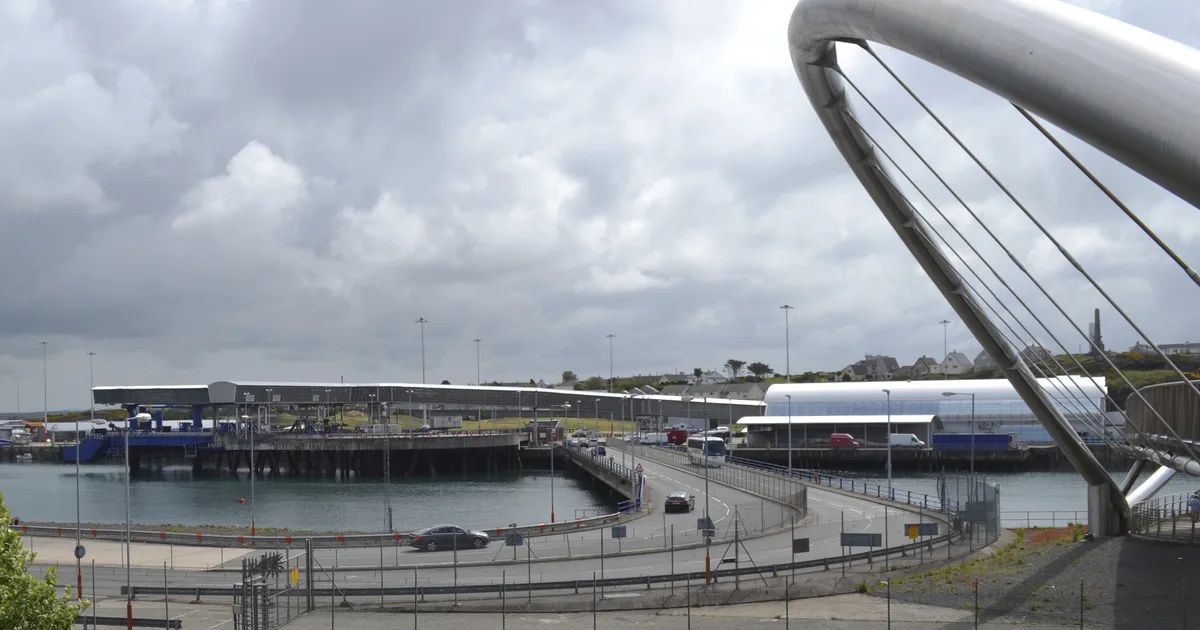

In short. Immigration Enforcement's equality impact assessment for live facial recognition (LFR), updated 5 October 2026, promises that after every deployment it will "publish the number of faces processed by the LFR system, confirmed matches and false alerts" (page 3) [1]. Its first trial, at the Port of Holyhead in November 2025, met that promise in six weeks [2]. Its second trial, at the same port in February 2026, has not: seven months on, no results have been published anywhere on GOV.UK [3]. The document's own equality-monitoring commitment has so far had two alerts, both correct, to work from [2], and the government's own consultation on a legal framework for the technology closed in February with no outcome published since [6]. Five documented mistakes: three stars.
Immigration Enforcement is not a police force, but since November 2025 it has been running the same technology Parliament has spent two years arguing about how to regulate, at a Welsh ferry port, against people it suspects of evading deportation. The equality impact assessment (EIA) governing that use, an internal Home Office document now in its ninth revision in fourteen months, was updated again yesterday [1]. It makes specific, checkable promises about transparency and oversight. Checked against what the Home Office has actually published, several of them are not holding up.
The promise, and the trial it has not kept
The EIA is explicit about what happens after a deployment. "We will undertake a post-deployment debrief, review the results, and publish the number of faces processed by the LFR system, confirmed matches and false alerts" (page 3) [1]. Further on, the same commitment is repeated: "We will also publish the outcomes of such operations" (page 14) [1].
Immigration Enforcement ran LFR at the Port of Holyhead across eight separate deployments between 10 and 29 November 2025. The Home Office published the results as transparency data on 9 January 2026, a table with a row for every deployment: dates, camera numbers, watchlist size, alerts, arrests, faces seen [2]. Across the eight rows, 7,512 faces were seen, two alerts were generated, both were correct, and one arrest or disposal followed [2]. Six weeks from last deployment to published data.
Immigration Enforcement ran LFR at the same port again in February 2026. The collection page that hosts all of this programme's documents records the fact of it plainly: "16 February 2026 Information added about a trial using live facial recognition in the Holyhead Port, week commencing 23 February 2026" [3]. Industry press confirms the trial went ahead as scheduled, a third proof-of-concept deployment, three days of scanning ferry passengers arriving from Dublin [4]. This site checked GOV.UK directly: the collection page lists no transparency-data publication newer than the November 2025 one, and no page exists at the pattern the first release used for a February or March 2026 equivalent [3]. The Irish Times reported the same gap on 5 March 2026, over a week after the trial ended: "Data from the most recent February 2026 operation has yet to be released" [5]. Seven months have now passed since that trial ran. On the Home Office's own six-week precedent, the outcomes it promised to publish are overdue by a factor of five.
Notice went to Dublin, not necessarily to the people being scanned
The EIA also commits to advance public notice. Before a deployment, Immigration Enforcement will set up "a public-facing web page" and, "where possible, and where it will not undermine the deployment's specific objectives, publish advance notice on Home Office websites at least 5 days before the deployment" (page 9) [1]. The carve-out is not defined anywhere in the document: what counts as undermining a deployment's objectives is for Immigration Enforcement to decide, about its own notice, with no published criteria for when the exception applies.
What is documented is that Ireland's government received advance notice through a different channel. Responding to a parliamentary question, Ireland's Minister for Justice, Jim O'Callaghan, said: "I can confirm that my officials were advised of the proposed trial of the technology at Holyhead port," citing "extensive engagement, co-operation and information sharing" between his department and the Home Office [5]. He added that "immigration measures implemented by the UK are entirely a matter for the UK authorities" [5], meaning Dublin was informed as a courtesy, not consulted as a check. The Irish Times found no equivalent evidence that ordinary ferry passengers, the people actually being scanned, received five days' public notice before the February deployment; the Irish Council for Civil Liberties' Olga Cronin described them as "having their biometric data processed without them having done anything to raise suspicion ... simply for getting on a ferry" [5]. A government received advance word through diplomatic channels; the document's own public-notice commitment, to the people the technology is actually used on, is harder to verify at all.
A monitoring commitment with almost nothing to monitor
Across every protected characteristic, the EIA promises active equality monitoring. On age: "IE will monitor deployment outcomes, including false alerts and confirmed matches by age band where lawful and proportionate, and will review or pause deployments if evidence indicates disproportionate impact on any age group" (page 6) [1]. Similar language covers sex and race (pages 9, 11) [1].
The only published results to test that commitment against are the November 2025 figures: 7,512 faces seen, two alerts, zero incorrect alerts, zero incorrect interventions [2]. With no false alerts recorded, there is no demographic breakdown to publish or review; a disparity can only show up in the data IE collects when its system gets something wrong, and so far it has not got anything wrong often enough to generate a pattern. The EIA sets no minimum sample size or deployment count at which the monitoring commitment is actually expected to produce a finding. On the only evidence published to date, it is a promise to review data that does not yet exist in a form capable of being reviewed.
Borrowed evidence for a different force, in a different setting
The EIA's confidence in its chosen accuracy threshold rests on a single external study. The National Physical Laboratory tested the facial recognition algorithm used by the Metropolitan Police and South Wales Police and found that "at a facial-match threshold of 0.64 and above, there were no false positive identifications" across demographic groups (page 8) [1]. Immigration Enforcement has adopted that same 0.64 threshold for its own deployments (page 9) [1].
The NPL's study tested two police forces running street deployments against policing watchlists. Immigration Enforcement runs a port deployment against an immigration watchlist, a different setting, a different agency, a different population passing through the camera's field of view. The EIA does not identify any IE-specific bias testing, commissioned or otherwise, and cites no reason to expect the two contexts behave identically. It borrows another organisation's evidence rather than generating its own.
The law meant to govern this is still being written
The Home Office's own legal mandate for this programme concedes the underlying gap. "LFR for law enforcement purposes is not subject to dedicated primary legislation," it states, relying instead on "implied powers from the Immigration Act 1971" [7]. The government has acknowledged as much itself: on 4 December 2025 it opened a consultation "to help develop a new legal framework for the use of facial recognition and similar technologies by law enforcement" [6]. It closed on 12 February 2026. As of this piece, GOV.UK's own consultation page still reads: "We are analysing your feedback. Visit this page again soon to download the outcome" [6].
The statutory Biometrics and Surveillance Camera Commissioner, Professor William Webster, welcomed the consultation's launch and was candid about what remains unsettled: his priorities, he said, would be "to consider, firstly, what meaningful oversight on the use of facial recognition and similar technologies actually looks like," and "how we can ensure that the regulatory framework is sufficiently agile" [8]. That is the government's own watchdog, on the record, treating "what oversight actually looks like" as an open question. The EIA's own sign-off is entirely internal: a Deputy Director and an Emerging Technology Lead, both Immigration Enforcement, due to review it again on 07/09/27 (page 16) [1]. The document asserting compliance with the Equality Act 2010 operates inside a legal and oversight structure that the government's own consultation, and its own Commissioner, say is not yet settled.
Credit where due
The document is not evasive about the limits of the technology it describes. It states plainly that "LFR does not confirm identity or determine whether an offence has been committed" (page 3) [1], and builds in a human-review step before any engagement: "Any alert must be reviewed by trained officers before any engagement or further action is considered" (page 1) [1]. It is specific, not vague, about age: anyone under 18 is excluded from the watchlist outright (page 6) [1]. And the one published deployment so far did produce the outcome the document promises: a transparency release, within six weeks, with a zero false-alert rate across every row of the table [2]. Whatever the gaps in the paperwork, the November trial's own numbers are not the problem.
The claims, tested
| The document's own words | What the record shows | Verdict |
|---|---|---|
| IE will "publish the number of faces processed by the LFR system, confirmed matches and false alerts" after each deployment (page 3) [1] | The November 2025 trial's results took six weeks to publish [2]; the February 2026 trial's results are unpublished seven months on [3] [5] | The transparency commitment was met once and is now overdue by a factor of five on IE's own precedent |
| IE will "publish advance notice on Home Office websites at least 5 days before the deployment," where it will not "undermine the deployment's specific objectives" (page 9) [1] | Ireland's government received advance notice through diplomatic channels [5]; no equivalent public notice to travellers was found, and the exception's trigger is undefined and self-assessed | A conditional public-notice promise whose central exception is set, and judged, by the body making the promise |
| IE "will monitor... by age band" and "review or pause deployments if evidence indicates disproportionate impact" (page 6) [1] | The only published results show two alerts total, both correct, zero false alerts, across 7,512 faces seen [2] | No minimum sample size is set; on the only evidence so far, there is nothing to monitor a disparity in |
| LFR's accuracy is supported by an NPL study finding no significant demographic variation at a 0.64 threshold (page 8) [1] | That study tested the Metropolitan Police's and South Wales Police's street-policing systems, not Immigration Enforcement's own port deployment, and no IE-specific study is cited | The document borrows another organisation's evidence for a different operational context |
| The EIA's internal sign-off asserts Equality Act 2010 compliance, reviewed again 07/09/27 (page 16) [1] | The Home Office's own legal mandate confirms LFR is "not subject to dedicated primary legislation" [7]; the government's own consultation on a legal framework closed in February with no outcome published [6] | A self-assessment operating inside a legal and oversight structure the government's own process has not yet settled |
Verdict
Three stars, from five documented mistakes. The technology itself, on the only published numbers, has not misidentified anyone yet: zero false alerts across 7,512 faces, a human officer reviewing every alert before any engagement. That is a genuinely low error rate to start from. What the EIA does not do is keep its own paperwork promises at the same standard. A transparency commitment met once, in six weeks, and then missed for seven months on the very next deployment is not a technology problem; it is a document whose assurances were tested against reality for exactly one trial before the evidence trail went quiet.
The star score counts five documented mistakes: the EIA's commitment to publish each deployment's faces-seen, matches and false-alert figures, met within six weeks for the November 2025 trial, unmet seven months on for the February 2026 trial; its advance-public-notice commitment, whose "will not undermine the deployment's objectives" exception is undefined and self-assessed, while Ireland's government received advance word through a separate diplomatic channel; its equality-monitoring commitment by age, sex and race, which the only published results (two alerts, zero false, across 7,512 faces) have not yet generated enough data to actually exercise; its accuracy and bias assurance, borrowed from an NPL study of a different force's street-policing deployment rather than any IE-specific testing; and an internal sign-off asserting Equality Act 2010 compliance inside a legal and oversight framework the government's own Home Office legal mandate says lacks dedicated primary legislation, and whose promised replacement framework closed for consultation in February 2026 with no outcome published since. Five falls in the 4 to 9 band: three stars; the bands are on the ratings page. This piece makes no finding that Immigration Enforcement's facial recognition technology itself is inaccurate or biased; the published error rate so far is zero. The finding is narrower: the document's specific, checkable promises about publishing results, giving public notice and monitoring equality impact have been kept for one trial and not demonstrably kept since, in a legal space the government's own consultation has not yet filled. Checked directly against the 17-page equality impact assessment PDF (full text), the Home Office's own November 2025 transparency data, its live facial recognition collection page, its legal mandate, its live facial recognition consultation page and the Biometrics and Surveillance Camera Commissioner's statement (all fetched 6 October 2026), and The Irish Times' and Biometric Update's independent reporting.
Sources
- Live facial recognition: equality impact assessment (EIA), Home Office and Immigration Enforcement, updated 5 October 2026
- Live facial recognition deployment in November 2025 (accessible), Home Office, published 9 January 2026
- Live facial recognition in Immigration Enforcement, Home Office and Immigration Enforcement, collection, last updated 16 February 2026
- UK live facial recognition trial on again at Holyhead for immigration enforcement, Biometric Update, 24 February 2026
- Irish officials were warned in advance that Irish travellers would have faces scanned at Holyhead, The Irish Times, 5 March 2026
- Legal framework for using facial recognition in law enforcement, Home Office, consultation, closed 12 February 2026
- Immigration Enforcement: live facial recognition legal mandate (accessible version), Home Office and Immigration Enforcement, updated 24 February 2026
- Commissioner's statement on live facial recognition consultation, Biometrics and Surveillance Camera Commissioner, updated 24 February 2026