Inspectors called HMP Lindholme's drug problem unaddressed in 2023. A prisoner has since died, and the prison's new action plan still does not finish fixing it until 2027.
Estimated reading time: 7 minutes

In short. At its 2023 inspection, HM Inspectorate of Prisons told HMP Lindholme its high level of illicit drug use was "linked to violence, debt and deaths in custody" and that "remedial action was not sufficiently comprehensive or coordinated" [2]. Its 2026 verdict on that concern: "Not addressed" [2]. Inspectors who returned in June 2026 found drug use "the most pressing challenge" the prison faced, with random testing positive "in excess of 30%" and the abuse of drugs having "contributed to one death in custody since our last inspection, with possible links to other deaths yet to be classified" [2]. HMP Lindholme's action plan, published 25 September 2026, does not complete its Mandatory Drug Testing programme until January 2027 or its drone defence strategy until February 2027 (page 3-4) [1]. A second concern, prisoners waiting too long for a Mental Health Act hospital transfer, was also marked "Not addressed" from 2023 [2]; the 2026 plan's fix is a national statutory reform "due to commence by December 2027" (page 11) [1]. Four documented mistakes: three stars.
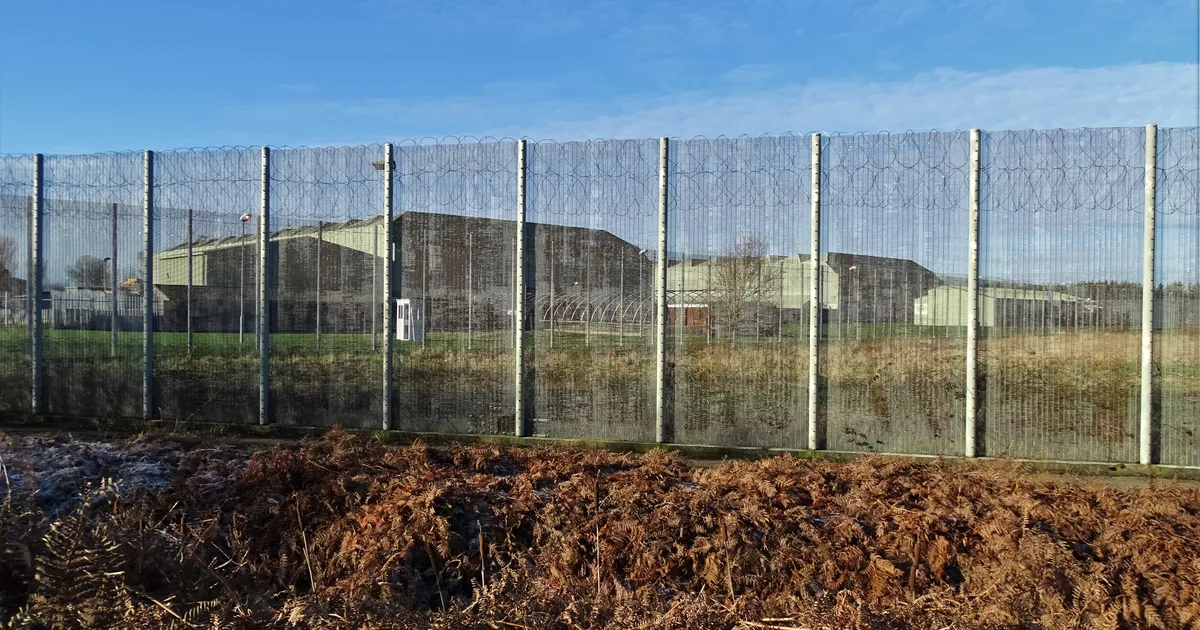
HMP Lindholme is a category C training prison built on a former RAF base near Doncaster, holding just under 1,000 men in a mix of converted airfield buildings and run-down cell blocks [2]. HM Chief Inspector of Prisons Charlie Taylor's team arrived unannounced on 1 June 2026 and left ten days later having identified 15 concerns, six of them priorities [2]. The report, published 1 September 2026, judged the prison "not sufficiently good" against all four of the inspectorate's healthy-prison tests: safety had not improved, and respect had deteriorated since the last visit [2]. HMPPS's written response followed on 25 September, its introduction promising actions that are "clear, outcome focussed, measurable, achievable, with clear accountability and appropriate timescales for completion" (page 2) [1]. Measured against the inspectorate's own findings and its own history of unaddressed concerns, the plan falls short on the two problems the report treats as most urgent, and on a third that ties directly to national prison capacity pressure.
A concern raised in 2023, still not addressed in 2026
Inspectors do not treat HMP Lindholme's drug problem as new. Their record of "Progress on concerns from the last inspection" shows that in 2023 they raised, as a priority concern, that "there was a very high level of illicit drug use in the prison, which was linked to violence, debt and deaths in custody" and that "remedial action was not sufficiently comprehensive or coordinated." Their verdict on progress by June 2026: "Not addressed" [2]. In the years between, the harm the 2023 report warned about arrived. The 2026 report's introduction records that "the scale of drug use continued to undermine safety, causing at least one death, fuelling debts and bullying, and damaging any chance some of the most vulnerable prisoners had to make progress" [2]. The report's numbered priority concern is blunter still: the abuse of drugs "had contributed to one death in custody since our last inspection, with possible links to other deaths yet to be classified" [2].
The 2026 action plan's answer is built from the same categories of measure the 2023 concern already found insufficiently coordinated: a quarterly review of the Supply Reduction Strategy and Drug Strategy Action Plan (December 2026), a review of "learning from drug-related incidents and deaths in custody" through governance forums (January 2027), strengthened supply-reduction searches and disruption reviewed monthly (December 2026), and maintaining and developing "the prison's drone defence strategy to identify, deter and disrupt drone activity, in conjunction with South Yorkshire Police" (February 2027) (page 3) [1]. A "comprehensive Mandatory Drug Testing programme" using suspicion, frequency and risk-based testing is not due until January 2027 either (page 4) [1]. Nowhere does the plan acknowledge that this is the second time round on the same concern, or set a date by which the positive-testing rate the inspectorate found "in excess of 30%" should actually come down.
A second concern, unaddressed since 2023, handed to a 2027 law
The same "Progress on concerns from the last inspection" record shows a second priority concern from 2023 also marked "Not addressed": prisoners "requiring transfer to specialist inpatient facilities under the Mental Health Act were waiting too long," with one man in that category held in the segregation unit "for more than four months" [2]. By 2026 the same failure had resurfaced as priority concern 11, "patients waited too long to transfer to hospital under the Mental Health Act" [2].
The action plan's answer does not describe a local fix. It describes a national one, and a distant date: "The Mental Health Act 2025 introduces a new statutory time limit of 28 days for transfers from prison and other places of detention to hospital. This reform is due to commence by December 2027, and health and justice partners remain committed to commencing this reform in the published timeframe" (page 11) [1]. The only step with an earlier date is a "fortnightly escalation meeting" between NHS England and healthcare providers to discuss individual cases, already marked "Complete" (page 12) [1]. For a concern the inspectorate has now marked unaddressed across two inspections, the substantive remedy is a statutory deadline more than a year away, owned by MoJ and NHS England nationally rather than by the prison the report is about.
Resettlement demand is up now; the plan's answer is dated 2027
The report's final concern connects HMP Lindholme to a pressure playing out across the prison estate: "resources allocated to resettlement had not kept pace with the substantial increase in the number of releases" [2]. The action plan's response does not add resettlement resourcing now. It points to a future recommissioning process, "HMPPS is preparing to recommission its rehabilitative services. It is intended that future combined-pathway contracts will include support for all people in prison and will have greater flexibility to respond to local changes" (target July 2027), and to reducing the demand at Lindholme itself by supporting "the prison's return to its Category C training function through population management arrangements, reducing resettlement demand" (target February 2027) (page 14) [1]. Both routes shrink or redirect demand over the next 16 to 22 months; neither adds resettlement capacity to meet the releases happening now.
A target date that had already passed
The plan's introduction promises timescales that are "clear" and "appropriate" (page 2) [1]. One of them was not. Responding to concern 6, that "many prisoners were frustrated at the lack of opportunity to complete offence-focused work," the plan commits to "recruit and deploy an additional Programmes Team to increase intervention delivery capacity" with a target date of January 2026 (page 7) [1], eight months before the plan itself was submitted on 25 September 2026. Whether the recruitment happened on schedule or the date is simply a drafting error, a document billed as giving readers "clear accountability and appropriate timescales" should not carry a completion date for a still-listed concern that had already elapsed before publication.
The claims, tested
| The claim | What the evidence shows | Verdict |
|---|---|---|
| The plan's actions are "clear, outcome focussed, measurable, achievable, with clear accountability and appropriate timescales for completion" (page 2) [1] | The drug-testing and drone-defence measures for concern 1 run to January and February 2027; one action against concern 6 carries a target date of January 2026, already past at submission (pages 3, 4, 7) [1] | Several timescales are long-dated relative to the harm found, and one had already lapsed |
| HMP Lindholme's drug problem is being addressed through a strengthened Supply Reduction Strategy, drone defence strategy and drug testing (pages 3-4) [1] | The same category of measures was already in place before the 2023 inspection found "remedial action was not sufficiently comprehensive or coordinated," a concern HMIP marked "Not addressed" in 2026, after a death in custody [2] | The plan does not explain what is different this time, for a concern now linked to a fatality |
| Mental Health Act transfer delays are being addressed nationally, with a 28-day statutory limit "due to commence by December 2027" (page 11) [1] | The same concern was marked "Not addressed" from 2023, when one man was held in segregation for transfer for more than four months [2] | The only local, dated action is a case-discussion meeting already marked complete; the substantive fix is a national deadline over a year away |
Four documented mistakes. First, the plan's response to HMP Lindholme's drug problem, marked "Not addressed" by inspectors since 2023 and now linked to a death in custody, does not finish (Mandatory Drug Testing, drone defence strategy) until January and February 2027, without acknowledging the concern's repeat status. Second, its response to Mental Health Act transfer delays, also marked "Not addressed" since 2023, rests on a national law reform "due to commence by December 2027" rather than any dated local remedy. Third, its response to resettlement resourcing not keeping pace with rising releases points to a services recommissioning process (July 2027) and a prison category change (February 2027), neither adding resettlement capacity for releases happening now. Fourth, one action against a separate concern carries a target date of January 2026, eight months before the plan was submitted. Rated three stars out of five.
Credit where due
Inspectors did find things worth keeping. They singled out "excellent joint working between the prison, police and other agencies" that was "helping to disrupt the supply of illicit drugs," and a "safety club" that "provided a supportive environment for vulnerable prisoners and helped to develop positive engagement between prisoners, peer workers and staff" [2]. Some of the plan's other responses carry real, near-term commitments rather than open-ended process: GP clinics increase from four to six sessions a week by January 2027 (page 4) [1], a single prison movement model to cut delays affecting education and work attendance is due by October 2026 (page 6) [1], and access to Buvidal treatment for prisoners on the drug recovery pathway is set to expand by January 2027 (page 10) [1]. The governor, in post a year at the time of inspection, was credited with bringing stability and clearer expectations after a period of "considerable operational pressure" from a "substantial increase in population churn" [2].
Verdict
Three stars, from four documented mistakes. The prison's own inspectorate has now marked the same two priority failings, drugs linked to deaths in custody and Mental Health Act transfer delays, as unaddressed across two separate inspections three years apart. The plan submitted in response neither names that history nor sets a date that lands before 2027 for either one, and its response to rising resettlement demand shrinks the problem rather than resourcing it. A prison that brought real, dated improvements to primary care and drug treatment access has not brought the same discipline to the concerns its own inspectors call most urgent.
Sources
- HM Prison and Probation Service, "HMP Lindholme Action Plan - 25 September 2026" (PDF, submitted 25 September 2026, published on GOV.UK, checked 30 September 2026). https://assets.publishing.service.gov.uk/media/6aba26028cb3c0580e50122e/HMP_Lindholme_action_plan_-_September_2026.pdf - landing page: https://www.gov.uk/government/publications/lindholme-prison-action-plan
- HM Inspectorate of Prisons, "HMP Lindholme" (report on an unannounced inspection, 1 to 11 June 2026, published 1 September 2026, checked 30 September 2026). https://hmiprisons.justiceinspectorates.gov.uk/hmipris_reports/hmp-lindholme-4/