HMP High Down nurses hand-poured and mislabelled individual doses of methadone for at least three years before carrying them to the wings, inspectors found. The prison's answer, published this month, promises only to review the options by November.
Estimated reading time: 6 minutes
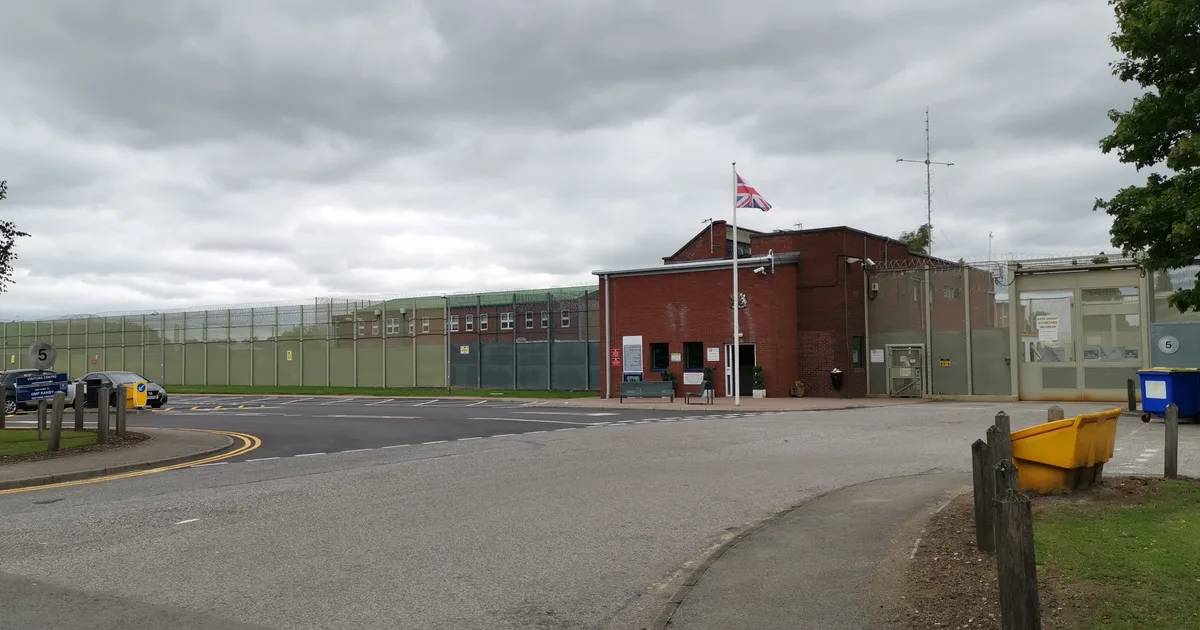

In short. HM Chief Inspector of Prisons Charlie Taylor's own account of what happens next at HMP High Down says continued improvement "is dependent on the prison service providing resources for refurbishment and security upgrades" [2], written straight after noting that "ingress using drones by criminal gangs was common and the prison service had not done enough to make the windows more secure" [2]. HM Prison and Probation Service's 13-page action plan, published the same week as the report, does not mention windows, drones, refurbishment or capital once, answering the same concern with deep cleaning and drug testing [1]. Its response to a separate finding, that healthcare staff had "routinely used nurses to re-pour and label individual doses of methadone before transporting them to wings" for "at least three years", in a way "not in line with professional nursing standards" [2], is a commitment to review the options by November 2026, not a fix, with no date anywhere for when the practice itself stops [1]. And a staffing gap inspectors say was "a major cause of frustration for those who wished to reduce their risk or be recategorised to open prisons" [2] gets a recruitment drive marked simply "ongoing" [1]. Three documented mistakes: four stars.
On 1 June 2026, inspectors from HM Inspectorate of Prisons arrived unannounced at HMP High Down, a category C prison holding 1,085 men in Sutton, south London [2]. Eleven days later they left with 15 concerns, seven of them marked priority [2]. The report was published on 7 September 2026, and HM Prison and Probation Service's written response followed on 22 September, appearing on GOV.UK the next day [1]. On the two findings that matter most, it does not answer the question the inspectors actually asked.
A three-year practice, and a review
Among the findings HMIP grouped under health services was a specific, dated one. "The provider also dispensed controlled drugs as stock to The Forward Trust for opiate substitution," the report records. "For at least three years, they had routinely used nurses to re-pour and label individual doses of methadone before transporting them to wings, which was not in line with professional nursing standards. All other opiate substitution medicines were administered from stock, rather than named patient boxes, which carried risks" [2].
The action plan's response, at concern 13, commits to a process rather than a result: "A robust and thorough review of current practice will be conducted that will involve NHSE, HMPPS on site and the providers of substance misuse treatment alongside the lead provider of healthcare, CNWL," covering an assessment of current distribution arrangements, whether patients could switch to alternative medication, and whether the affected population could be managed from a single medication hatch. "Following the joint review, options for resolution will be agreed by key partners with an action plan put in place" (page 12) [1]. The owner is NHS England's Health and Justice team for the South East; the target date is November 2026 (page 12) [1]. That date is for agreeing which options to pursue. Nothing in the 13 pages sets a date for when nurses stop re-pouring and hand-labelling controlled drugs before carrying them across the prison.
The windows the plan does not mention
Charlie Taylor's own overview of the inspection, printed ahead of the findings, is blunter than anything in the numbered concerns. "Drugs continued to be a major risk to the prison with 19% of random tests coming back positive," he writes, adding that "ingress using drones by criminal gangs was common and the prison service had not done enough to make the windows more secure" [2]. His closing assessment is explicit about what continued progress requires: "This was a generally positive inspection and if the current leadership team continue in post there is good reason to expect further improvements. This is dependent on the prison service providing resources for refurbishment and security upgrades" [2].
The action plan's response to the drugs concern is built entirely around strategy, testing and intelligence: a "refreshed Drug Strategy", "enhanced intelligence gathering", the "extensive mandatory drug testing programme", and closer work "with security partners, in particular with the Police, to detect and deter conveyance" (pages 3 to 4) [1]. Its response to living conditions, the first priority concern, is deep cleaning, "Accommodation Fabric Checks" and replacing curtains (page 3) [1]. Searching the full text of the action plan for the words the Chief Inspector used to describe what improvement depends on turns up nothing: "window", "drone", "refurbish" and "capital" do not appear anywhere across all 13 pages. The document that is supposed to answer the inspection does not engage with the one condition its own inspector attached to further progress.
A staffing gap with no end date
The report's leadership section names a second consequence of thin staffing that the numbered concerns understate. "The offender management unit was understaffed, which meant that support was limited to prisoners approaching a key sentence milestone," it says. "This was a major cause of frustration for those who wished to reduce their risk or be recategorised to open prisons" [2].
The action plan's response, at concern 6, is recruitment activity without a completion date: "Substantive recruitment to Probation Service Officer (PSO) posts is ongoing. Senior leaders will continue to closely monitor recruitment pipelines and workforce forecasts to minimise the impact of any delays... In the interim, local managers have been encouraged to utilise agency staff to provide temporary cover for staffing gaps" (page 7) [1]. The target date given is "Ongoing" (page 7) [1] - ongoing, with no measure attached, for a gap the inspectorate says is already blocking the exact recategorisation process this action plan is supposed to unblock.
The claims, tested
| The action plan's own words | What the inspection report says | Verdict |
|---|---|---|
| Living conditions and drugs are being addressed through deep cleaning, Accommodation Fabric Checks and an "enhanced" drug strategy (pages 3-4) [1] | The Chief Inspector says drone-delivered contraband exploits insecure windows, and further improvement "is dependent on the prison service providing resources for refurbishment and security upgrades" [2] | The plan does not mention windows, drones, refurbishment or capital once; it answers a security-infrastructure problem with cleaning and testing |
| An unsafe methadone-handling practice will be resolved through "a robust and thorough review," options agreed by November 2026 (page 12) [1] | Nurses had "routinely" re-poured and mislabelled controlled drug doses "for at least three years," a practice inspectors call "not in line with professional nursing standards" [2] | November is a deadline to agree what to do, not to stop doing it; no date exists anywhere for ending the practice itself |
| Offender management staffing will improve through recruitment that is "ongoing," with agency cover in the interim (page 7) [1] | Understaffing was "a major cause of frustration for those who wished to reduce their risk or be recategorised to open prisons" [2] | An open-ended timeline for a gap the inspectorate says is already obstructing the outcome the plan is meant to deliver |
The mistakes, counted
The plan does not address the specific condition its own inspector attached to further improvement (1). Charlie Taylor names capital investment in refurbishment and window security as what continued progress depends on; the 13-page response does not use the words windows, drones, refurbishment or capital once.
A three-year unsafe medicines practice gets a review of options, not a fix, and no date for when it ends (2). November 2026 is when partners agree what to do about hand-poured, hand-labelled methadone doses, not when the practice stops.
A staffing gap inspectors link directly to blocked recategorisation gets an open-ended answer (3). "Ongoing" recruitment, backed by agency cover, carries no date by which the offender management unit will actually be staffed to the level the report says prisoners need.
Credit where due
The inspection found real improvement since HMIP's last visit in 2023: scores for safety and purposeful activity both moved up a band, from "not sufficiently good" to "reasonably good" and from "poor" to "not sufficiently good" respectively, and there had been no self-inflicted deaths in the prison since the last inspection, with self-harm running 22% lower [2]. Some of the plan's responses are genuinely completed, not promised: a revised offender management model introduced on 1 June 2026 already gives every new prisoner an in-person meeting with their Prison Offender Manager within two weeks of arrival (page 7) [1]; the confidential complaints-box collection process has already been fixed (page 10) [1]; and a full review of Do Not Attempt Cardiopulmonary Resuscitation records is marked complete (page 11) [1]. Other responses carry real numbers, not just intentions: a 90% target for attendance and unlock in education (page 5), a 100%-acknowledgement and 95%-response target for healthcare complaints (page 11), and a target of 100% of learners receiving written feedback (page 6) [1]. Inspectors also singled out practice worth keeping: nearly all officers trained in life support, defibrillator use and naloxone administration; a dedicated neurodiversity service assessing prisoners within eight weeks; and family-support work with Pact and Sutton Council that both sides described as genuinely useful [2].
Verdict
Four stars, from three documented mistakes. The improvement since 2023 is real, and several of the plan's answers are completed work, not paperwork. What does not survive contact with the inspection report is the shape of the response to the concerns that matter most: cleaning and testing answer a security-infrastructure problem the Chief Inspector says needs capital investment, a review answers a three-year unsafe medicines practice with no date for when it stops, and "ongoing" answers a staffing gap inspectors say is already keeping prisoners from progressing toward release.
Sources
- HM Prison and Probation Service, "HMP High Down Action plan - 7 September 2026" (PDF, submitted 22 September 2026, published on GOV.UK 23 September 2026, checked 24 September 2026). https://assets.publishing.service.gov.uk/media/6ab3c110fe72ed1e2b02ef2a/HMP_High_Down_action_plan_-_Sep_2026.pdf - landing page: https://www.gov.uk/government/publications/high-down-prison-action-plan
- HM Inspectorate of Prisons, "HMP High Down" (report on an unannounced inspection, 1 to 11 June 2026, published 7 September 2026, checked 24 September 2026). https://hmiprisons.justiceinspectorates.gov.uk/hmipris_reports/hmp-high-down-4/