For 388 days after launch, Home Office staff had no way to correct wrong personal data on a border watchlist that risked wrongly detaining travellers. The regulator's own fining rules name duration as grounds for more than a reprimand.
Estimated reading time: 6 minutes
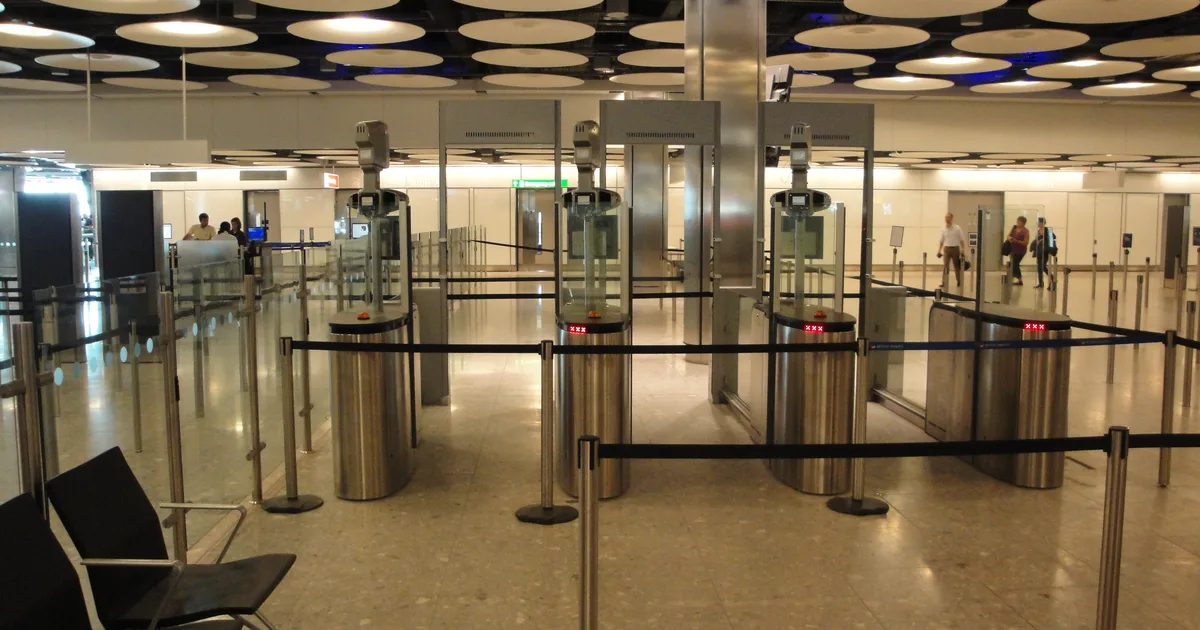

In short. On 25 November 2026 the Information Commissioner's Office reprimanded the Home Office over Helios, the border-control watchlist platform that replaced the previous system on 2 October 2024 "without appropriate measures to ensure that inaccurate personal information could be easily reported and quickly corrected" [1]. The ICO's own account states that from 2 to 11 October 2024, staff sent 87 rectification requests that could not be processed, that no temporary reporting system existed until 25 October 2025, 388 days after launch, and that by March 2026, nearly eighteen months after go-live, "more than 6,500 incidents had been raised" [[1]]. The ICO's own current fining guidance says a failure's "duration" makes a penalty notice "likely" absent outweighing mitigation, and names cases with "a clear imbalance of power between the data subjects and the controller" as ones that should carry more weight [3]. The outcome was a reprimand, the lightest sanction the ICO has [2]. Two documented mistakes: four stars.
A traveller stopped at the UK border has no real leverage. They cannot choose a different immigration service, cannot see the record being checked against them, and cannot correct it themselves if it is wrong. That is precisely the kind of relationship data protection law treats as high risk, and it is precisely the relationship the Information Commissioner's Office found broken when it reprimanded the Home Office over Helios on 25 November 2026 [[1]]. The interesting part of this case is not that the ICO found a failure. It is that the regulator's own published rules for choosing between a reprimand and a fine point toward the heavier option, using language that matches this case closely, and the ICO chose the lighter one anyway without saying why.
The claims, tested
| The ICO's own criteria | What the ICO's own Helios reprimand discloses | Verdict |
|---|---|---|
| "If the Commissioner decides that the infringement was serious, having regard to those factors [its nature, gravity and duration], then it is likely that the Commissioner will issue a penalty notice, unless there are mitigating factors that outweigh that assessment" [[3]] | Helios went live on 2 October 2024 with no process to correct inaccurate records. From 2 to 11 October 2024, Home Office staff sent 87 rectification requests that the old team could no longer act on. No temporary reporting system existed until 25 October 2025, 388 days later. By March 2026, nearly eighteen months after launch, "more than 6,500 incidents had been raised through this system and around 5,000 incorrect records had been removed" [[1]] | A failure that ran, by the regulator's own timeline, for the better part of a year and a half before the correction backlog was substantially cleared is a textbook duration case under the Commissioner's own test. The reprimand does not explain what mitigating factors were found to outweigh that duration |
| The Commissioner "may also give more weight" to the seriousness of an infringement "where there is a clear imbalance of power between the data subjects and the controller" or "the processing involves personal data of other vulnerable people who need extra support" [[3]] | The ICO's own reprimand says the failure "had the potential to result in people being wrongly detained at the UK border for additional checks, potentially causing psychological distress and other adverse consequences" [[1]] | A traveller facing a border check has no practical power over the Home Office's processing of their record, which is close to the definition of the power imbalance the Commissioner's own guidance names as an aggravating weight. The reprimand discloses the harm but does not address why this named factor did not move the case toward a penalty notice |
A year and a half, in the regulator's own words
The Home Office's account of what happened, as the ICO tells it, is specific. Helios is a "federated system" that replaced an older platform in which "a dedicated team corrected information inaccuracies in real time" [[1]]. Under the new model, staff could not amend records themselves; corrections had to be reported to and made by "the owner of the original source data" [[1]]. The ICO's own text says there was, at launch, "no dedicated system in place to report inaccurate personal information," and that staff were separately "told not to include personal information when reporting inaccuracies," a combination the regulator itself says "made it virtually impossible to provide the necessary information to correct a person's record" [[1]].
That is the starting condition on 2 October 2024. The ICO's timeline then runs: 87 ignored requests in the first nine days; an unspecified gap; a temporary workaround on 25 October 2025; and a disclosed backlog of over 6,500 incidents by March 2026 [[1]]. Nowhere in the regulator's own account does a date appear for when the Home Office is expected to have a permanent fix in place. The reprimand's own closing language is prospective, not confirmed: the ICO says it "recognises the steps the Home Office has taken" so far and states that the Home Office "must ensure that its permanent solution provides a robust and effective way to identify and correct inaccurate information," phrasing that describes an expectation, not a result [[1]]. Two years after launch, the only document in public confirming the fix is complete is this reprimand, and it does not confirm that.
What the regulator's own rulebook says about duration
The 2018 Regulatory Action Policy's sections on fines were replaced in March 2024 by the ICO's current Data Protection Fining Guidance, published under the Commissioner's statutory duty in section 160 of the Data Protection Act 2018 [[3]]. That guidance is explicit about what makes a penalty notice likely rather than a reprimand: the Commissioner assesses "nature, gravity and duration," and where that assessment finds the infringement serious, "it is likely that the Commissioner will issue a penalty notice, unless there are mitigating factors that outweigh that assessment" [[3]]. The same guidance separately instructs the Commissioner to give more weight to seriousness where there is "a clear imbalance of power between the data subjects and the controller" or where "vulnerable people who need extra support" are affected [[3]].
Both tests point the same way here. Duration: 388 days with no correction route at all, followed by a backlog measured in the thousands for months afterward. Power imbalance: a border checkpoint is as close to a textbook asymmetric relationship as data protection law gets, and the ICO's own harm description, wrongful detention and psychological distress, is the kind of consequence the guidance's power-imbalance language is written to catch. None of this means the ICO's overall judgement was wrong; reprimands exist precisely because not every serious failure needs a fine. But the regulator's own published reasoning for when a fine, not a reprimand, becomes "likely" is not addressed anywhere in the document announcing the opposite outcome.
Credit where due
The underlying investigation is thorough and the disclosure is unusually specific for a reprimand. The ICO names the exact nine-day window in which the first 87 requests failed, the exact date the Home Office introduced its temporary fix, and a running total of incidents and corrected records, numbers a regulator could easily have left out of a short enforcement notice [[1]]. The ICO also explicitly acknowledges the operational difficulty of the system it is criticising, writing that it "recognises that federated systems like Helios present unique challenges," rather than treating a generic platform migration as a simple rule-breaking case [[1]]. The Home Office, for its part, is recorded as having "acknowledged" during the investigation that staff may not have known how to report inaccuracies at all, a degree of candour that does not always survive contact with a regulator [[1]]. Nothing here suggests the ICO's investigation was anything other than careful.
Verdict
Four stars, two documented mistakes. The ICO's own reprimand is a detailed, specific account of a border data system that ran for well over a year without a working way to fix wrong information about people, with a disclosed risk of wrongful detention. The same regulator's own current fining guidance names duration and power imbalance as the two tests most likely to point toward a penalty rather than a reprimand, and this case matches both descriptions closely. The reprimand does not say why those tests, on the regulator's own terms, did not apply here. That gap does not show the sanction was wrong. It shows the regulator's reasoning for choosing it was not shown.
The star score counts two documented mistakes. First, the ICO's own Data Protection Fining Guidance says a penalty notice is "likely" once an infringement is assessed as serious based on its "nature, gravity and duration," and this reprimand's own disclosed timeline, 388 days from Helios going live to a temporary fix, and a backlog still being cleared nearly eighteen months later, meets that description without the reprimand explaining what mitigating factors outweighed it. Second, the same guidance says the Commissioner gives more weight to seriousness where there is "a clear imbalance of power between the data subjects and the controller", which describes a traveller facing a border check, and the reprimand's own disclosed harm, wrongful detention risk and psychological distress, matches that description without being addressed against it. Two falls in the 1 to 3 band: four stars; the bands are on the ratings page. This piece makes no finding that the reprimand was the wrong sanction, only that the regulator's own published criteria for choosing a heavier one are not addressed in the document that chose the lighter one. Checked directly against the ICO's 25 November 2026 reprimand, its enforcement action register entry, and its current Data Protection Fining Guidance, all current to 26 November 2026.
Sources
- Home Office reprimanded after personal information failings at UK border, Information Commissioner's Office, published 25 November 2026.
- Enforcement action: Home Office, Information Commissioner's Office, dated 25 November 2026.
- Data Protection Fining Guidance: Seriousness of the infringement, Information Commissioner's Office, published March 2024.