A planning power meant for urgent developments was used to retrospectively legalise Manston's migrant centre, already unlawful for almost four years. The one document meant to explain why that counted as urgent was never published.
Estimated reading time: 7 minutes
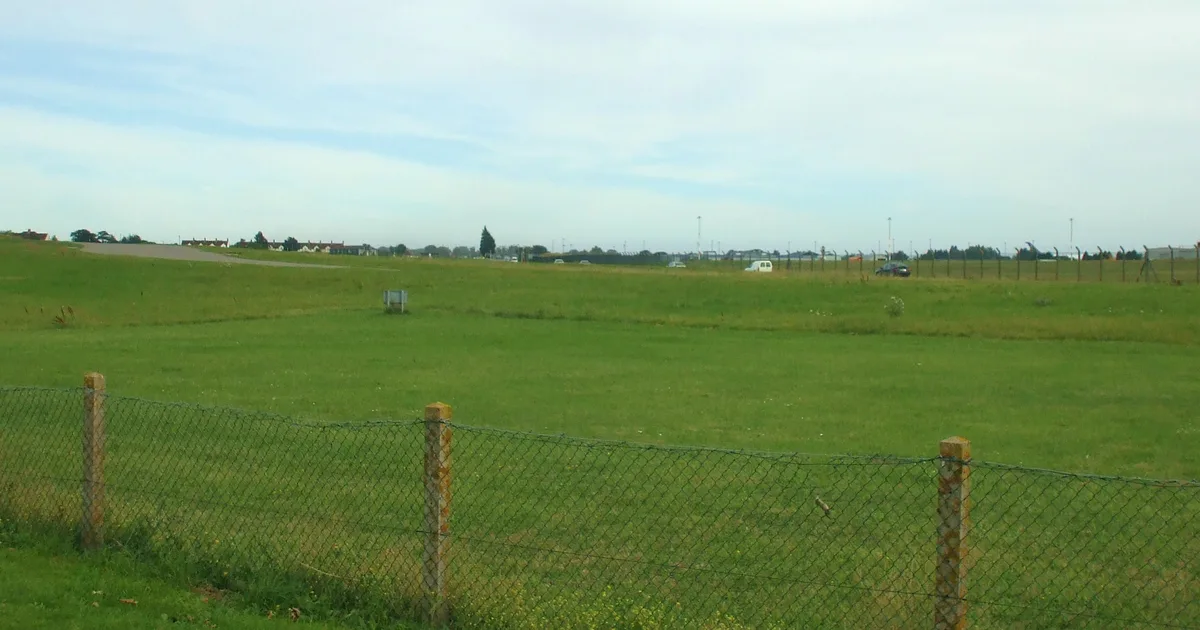

In short. The Home Office's planning application for the Manston migrant processing centre in Kent was approved on 24 February 2026 under the Urgent Crown Development power, which MHCLG's own guidance says is for development "needed as a matter of urgency" where the applicant shows "the likely consequences of not securing a decision within the accelerated timeframe" [4]. What was actually approved was retrospective permission: the Home Office's own planning statement says the site "has been operating without planning permission since early 2022" [2], and the Secretary of State's own decision letter confirms the application "seeks retrospective consent" [3]. The one document meant to set out why that counted as urgent, the "Statement on National Importance and Urgency," was never published, even in redacted form, and the decision letter cannot agree with itself on when the application was even submitted. Three documented mistakes: four stars.
A government department asking the Secretary of State to bypass the ordinary planning system has to show two things: that the development is nationally important, and that it is genuinely urgent. Reading the first application ever decided under that power shows what "urgent" turned out to mean in practice.
A power built for developments that have not happened yet
Sections 293B to 293E of the Town and Country Planning Act 1990 [6], inserted by the Levelling-up and Regeneration Act 2023, let an "appropriate authority" apply to the Secretary of State directly for planning permission rather than to the local council, where the development is of "national importance." A faster sub-route, Urgent Crown Development, is available where the development is additionally "needed as a matter of urgency" [4]. MHCLG's own guidance on the power, last revised 12 May 2025, spells out what that test actually requires: the Secretary of State will treat a case as urgent only where "the applicant can demonstrate the need for an expedited planning process," showing that "the proposed development will need to be made operational to an accelerated timeframe," with "evidence of the likely consequences of not securing a decision within the accelerated timeframe" [4]. Every verb in that test points forward, to a development that has not yet happened and cannot wait. The guidance's own text, read in full, does not use the word "retrospective" once [4].
Manston is the case that tested that framing against reality, and it did so first. The Home Office's own collection page for the route records only two applications ever made under it: Manston, added 22 October 2025, and the MOD Bicester asylum site, added almost eleven months later, on 2 September 2026, and still undecided as of this week [5]. Manston's application, by contrast, was decided on 24 February 2026, the first Urgent Crown Development decision the power has produced [1].
Urgent, four years after the fact
What Manston's application actually asked for was retrospective planning permission for a site already built and already running. The Secretary of State's decision letter is direct about it: the Home Office "took possession of the site in December 2021, establishing the ITPC at speed in response to unprecedented small boat arrivals. This initial use took place without planning permission, and the current application seeks retrospective consent for that development" [3]. The Home Office's own planning proposal statement, prepared for the application, is blunter still: "The Manston Reception Centre (MRC) has been operating without planning permission since early 2022 and was set up at speed to deal with the unprecedented arrivals that came to the UK in 2021 and 2022... The planning proposal seeks to regularise the existing use of the site" [2].
The decision letter also records why the Secretary of State decided refusal was not a realistic option by this point: the existing infrastructure is "temporary, sub-optimal, and operating without the benefit of planning permission," and failing to replace it "would therefore risk recurrence of the operational pressures that contributed to the 2022 overcrowding incident" [3], the same overcrowding scandal that made Manston a byword for conditions at the UK's migrant reception sites. That is a real and serious consideration. It is also, read plainly, an urgency created by nearly four years without planning permission rather than a new, time-critical proposal. The power exists, on MHCLG's own description of it, to let a development go ahead quickly when delay would be costly. Here, the delay had already happened, caused by the applicant's own earlier decision to build without permission, and the "urgent" decision was the one legalising it after the fact.
The one document the public cannot see
The Home Office's planning proposal statement lists the documents submitted alongside it, including "Statement on National Importance and Urgency (Confidential)" [2], and says plainly that "a separate statement setting out the reason why the proposal at Manston is both nationally important and urgent has also been submitted" [2]. That document does not appear among the ten files published on the application's own gov.uk page, not as a full version and not as a redacted one [1]. The published set runs to the planning proposal statement itself, the cover letter, an engagement report, technical surveys and the final decision documents, and stops there.
This is a step back from the precedent this site has already examined. The Home Office's Statement of National Importance for the later Bicester asylum site was published in full, with specific passages redacted and a legal basis cited for each [1]. For Manston, the equivalent document, covering the central legal test the whole decision turns on, is not published in any form. The public is told the test was met. It cannot read the case that was made for meeting it.
The paperwork cannot agree on when it started
The Secretary of State's own decision letter contradicts itself on the application's basic timeline. On page 2, it states: "The Urgent Crown Development planning application was received on 26 July 2025 and validated on 22 October 2025" [3]. On page 4, describing the same application, it states: "The application was formally submitted on 26 June 2025 for determination under the Urgent Crown Development procedure" [3]. The two dates, a month apart, cannot both be the date this application arrived.
The live gov.uk page adds a third figure rather than resolving the other two. Its summary panel states "Date validated: 24 February 2026" [1], the same date as the decision itself, four months after the 22 October 2025 validation date given twice in the decision letter published on that same page. None of this changes the outcome. It does mean that for the first decision made under a novel power bypassing the ordinary council planning process, the government's own published record cannot tell a reader, without contradiction, when the clock on the application actually started.
Credit where due
The decision letter does not hide the central fact this piece turns on. It states outright, twice, that the Manston facility had been built and run without planning permission since 2021, and that the application sought retrospective consent, rather than describing the history in terms that might obscure it [3]. It also records that statutory consultation took place with Thanet District Council, Kent County Council, the Environment Agency, Natural England, National Highways and the Ministry of Defence, and that none raised an objection subject to conditions [3], a genuine multi-body check this piece makes no finding was skipped or rushed.
The claims, tested
| The document's own words | What the record shows | Verdict |
|---|---|---|
| MHCLG guidance: Urgent Crown Development is for a development that "will need to be made operational to an accelerated timeframe," with evidence of the "consequences of not securing a decision" in time [4] | The Home Office's own documents say the Manston site "has been operating without planning permission since early 2022" and the application "seeks retrospective consent" [2] [3] | The first decision made under a power framed for forward-looking urgency legalised almost four years of unauthorised operation |
| The applicant's own planning statement says "a separate statement setting out the reason why the proposal... is both nationally important and urgent has also been submitted" [2] | No version of that statement, full or redacted, appears among the ten documents published on the application's gov.uk page [1] | The document explaining the central legal test is withheld entirely, a step back from the later Bicester application, where the equivalent statement was published with redactions |
| The decision letter states the application "was received on 26 July 2025" (page 2) [3] | The same letter states it "was formally submitted on 26 June 2025" (page 4) [3], and the live gov.uk page gives a third date, 24 February 2026, for validation [1] | Three different dates for when the same application started, none reconciled, across the government's own published record |
The star score counts three documented mistakes: the gap between MHCLG's own guidance describing Urgent Crown Development as a forward-looking power for developments not yet operational, tested against the Home Office's own admission that the Manston site had already run without planning permission for almost four years before this retrospective approval; the applicant's own reference to a "Statement on National Importance and Urgency" as submitted with the application, tested against its total absence from the published document set, in any form; and the decision letter's internal contradiction on the application's own received date (26 July 2025 against 26 June 2025), compounded by a third, unreconciled validation date on the live gov.uk page. Three mistakes in the 1-to-3 band: four stars; the bands are on the ratings page. This piece makes no finding that the statutory consultation was inadequate, that the decision to grant permission was wrong on its planning merits, or that any official acted improperly; the Secretary of State's own reasoning on the planning merits, and the genuine operational pressures behind the original 2021 decision to build without permission, are not disputed here. Checked directly against the Manston application's gov.uk page, the Home Office's Manston Planning Proposal Statement, the Secretary of State's decision letter and annexes (all fetched 8 October 2026), MHCLG's general Crown Development guidance, and the applications-and-decisions collection page listing every application made under the route to date.
Sources
- Urgent Crown Development application: Manston Initial Triage and Processing Centre, Reception Centre and Training Facility, Ministry of Housing, Communities and Local Government
- Manston Planning Proposal Statement, Home Office / Cushman & Wakefield, September 2025
- Final decision documents (includes the Manston Decision Letter, 24 February 2026), Ministry of Housing, Communities and Local Government
- Crown Development guidance, Ministry of Housing, Communities and Local Government, revised 12 May 2025
- Crown Development and Urgent Crown Development: applications and decisions, Ministry of Housing, Communities and Local Government
- Town and Country Planning Act 1990, section 293B, legislation.gov.uk