Immigration Enforcement's new facial recognition procedure runs 31 pages on who can authorise a deployment. It runs none on how someone wrongly flagged can complain, appeal or reach anyone outside the Home Office.
Estimated reading time: 7 minutes
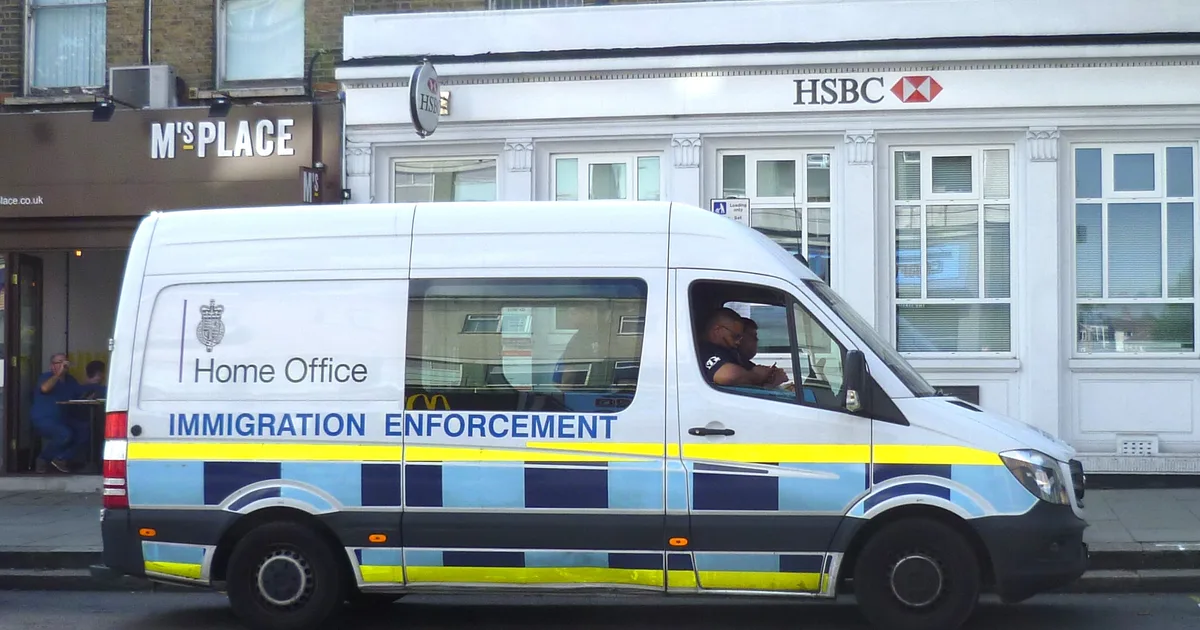

In short. Immigration Enforcement's Live Facial Recognition Standard Operating Procedure, version 2.0, "aligned with IE Live Facial Recognition Policy v2.4" [1] (p.4), sets out who can authorise, run and review a deployment of facial recognition cameras against the public. Deployments need sign-off from "an appropriately trained Grade 7 or above Authorising Officer" [1] (p.6), a Gold, Silver and Bronze command structure (p.15), a programme-level Senior Responsible Owner (p.8) and, for higher-risk locations, "Deputy Director (G5)-level oversight" (p.9-10). Every one of those roles is Home Office or Immigration Enforcement staff. Searched in full across all 31 pages, the document contains no occurrence of the words complain, appeal, redress, compensation or independent. Two documented mistakes: four stars.
Immigration Enforcement has run live facial recognition deployments at ports and other locations since at least May 2026, when this site's first piece on the programme examined its Holyhead ferry-terminal trial [2]. Subsequent teardowns found the policy's watchlist rules silent on age despite the department's own accuracy study flagging under-20s as the technology's weakest group [3], deployment data published 231 days late [4], and a legal mandate resting partly on a court ruling that found a police force's near-identical use of the technology unlawful, twice over [5]. The document reviewed here is a different one: the operational Standard Operating Procedure (SOP) that Immigration Enforcement staff follow on the day of a deployment, rather than the policy that sets the rules behind it.
The SOP's own introduction explains the relationship between the two: "It implements the Immigration Enforcement Live Facial Recognition Policy Document, which is the source document for legality, governance, watchlist criteria, transparency, retention and oversight requirements" [1] (p.5). The GOV.UK page carrying it shows the current version last updated 19 November 2026; the document itself records that it was "published for Home Office staff on 5 November 2026" [1] (p.1), with the guidance first published on this GOV.UK page on 5 November 2025 [6].
Six signatures, all from the same building
The SOP describes its sign-off chain in detail. An Authorising Officer, "an appropriately trained Grade 7 or above", must "personally assess whether the deployment is lawful, necessary and proportionate" before approving a Written Authority Document covering up to 30 calendar days and no more than "10 deployment days" within that window [1] (p.6-7). On the day, a Gold Commander holds "strategic command", a Silver Commander holds "tactical command" and "must keep the deployment under review", and Bronze Commanders carry out the assigned activity (p.15). A Senior Responsible Owner provides "overall accountability, governance, risk, policy compliance and strategic oversight" at programme level (p.8). Where a location carries "higher privacy expectations or heightened community sensitivity", the deployment is treated as higher risk and "Deputy Director (G5)-level oversight must be obtained and recorded before deployment" (p.9-10).
That is six named layers of review: Authorising Officer, Gold, Silver, Bronze, Senior Responsible Owner and Deputy Director. The document is explicit that none of these layers substitutes for another: Deputy Director sign-off "does not replace the AO's operational authorisation decision" (p.10), and the SRO's role "does not replace the AO's operational authorisation decision" either (p.8). What the document does not say, anywhere in its 31 pages, is that any of these layers sits outside the Home Office. The only external body named in the whole document is "College of Policing APP guidance", listed once among "further documentation" for joint deployments with a police force (p.23). It is guidance that police forces write for their own use of the technology, not a check on Immigration Enforcement's.
What the public is told it will see
The SOP commits Immigration Enforcement to a post-deployment evaluation after every operation, built around a table of ten metrics: the size of the watchlist, the number of faces processed, the number of alerts, confirmed true and false alerts, outcomes following alerts, and the threshold setting used (p.18-19). Several of these carry a publication status of "may be published", but only, the table specifies, as a summary rather than in full [1] (p.18-19). Three others, including "alerts not resulting in engagement" and "true alerts requiring no further action", are marked "Normally internal assurance data" (p.18-19), not candidates for publication at all, only for the Home Office's own review.
Elsewhere, the document promises more generally that "IE will make information about LFR deployments available to the public in line with the IE LFR documents" [1] (p.21). "May be published" and "will make information available" are both discretionary commitments; neither specifies a deadline, a minimum data set or a consequence for not publishing. This site's own reporting on the same programme has already found what that discretion looks like in practice: the Holyhead trial's results arrived 231 days after the deployment it covered [4].
No mention of a way back
The SOP is detailed about what officers must do when an alert leads to an encounter. "An alert is not an automatic basis for engagement or enforcement action" and "no action may be taken solely on the basis of an LFR alert"; officers "must verify identity and status using lawful checks" and ensure "any further action is supported by a clear legal basis" [1] (p.16). It is equally clear that being unable to confirm identity "alone is not a criminal offence and does not necessarily justify arrest or enforcement action" (p.16).
What the SOP does not set out, anywhere, is what a person does next if an officer gets it wrong: stopped on the strength of a false alert, asked to prove their identity in a public place, and then released with no further action. Searched in full across the extracted text of all 31 pages, the document contains no occurrence of the words complain, appeal, redress, compensation or independent. The nearest it comes to acknowledging error is procedural, not personal: false-alert data "must be deleted within 24 hours unless a shorter period is specified" (p.20), which protects the record, not the person who was stopped because the record existed for 24 hours in the first place.
The claims, tested
| The document's own words | What the document actually contains | Verdict |
|---|---|---|
| Deployments require "lawful, necessary and proportionate" assessment at each of six sign-off layers: AO, Gold, Silver, Bronze, SRO and Deputy Director (G5) [1] (p.6-10, p.15) | The only external body named anywhere in the SOP is "College of Policing APP guidance", listed once for joint deployments with police (p.23) | Every layer of review reports to the Home Office; none reports to anyone outside it |
| The post-deployment evaluation table commits to measuring ten metrics, with several marked "may be published" as a summary rather than in full (p.18-19) | Three of the ten metrics, including alerts not resulting in engagement and true alerts requiring no further action, are marked "Normally internal assurance data" (p.18-19) | The metrics that would show how often the system gets it wrong are the ones kept internal by default |
| Officers must act lawfully and proportionately when engaging someone after an alert, with human decision-making "central throughout" (p.16) | Zero occurrences of complain, appeal, redress, compensation or independent across the full extracted text of all 31 pages | A procedure for the officer; nothing for the person stopped by mistake |
The mistakes, counted
Every layer of review that can authorise or check a deployment sits inside the Home Office (1). The SOP names six distinct roles with responsibility for sign-off or oversight: an Authorising Officer, Gold, Silver and Bronze commanders, a Senior Responsible Owner and, for higher-risk locations, a Deputy Director [1] (p.6-10, p.15). The document repeatedly stresses that these roles are independent of one another, for example that Deputy Director sign-off "does not replace the AO's operational authorisation decision" (p.10), but at no point does it describe any of them as independent of the Home Office. The single external reference in the whole document, College of Policing guidance, governs police forces' own deployments, not a check on Immigration Enforcement's (p.23).
The document names no complaints process, no appeal and no independent reviewer for anyone the system flags wrongly (2). The SOP sets out in detail what officers must do during and after an alert, including that "no action may be taken solely on the basis of an LFR alert" (p.16), but it contains no route back for the person on the other side of that alert. A full-text search of the extracted document turns up zero occurrences of complain, appeal, redress, compensation or independent, across the sign-off procedures, the watchlist rules, the retention schedule and the post-deployment evaluation alike.
Credit where due
The SOP is specific, not vague, about what happens to data when the system gets it right by not generating an alert, or wrong by generating one that turns out to be false. "Where the LFR application does not generate an alert, biometric data captured for that person is automatically and permanently deleted as part of the LFR system process" [1] (p.20), and confirmed false-alert data "must be deleted within 24 hours unless a shorter period is specified" (p.20). The document also bars anyone under 18 from an Immigration Enforcement watchlist outright (p.13), a clearer line than the Policy Document's own silence on age that this site found in October [3]. It requires advance public notice of a deployment "at least 5 days before" in most cases (p.10), and states plainly that an alert "is not an automatic basis for engagement" and that "human decision-making must remain central throughout" (p.16). None of this piece's findings suggest officers are acting in bad faith; the criticism is that the document's own accountability structure has no door that opens outward.
Verdict
Four stars, from two documented mistakes. Immigration Enforcement's facial recognition procedure is precise about chains of command and data-deletion timers, and vaguer than its own safeguards suggest about who answers for a mistake. Six named roles can authorise, run and review a deployment; none of them, on the document's own account, answers to anyone outside the Home Office, and no one wrongly flagged is told where to go next.
The star score counts two documented mistakes: every sign-off and review role in the SOP (Authorising Officer, Gold, Silver, Bronze, Senior Responsible Owner, Deputy Director) sits inside the Home Office, with the single external reference in the document governing police forces' own use of the technology rather than checking Immigration Enforcement's; and the document names no complaints process, appeal route or independent reviewer for a person stopped on the strength of a false alert, confirmed by a full-text search of the extracted document for complain, appeal, redress, compensation and independent, all with zero results. One fall in the 1 to 3 band: four stars; the bands are on the ratings page. Checked directly against the Standard Operating Procedure PDF and its GOV.UK landing page, both fetched 20 November 2026.
Sources
- Live Facial Recognition Standard Operating Procedure, version 2.0, Home Office Immigration Enforcement, published for Home Office staff 5 November 2026, checked 20 November 2026.
- "Immigration Enforcement scanned 7,500 faces at a Welsh ferry port and promised to publish the results of every deployment. Its most recent trial's results are seven months overdue, and the law meant to govern the technology is still unwritten.", Tracked Changes, 6 October 2026.
- "Immigration Enforcement's facial recognition policy runs 52 pages on who goes on a watchlist. None mention children, though its own cited study flags them as the technology's weakest group.", Tracked Changes, 9 October 2026.
- "Immigration Enforcement published its overdue Holyhead facial recognition data this month, 231 days late. Its own table records two arrests from zero recorded alerts, a week before deployments become permanent.", Tracked Changes, 25 October 2026.
- "Immigration Enforcement's legal mandate for facial recognition rests partly on a landmark court ruling. The same ruling found a police force's near-identical use of the technology unlawful, twice over.", Tracked Changes, 30 October 2026.
- Live facial recognition standard operating procedures, GOV.UK publication page, Home Office, first published 5 November 2025, last updated 19 November 2026, checked 20 November 2026.