The government's steel strategy, updated yesterday, still promises to find British Steel's owners a solution for its future. The government itself has owned British Steel outright since July.
Estimated reading time: 7 minutes
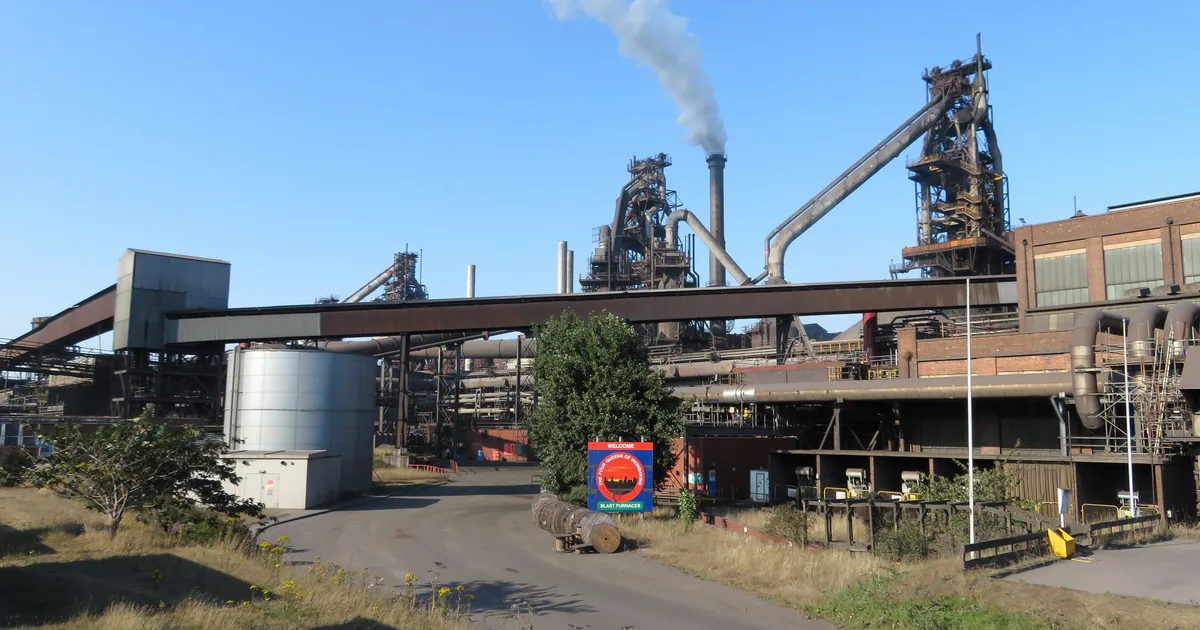

In short. The Department for Business and Trade's UK Steel Strategy, first published in March 2026 and last updated on GOV.UK on 14 October 2026 [[1]], describes the legislation that gave ministers control over British Steel's Scunthorpe blast furnaces and says: "This legislation does not alter ownership of British Steel... We continue to work with British Steel's owners to find a pragmatic, realistic solution for the future of British Steel" [[2]]. The government itself transferred British Steel into full public ownership on 16 July 2026, three months before that update, after the Steel Industry (Nationalisation) Act received Royal Assent [[3]]. The same strategy says its energy support brings costs for steel "closer in line with other major economies," then charts the result: even at its top support tier, UK industrial electricity still costs more than France's and Germany's [[2]]. And it credits itself with "5,000 jobs... secured nationwide" through the Port Talbot transition, without once stating the 2,800 jobs cut in the same restructuring [[2]] [[4]]. Three documented mistakes: four stars.
The Department for Business and Trade updated its UK Steel Strategy on GOV.UK yesterday [[1]]. The document is the government's own account of where it stands with the industry it took the unusual step of nationalising this year, and it still talks about British Steel as something with private owners. Page 22 explains the Steel Industry (Special Measures) Act, the law ministers used in April 2025 to keep Scunthorpe's last two blast furnaces running, and is careful to note that law "does not alter ownership of British Steel" [[2]]. It then says the government "continues to work with British Steel's owners to find a pragmatic, realistic solution for the future of British Steel" [[2]]. That sentence was true in April 2025. It has not been true since 16 July 2026, when a different Act, the Steel Industry (Nationalisation) Act, took effect and the company passed into the government's own hands [[3]]. The strategy does not mention that Act, or the word "nationalised," anywhere in its 72 pages.
The claims, tested
| The strategy's own words | What the record shows | Verdict |
|---|---|---|
| "This legislation does not alter ownership of British Steel... We continue to work with British Steel's owners to find a pragmatic, realistic solution for the future of British Steel" [[2]] | GOV.UK's own news release: the Steel Industry (Nationalisation) Act received Royal Assent on 15 July 2026, and "British Steel transferred into public ownership with effect immediately on 16 July 2026." The former owner, Jingye, is referred to throughout in the past tense: "it was not possible to reach an agreement with the former owner Jingye." British Steel's interim chief executive is quoted the same day: "British Steel now belongs to the British people" [[3]] | A strategy updated three months after nationalisation still writes as if the company has private owners to negotiate with |
| "We are continuing the roll out of the British Industry Supercharger as a significant measure to bring energy costs for eligible businesses in strategically important sectors like steel closer in line with other major economies" [[2]] | The strategy's own chart, sourced to its own energy-intensive-industries consultation, shows industrial electricity at £86 per MWh for Great Britain even with the full 90 percent network-charging-compensation relief, the top tier of the support the sentence describes. The same chart puts France at £69 per MWh and Germany at £60 per MWh [[2]] | The strategy's own numbers put two of the "other major economies" it names below Britain's best-supported price, not level with it |
| "In September 2024, the UK government announced an investment of £500 million in grant funding to support Tata's £1.25 billion capital project at Port Talbot Steelworks... 5,000 jobs have been secured nationwide post transition" [[2]] | Tata Steel's own statutory consultation announcement, reported at the time, confirmed around 2,800 jobs would be cut across the UK as part of the same transition, roughly three-quarters of Port Talbot's then 4,000-strong site workforce, with most of the cuts taking effect within 18 months [[4]] | The jobs the transition "secured" appear in the strategy; the jobs it cut do not appear once |
The mistakes, counted
A document updated three months after nationalisation still describes British Steel as privately owned (1). Page 22 of the strategy sets out, correctly, that the April 2025 Steel Industry (Special Measures) Act "does not alter ownership of British Steel" [[2]]. It then moves straight to a present-tense commitment to keep "working with British Steel's owners" on a "solution for the future" [[2]], the kind of language that only makes sense if ownership is still open. It has not been open since 16 July 2026. The Steel Industry (Nationalisation) Act received Royal Assent the day before, and British Steel transferred into public ownership "with effect immediately," ending talks with the former owner Jingye [[3]]. The strategy page carrying the stale sentence shows a change timestamp of 14 October 2026, the day before this piece was written, and the nationalisation does not appear anywhere else in the document's 72 pages, including the sections specifically about British Steel and Scunthorpe.
An energy-cost claim contradicted by the chart next to it (2). The strategy says its Supercharger and network-charging-compensation support bring UK industrial electricity "closer in line with other major economies" [[2]]. Turn the page, and its own chart shows what "closer" means in practice: £86 per MWh for Great Britain at the top support tier, against £69 for France and £60 for Germany, the chart's own figures, sourced to the government's own energy-intensive-industries consultation [[2]]. The strategy does not claim the gap has closed, only that it has narrowed, but the sentence sits above a chart that shows Britain still paying more than two of the specific economies the policy is pitched as catching up with.
Jobs secured are counted; jobs cut are not (3). The strategy's account of the Port Talbot transformation states the £500 million grant and the resulting "5,000 jobs... secured nationwide post transition" [[2]], alongside an "improved deal" negotiated with trade unions. It does not state, anywhere in the document, that the same restructuring Tata announced in January 2024 cut around 2,800 jobs across the UK, most of them at Port Talbot itself, a figure confirmed at the time by Tata's own statutory consultation announcement [[4]]. A strategy that names the jobs a 500 million pound subsidy secured, without naming the jobs lost in the same transition it is describing, gives a reader only one side of the ledger the subsidy was meant to balance.
Credit where due
The strategy does not hide the scale of the problem it is responding to. It states plainly that "blast furnace production... [is] reaching the end" of its working life at UK sites, and that the modern plants replacing them "will likely involve a smaller workforce" than the furnaces they succeed [[2]], an unusually direct admission for a document also trying to sell its own jobs record. On the manufacturer side, it is specific rather than vague about the £2.5 billion manifesto commitment, itemising the Port Talbot grant, the Sheffield Forgemasters investment, and the regional growth and business-support funds that make it up, with figures for each [[2]]. And on trade protection, it gives a hard date, "a new steel trade measure coming into force on 1st July 2026," rather than a vaguer promise to "consider" action [[2]].
Verdict
Four stars, from three documented mistakes. The strategy is candid about the industry's structural problems, blast furnaces ageing out, a smaller future workforce, years of overcapacity, and it is specific about where its money has gone. What it gets wrong is its own position relative to events it should already know about. Updated the day before this piece was written, it still frames British Steel's ownership as an open question for "owners" the government itself replaced three months earlier. It claims an energy policy brings Britain "closer" to competitor prices, then charts a gap to France and Germany that its own numbers leave open. And it tells readers what a 500 million pound subsidy secured at Port Talbot without telling them what the same transition cost in jobs.
The star score counts three documented mistakes. First, the strategy says the government "continues to work with British Steel's owners to find a pragmatic, realistic solution," but the government itself took British Steel into full public ownership on 16 July 2026, three months before the page's own 14 October 2026 update, and the strategy does not mention the nationalisation anywhere in its 72 pages. Second, the strategy says its energy-cost support brings steel "closer in line with other major economies," but its own chart shows UK industrial electricity, even at the top support tier, still costing more than France's and Germany's. Third, the strategy states that 5,000 jobs were "secured nationwide" through the Port Talbot transition without stating that the same transition, by Tata Steel's own January 2024 announcement, cut around 2,800 jobs. Three falls in the 1 to 3 band: four stars; the bands are on the ratings page. This piece makes no finding about the competence of any named individual; the ownership passage, the energy chart and the jobs framing are the department's drafting, not any one official's decision. Checked directly against the live strategy document, GOV.UK's own nationalisation news release, and reporting of Tata Steel's 2024 statutory consultation announcement, all fetched 15 October 2026.
Sources
- Steel strategy, GOV.UK / Department for Business and Trade, first published 19 March 2026, updated 14 October 2026
- The UK Steel Strategy, GOV.UK / Department for Business and Trade (PDF, linked from the Steel strategy page)
- Government brings British Steel into public ownership to protect UK steelmaking, GOV.UK / Department for Business and Trade, published 16 July 2026
- Tata Steel confirms 2,800 job cuts across UK as Port Talbot steel plant transitions towards electric, LBC