The Environment Agency fined Essar Oil £800,000 for 489 permit breaches and vowed to regulate Stanlow rigorously. Its own release says the company broke the same rule twice more, in 2022 and 2023, for free.
Estimated reading time: 4 minutes

In short. The Environment Agency fined Essar Oil (UK) Limited £800,000, plus £73,473 costs, after the company pleaded guilty to 12 charges over at least 489 breaches of its environmental permit at the Stanlow Manufacturing Complex between 2018 and 2020, discharging oil, chemicals and sewage towards the protected Mersey Estuary [1]. The Agency's own release quotes itself promising to "hold them to account" and "continue to regulate the facility rigorously... take enforcement action where necessary" [1]. Its own "Further information" section then discloses that two further charges over separate 2019 incidents drew no separate penalty, and that three further breaches of the identical permit condition in 2022 and 2023 were taken into consideration at the same hearing and received no further punishment at all [1]. Two documented mistakes: four stars.
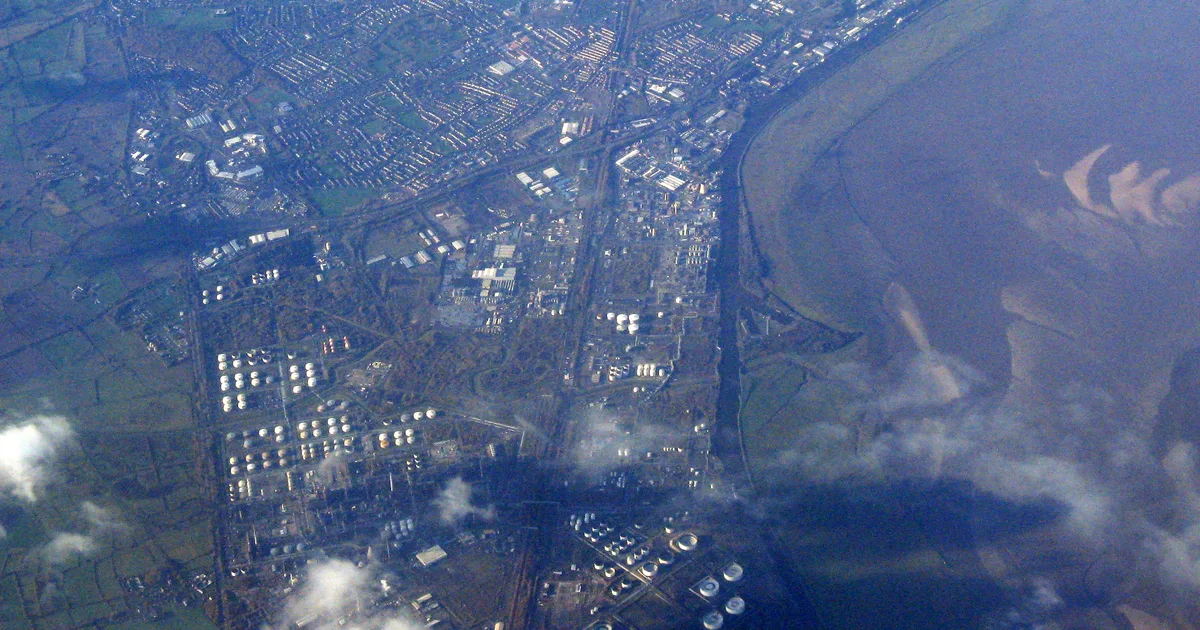
Essar Oil (UK) Limited, trading as EET Fuels, runs one of the UK's biggest oil refineries at Stanlow, Ellesmere Port, supplying around 16 percent of the country's road fuel and reporting revenue of roughly £7.6 billion in its accounts for the year to March 2025 [2]. On 19 November 2026 the Environment Agency announced the company had been ordered to pay £873,473 in total at Warrington Magistrates' Court, having pleaded guilty to 12 charges of breaching the emission limits and management conditions of its environmental permit [1]. The release is detailed about the pollution and confident about the deterrent. It is also, two sections later, candid about where that deterrent did not reach.
What the Agency says happened
Ten of the twelve charges concerned the refinery exceeding permit limits on trade effluent, including suspended solids, oil and cyanide, discharged into Thornton Brook, the River Gowy and the Manchester Ship Canal, all of which lead towards the Mersey Estuary, a Site of Special Scientific Interest and a wetland of international importance [1]. Two separate 2019 incidents were especially severe: in February, between 15 and 20 tonnes of a chemical used to remove hydrogen gas leaked into the drainage system after a vent was left open, which the company itself called "a conscious deviation from operating procedures"; in March, a contractor's vehicle reversed into an effluent pipe, discharging around 15 tonnes of partially treated sewage into Thornton Brook during repairs that took until April [1]. Agency officers reported a silver sheen of oil on the watercourses and, in January 2020, vegetation downstream of the discharge point "black with oil" [1].
Nigel Glasgow, the Agency's Area Environment Manager, is quoted setting out what the fine is meant to achieve: "Operators have a fundamental responsibility to properly manage their sites, and where they fail to do so we will hold them to account. We will continue to regulate the facility rigorously, investigate breaches and take enforcement action where necessary" [1].
The two admissions the release makes about itself
Immediately after the fine is announced, the release's own "Further information" section does two things that sit uneasily next to that quote. First: "At the hearing today, it was fined £80,000 each for 10 of the 12 offences and ordered to pay £73,473 in costs after admitting to the breaches. There was no further separate penalty for two further charges relating to separate incidents in 2019" [1]. Those two charges, numbered 11 and 12, relate to the company's breach of Condition 1.1.1 of its permit, which requires a written management system that minimises pollution risk, the same condition behind the vent-left-open chemical leak and the unassessed contractor-vehicle risk described above [1]. Two of the twelve charges the company admitted to, covering some of the release's own most vivid pollution incidents, carried no additional cost beyond the shared £73,473.
Second, and more striking for a release about ongoing deterrence: "The company asked the court to take three further offences into consideration relating to similar breaches of the permit's emission limits in 2022 and 2023. These were dealt with but received no further punishment" [1]. These are not part of the 2018 to 2020 conduct the sentence was for. They are later breaches of Condition 3.1.2, the same emission-limit condition as the headline charges, as recent as three years before the hearing the release is announcing. They were not separately charged, and they carried no penalty of any kind.
The claims, tested
| The Agency's own words | What the same release discloses | Verdict |
|---|---|---|
| "Operators have a fundamental responsibility to properly manage their sites, and where they fail to do so we will hold them to account" [1] | Two of the twelve admitted charges, over separate 2019 pollution incidents, drew "no further separate penalty" beyond the shared costs award [1] | Accountability stopped at ten of the twelve offences the company itself admitted to. |
| "We will continue to regulate the facility rigorously, investigate breaches and take enforcement action where necessary" [1] | Three further breaches of the same emission-limit condition in 2022 and 2023, taken into consideration at this hearing, "received no further punishment" [1] | The most recent known breaches of the rule the fine is meant to enforce drew no enforcement action at all. |
Credit where due
The release does not hide either admission: both appear in its own text, in a "Further information" section a reader has to reach but which the Agency chose to publish rather than omit, and the detail on each pollution incident, including volumes, locations and dates, is specific enough to check [1]. The prosecution itself covers real and documented harm: 489 recorded exceedances, oil sheens on three watercourses, and vegetation blackened by oil a mile downstream, none of which the company disputes [1].
The mistakes, counted
No separate penalty for two of the twelve admitted charges (1). The release states plainly that charges 11 and 12, covering the February and March 2019 chemical and sewage incidents, drew "no further separate penalty" once the first ten were fined [1].
No penalty at all for three further breaches of the same rule in 2022 and 2023 (2). The release's promise to "regulate the facility rigorously... take enforcement action where necessary" is published in the same document that discloses three more breaches of the identical emission-limit condition, as recent as 2023, that "received no further punishment" [1].
Verdict
Four stars, from two documented mistakes. The pollution record at Stanlow between 2018 and 2020 is real, specific and admitted. What the Environment Agency's own release does not support is the "rigorous" enforcement it promises in the same breath: two of the charges it brought, and three further breaches of the same condition after the conduct being punished, carried no additional penalty of any kind.
The star score counts two documented mistakes against the Environment Agency's 19 November 2026 press release, each drawn from the release's own text: charges 11 and 12, covering separate 2019 incidents the company admitted to, received "no further separate penalty" beyond the shared costs award; and three further breaches of the same emission-limit condition in 2022 and 2023, taken into consideration at the same hearing, "received no further punishment." Two falls in the 1 to 3 band: four stars; the bands are on the ratings page. This piece makes no finding about whether £800,000 was the right fine for the 2018 to 2020 conduct, only that the release's own promise of rigorous, continuing enforcement sits next to its own admission that later breaches of the same rule were not enforced at all.
Sources
- Essar Oil fined £800,000 for exceeding permit limits 489 times, Environment Agency, 19 November 2026
- Losses widen to £241m at Stanlow oil refinery owner, Liverpool Business News, 19 January 2026