A cladding fund built only for buildings under 11 metres with nowhere else to turn closed for good on 9 October 2026. Its own closing notice points readers to a guide it never names.
Estimated reading time: 5 minutes

In short. The Ministry of Housing, Communities and Local Government's funding route for buildings under 11 metres with a life-critical cladding fire risk, run through Homes England's Cladding Safety Scheme, closed to new applications on 9 October 2026 [[1]]. The policy document that created the route says it exists for exactly the buildings that "do not have an alternative route to funding" [[2]]. The closing notice gives no date for a successor, and its own final sentence points readers to "the relevant section of the fund overview" without naming or linking it anywhere on the page [[1]]. Two documented mistakes: four stars.
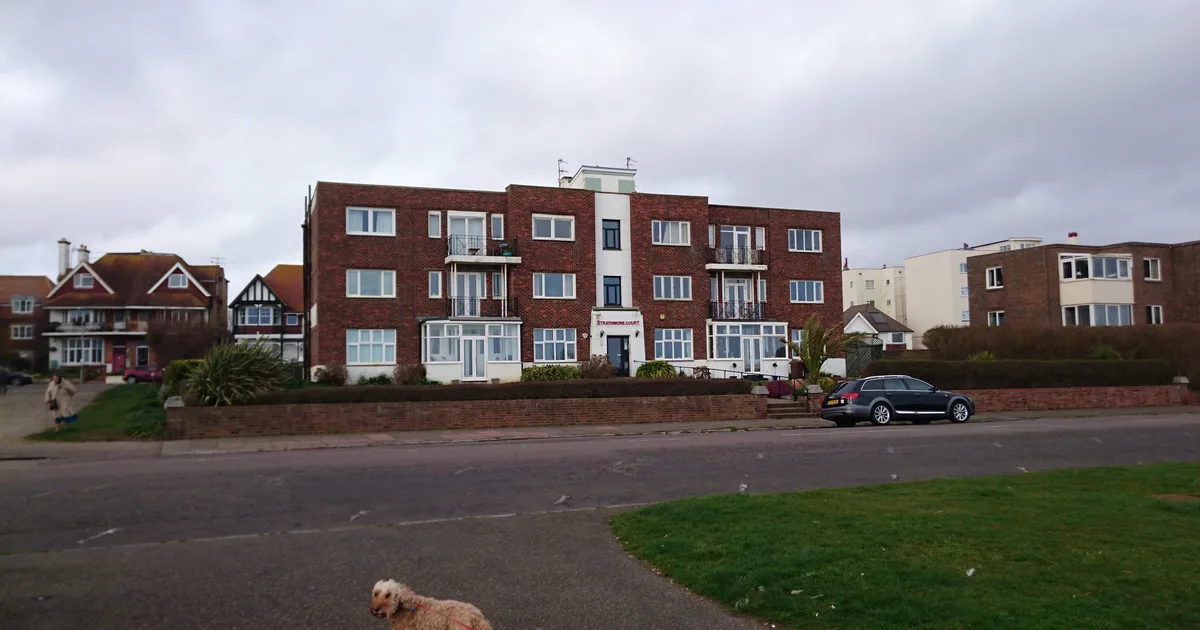
A block of flats under 11 metres is, on the government's own figures, unlikely to need cladding remediation. But some do, and until this week there was a specific, named route for the worst of those cases: public money for a building with a life-critical fire risk from cladding and no other way to pay for the fix. The Ministry of Housing, Communities and Local Government's page on that funding now carries a single line at the top: "Applications have closed" [[1]]. The application window closed on 9 October 2026, and "new applications can no longer be submitted through the Building Remediation Hub" [[1]].
That route was never meant to be generous. It was meant to be narrow. The policy document that created it, the government's Remediation Acceleration Plan Update of July 2025, is explicit about why: "We have investigated all under 11m buildings brought to our attention since 2022. The vast majority have not required cladding remediation works, and fire risks have often been addressed through proportionate lower-cost mitigation measures. Only a limited number of buildings have been found to require cladding remediation" [[2]]. Because the risk is rare, the funding was built to match it. The same section commits to "provide funding in those exceptional cases where multi-occupied residential buildings under 11 metres have life-critical fire safety risks from cladding and do not have an alternative route to funding" [[2]].
The claims, tested
| The document's own words | What the cited evidence shows | Verdict |
|---|---|---|
| "The application window for funding through the CSS closed on 9 October 2026. New applications can no longer be submitted through the Building Remediation Hub" [[1]] | The scheme exists, by its own founding policy, for buildings under 11 metres with "life-critical fire safety risks from cladding" that "do not have an alternative route to funding" [[2]] | A funding route designed as the last resort for the buildings with nowhere else to turn shut with no reopening date and no named successor for a case found on 10 October or later |
| "The eligibility criteria and application process align with the CSS and are set out in the relevant section of the fund overview" [[1]] | No hyperlink, title or publishing body accompanies "the fund overview" anywhere on the page; it is the page's final sentence and its only pointer to where the actual rules live | A guidance page's one reference to its own source document is a dead end |
A route built for exactly this case, with no stated next step
The closing notice does not pretend the underlying risk has gone away. It restates the department's position that "buildings under 11 metres are less likely to have widespread cladding fire safety risks", then immediately qualifies it: funding existed "where a Fire Risk Appraisal of External Walls, undertaken by a suitably qualified and competent professional in accordance with PAS 9980:2026, identified unsafe cladding that presented a serious life critical fire safety risk" [[1]]. That is not a hypothetical category. The 2025 policy document that built the scheme put a number on it: "Only a limited number of buildings have been found to require cladding remediation" [[2]], which concedes the category is small, not that it is empty.
The same 2025 document is also clear about who still carries the legal duty once the money is gone: "Responsible Persons such as building owners remain responsible for ensuring that a building is safe and that life-critical defects are addressed" [[2]]. Nothing in either document suggests that duty lapses on 9 October 2026. What has lapsed is the one funding route the government itself said existed because some of those buildings have no other way to pay for the work. A leaseholder or freeholder in exactly that position, who discovers the risk on 10 October 2026, is left with an unchanged legal duty, a closed scheme, and a page that offers no date for when, or whether, the route reopens. The only contact point given is for people who already applied: "Applicants should contact Homes England if they have questions about an existing application" [[1]].
How slowly the wider scheme has been moving is itself on the public record. The same 2025 update reports that "over 1,000 buildings have applied to the Cladding Safety Scheme (CSS), with 753 being made eligible, of which 711 have progressed through to sign grant agreements. 130 have started on site, of which 43 have completed works" [[2]]. Two years into the scheme, roughly 1 in 17 eligible buildings had finished the work. That is the operational reality behind a closing notice that gives a building owner nothing to plan around.
Sources that are not there
The closing notice's final sentence reads: "The eligibility criteria and application process align with the CSS and are set out in the relevant section of the fund overview" [[1]]. On the live page, those words carry no link, and no document called "the fund overview" is named, titled or cited anywhere else on it. For a reader trying to work out whether their building ever qualified, or what the rules were while the window was open, that sentence is the page's only pointer to the source, and it points nowhere a reader can follow.
Credit where due
The closing notice is honest about the one thing that matters most: it does not hide that applications have closed, and it does not overstate the scale of the underlying risk. It also correctly, if briefly, signposts existing applicants to Homes England. The 2025 policy document it draws on is candid about its own numbers, including the slow pace of completed works, rather than only publishing the more flattering figures for eligibility and sign-up. The gap here is not in what the department admits; it is in what it leaves unaddressed for the case its own policy says the scheme exists to cover.
Verdict
Four stars, from two documented mistakes. The underlying policy, funding only the buildings under 11 metres that genuinely need it, is defensible and the department says so plainly. What is missing is any answer, on the one page a worried building owner would land on, for what happens next to the exact case the scheme was built for.
The star score counts two documented mistakes. First, the funding route for buildings under 11 metres, created specifically for cases with "no alternative route to funding", closed to new applications on 9 October 2026 with no stated reopening date and no named alternative for a life-critical cladding risk discovered afterwards. Second, the closing notice's own final sentence refers readers to "the relevant section of the fund overview" for the eligibility criteria and process, a document that is not named, titled or linked anywhere on the page. Two falls in the 1 to 3 band: four stars; the bands are on the ratings page. This piece makes no finding about the competence of any named individual; the Ministry of Housing, Communities and Local Government is a department, not a person. Checked directly against the live closing notice and the Remediation Acceleration Plan Update (July 2025), both fetched 10 October 2026.
Sources
- Buildings under 11 metres: new funding, Ministry of Housing, Communities and Local Government, published 9 July 2026, updated 10 October 2026
- Remediation Acceleration Plan update, July 2025, Ministry of Housing, Communities and Local Government