Non-jury trials in Northern Ireland have been extended eight times since 2007, and the government wants a ninth. Its own independent reviewer, writing five months earlier, recommended letting the power expire instead.
Estimated reading time: 7 minutes
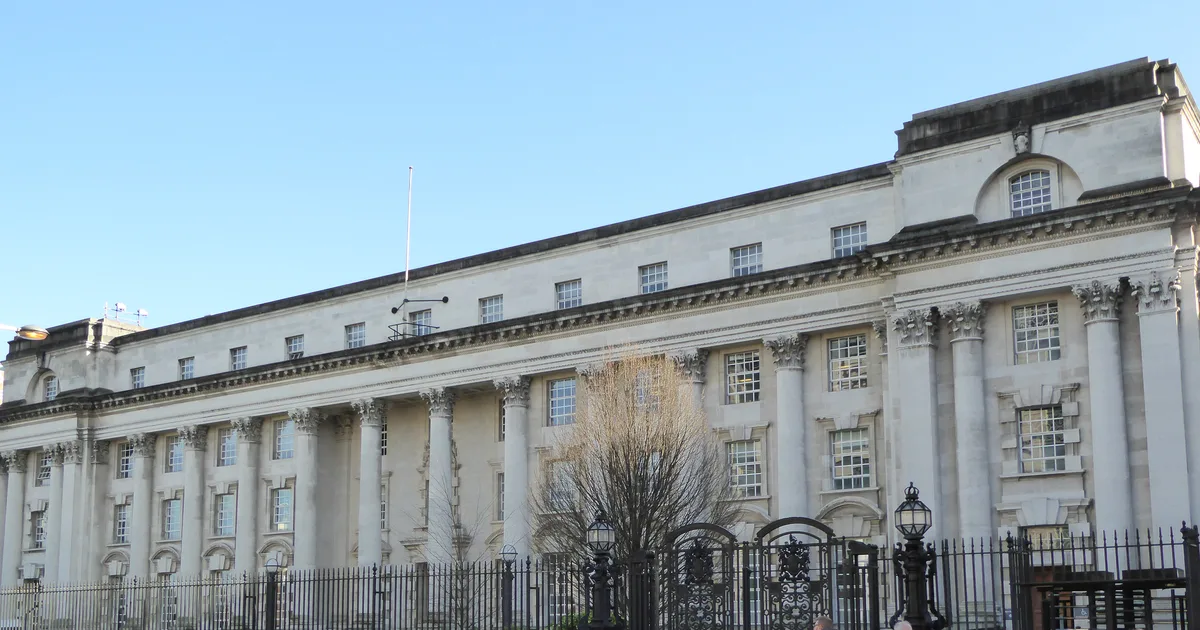

In short. The Northern Ireland Office's consultation, published 16 November 2026, asks whether to extend the non-jury trial provisions in the Justice and Security (Northern Ireland) Act 2007 for a ninth time, "for a further two years, to July 2029" [1], page 10. Its own foreword says "there are no limits to the number of times these non-jury trial provisions may be extended," with the only stated end point being "when it is safe to do so" [1], page 3, even though the document's own figures show the threat level downgraded in March 2024 and usage averaging 1.3% of Crown Court cases over 19 years [1], pages 9 and 20 to 21. The consultation names its own Independent Reviewer's most recent report twice, but quotes nothing from it [1], pages 14 to 15. That report, published five months earlier, says the renewal test is evidentially backwards and that "there exists an opportunity to consider allowing the emergency legislation to expire" [3], page 44. Two documented mistakes: four stars.
A non-jury trial in Northern Ireland happens when the Director of Public Prosecutions certifies that a Crown Court case should be heard by a single judge rather than a jury, on the strength of a suspicion, not proven evidence, that paramilitary interference might otherwise taint the verdict [1], page 16. The power has existed since 2007, replacing the Diplock courts that ran from 1972. It was built to be temporary. The Northern Ireland Office's new consultation, open until 8 February 2027, asks the public whether to renew it for a ninth time [2]. What the consultation does not do is grapple with what its own most recent, most authoritative source on the question actually recommends.
A power with no exit ramp, by its own account
The consultation is candid that there is no mechanism forcing an end to this. "There are no limits to the number of times these non-jury trial provisions may be extended," the foreword states, adding only that "it is important to note that they were designed to be a temporary measure" [1], page 3. The Secretary of State, Sir Chris Bryant, writes that the government "remains fully committed to seeing an end to these non-jury trial provisions, when it is safe to do so and compatible with the interests of justice" [1], page 3. Nowhere in the document is "safe to do so" given a figure, a date or a named indicator against which it could be checked. The provisions were last extended in July 2025, the ninth extension since 2007, and expire on 31 July 2027 unless renewed again [1], page 8.
The document's own statistics do not obviously support urgency. The Northern Ireland-related terrorism threat level "was reduced from SEVERE to SUBSTANTIAL in March 2024" [1], page 9. Annex C's own Table 2 shows non-jury trials falling from 4.5% of all Crown Court cases in 2007 to an average of 1.3% across the full 19-year run, between 0.6% and 1.5% in every year since 2016, with eleven cases, 0.8% of the total, in 2025 [1], pages 8 and 20 to 21. The same background section notes that Diplock courts averaged 64 cases a year in their final five years, against an average of 10 a year in the Crown Court's non-jury system over 2020 to 2025 [1], page 12. A power whose own use has fallen by that margin, attached to a threat the government's own assessment has just downgraded, is being renewed against a success criterion that cannot be measured because it was never defined.
The reviewer it cites, but does not quote
The consultation twice points to the Independent Reviewer of the Justice and Security (Northern Ireland) Act 2007, the oversight role Parliament added to the Act's remit in 2017 specifically to assess the non-jury provisions [1], page 14. It states that "findings on non-jury trial provisions were included in all reports" and names the current reviewer's eighteenth report, covering August 2024 to July 2025 and published in June 2026, as the most recent [1], pages 14 to 15. Annex D links to it. The consultation does not quote a single sentence from it.
Read directly, that report does not simply endorse the status quo. On the "sufficient change" test the government used to justify the 2025 renewal, the reviewer, Professor Jonny Byrne, writes that "the absence of any clarity around what constitutes 'sufficient change' means that the emphasis is always on providing evidence as to why they (NJTs) are no longer required," rather than evidence that they remain necessary, and warns that "if we continue to adopt the same tests, collate the usual statistics using old methodologies, we will further embed these exceptional powers, and normalisation will become an unachievable goal" [3], page 41. In his conclusions, he goes further: "With respect to non-jury trials, it is evident that decisions to grant certificates are grounded in credible and robust intelligence. However, over the forthcoming eighteen months, there exists an opportunity to consider allowing the emergency legislation to expire and to restore standard procedural operations" [3], page 44. That recommendation was published in June 2026. The consultation proposing a ninth extension was published five months later. It does not mention the recommendation, let alone explain why the government is not acting on it.
The claims, tested
| The consultation's own words | What its own evidence shows | Verdict |
|---|---|---|
| "There are no limits to the number of times these non-jury trial provisions may be extended," with an end point only when it is "safe to do so" [1], page 3 | The threat level was downgraded in March 2024 and usage has averaged 1.3% of Crown Court cases over 19 years, falling as low as 0.6% in several recent years [1], pages 9 and 20 to 21 | An indefinitely renewable power is being tested against a success criterion the document never defines, while its own usage and threat data point the other way |
| The consultation names its Independent Reviewer's most recent report twice as the relevant evidence on this question, without quoting any finding from it [1], pages 14 to 15 | That report says the renewal test puts the burden of proof backwards and recommends that "there exists an opportunity to consider allowing the emergency legislation to expire" within eighteen months [3], page 44 | The one independent assessment built into the Act's own oversight structure recommends the opposite of what the consultation proposes, and the consultation does not engage with it |
Credit where due
The consultation is more transparent than many of the documents this site reviews. It publishes 19 years of its own underlying data, including an acquittal-rate comparison between jury and non-jury trials that shows no consistent pattern either way, rather than a cherry-picked figure [1], page 24. It sets out, in a side-by-side table, exactly how the Justice and Security Act's lower evidential threshold differs from the Criminal Justice Act 2003 alternative used in England and Wales, including the fact that the 2003 Act route has produced zero non-jury trials in Northern Ireland in the last three years against 34 under the Act being renewed here [1], page 14. And its first consultation question is genuinely open, asking whether the provisions should be extended at all, not simply how [1], page 10.
Verdict
Four stars, from two documented mistakes. A power introduced in 2007 as an exceptional, temporary response to a specific threat is, on this consultation's own figures, used in under 1% of Crown Court cases against a threat the government's own assessment has downgraded, with no defined test for when it should finally lapse. The one reviewer Parliament specifically tasked with assessing it has just recommended, in a report this consultation cites but will not quote, that the window to let it expire is now. A document that names its own best evidence and then declines to engage with what that evidence says is not making the case for a ninth extension. It is avoiding one.
The star score counts two documented mistakes. First, the consultation proposes renewing an indefinitely extendable power against an undefined success criterion ("when it is safe to do so"), while its own data shows the threat level downgraded in March 2024 and usage averaging 1.3% of Crown Court cases over 19 years. Second, the consultation names its own Independent Reviewer's most recent report as relevant evidence without quoting its actual recommendation, published five months earlier, that there is now an opportunity to let the power expire. Two falls in the 1 to 3 band: four stars; the bands are on the ratings page. This piece makes no finding about the conduct of any named official, about the propriety of any individual non-jury trial certificate, or about whether paramilitary activity in Northern Ireland remains a genuine security concern; none of those were independently tested here. The consultation document and the Independent Reviewer's eighteenth report were both fetched and read in full directly on 16 November 2026.
Sources
- Non-Jury Trials: Justice and Security (Northern Ireland) Act 2007 (consultation document), Northern Ireland Office, 16 November 2026
- NIO launches consultation on the use of non-jury trials in Northern Ireland, GOV.UK, 16 November 2026
- Eighteenth Report of the Independent Reviewer of the Justice and Security (Northern Ireland) Act 2007, Northern Ireland Office, published 16 June 2026
- File:Royal Courts of Justice, Belfast, March 2015.JPG, Wikimedia Commons, photo by Ardfern, 24 March 2015
- Creative Commons Attribution-ShareAlike 3.0 Unported licence