Three times in one month, the government updated who may decide the Holocaust Memorial's planning application, citing ministerial changes each time. Parliament cleared the legal obstacle in January; the decision itself still has no date.
Estimated reading time: 7 minutes
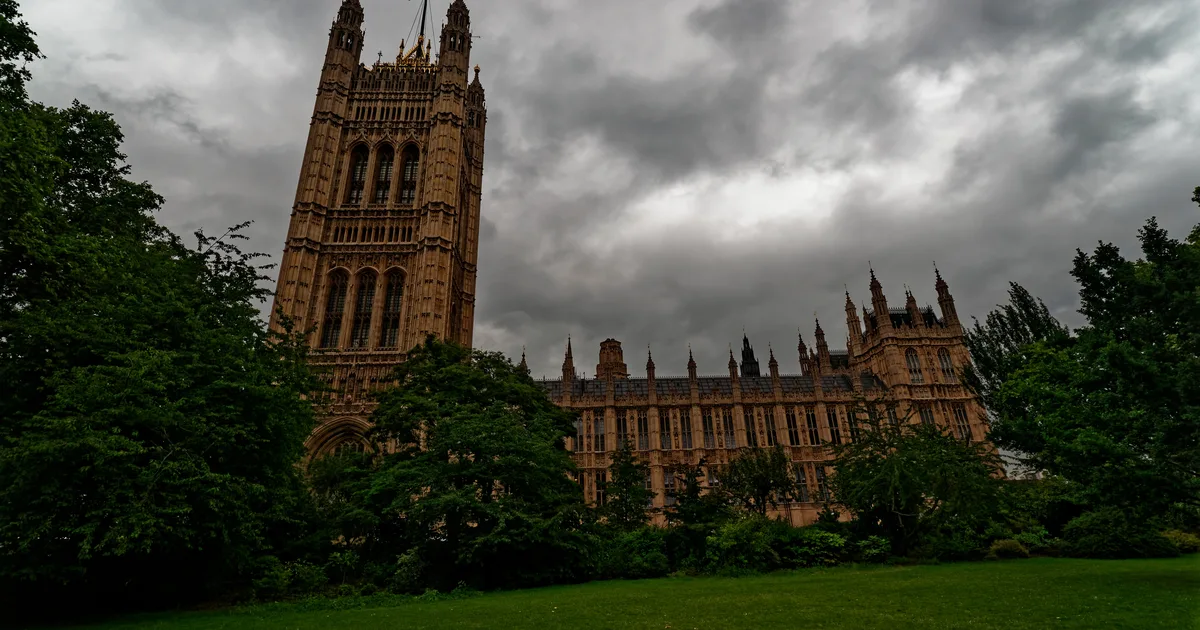

In short. The planning application for the Holocaust Memorial and Learning Centre in Victoria Tower Gardens has been awaiting redetermination since the High Court quashed its 2021 permission on 8 April 2022. MHCLG's own handling note says the point of the arrangement is "functional separation between the persons bringing forward the proposal for development and the persons responsible for determining that proposal" [1], with a single isolated minister holding the file. That minister's identity has needed updating repeatedly, including three separate changes logged on the application's own status page within a single month, 6 to 20 August 2026 [3]. The Holocaust Memorial Act cleared the specific legal obstacle behind the quashing, Royal Assent 22 January 2026 [4], but the government's own NISTA annual report still rated the programme red for the quarter covering that Royal Assent, naming the outstanding planning decision as the reason [5]. No date for a decision exists. Three documented mistakes: four stars.
A planning application for a building next to Parliament has been waiting for a decision since the High Court quashed its permission on 8 April 2022 [1]. The government's answer to the obvious conflict of interest, a Secretary of State both promoting a memorial and nominally responsible for approving it, is a published firewall: one minister, walled off from the programme team, makes the call alone. The problem this piece finds is not that the firewall is fake. It is detailed and real. The problem is that the person standing inside it keeps changing, and four and a half years on, nobody outside government can say when it will produce a decision at all.
A firewall built for one person at a time
The planning application for the Holocaust Memorial and Learning Centre, made to Westminster City Council in December 2018 in the Secretary of State's own name, was called in by the then Housing Minister on 5 November 2019 [1]. Permission was granted in July 2021 and quashed by the High Court on 8 April 2022 [1]. MHCLG's handling note, reissued since to cover the redetermination, says it "sets out appropriate administrative arrangements to ensure that there is a functional separation between the persons bringing forward the proposal for development and the persons responsible for determining that proposal, and also applies in respect of the conduct of any litigation" [1].
The note names the structure in detail, which is itself unusual and worth crediting. One minister, currently named as Jim McMahon OBE MP, "will handle any advice / submissions on the redetermination of the case. Advice and submissions on these matters will not be seen by any other Minister" [1], and is explicitly stated not to be bound by collective ministerial responsibility on this one matter. On the other side of the wall, the note separately lists the Programme's own Lead Minister, Florence Eshalomi MP, among those who are to have "no role in planning casework decision-making" at all [1]. Named case officials, lawyers and FOI handlers on both sides are listed by name, with the note itself describing the list as "to be kept under regular review and added / amended as necessary" [1]. This is not a box-ticking paragraph. It is a working internal control, published in full.
The file keeps changing hands
What that regular review has actually meant, in practice, is near-constant reissue. The handling note's own publication history, on the parent gov.uk page, records updates in 2022, 2025 (twice) and 2026 (twice), the most recent dated 7 October 2026 and explained in the update log itself: "This update is necessary to identify the Ministers and officials currently responsible for handling the planning casework decision for the proposed Holocaust Memorial. It reflects changes to Ministers and officials dealing with the application (and those who must not do so) since the last update was published earlier this year, following the change in Prime Minister and subsequent Ministerial changes" [2].
The companion page tracking the live application shows the same churn at closer range. First published 15 July 2026, it records four updates in five weeks, three of which give the same reason in nearly the same words: "Updated paragraph 2 to reflect ministerial changes" (17 August 2026), "updated paragraph 2 to reflect ministerial changes" again as part of a wider update (6 August 2026), and "Updated to reflect ministerial changes" (20 August 2026) [3]. Three recorded ministerial-change updates to a single decision role, on a single page, inside one calendar month. Paragraph 14 of that page, discussing the handling arrangements directly, adds that they "will shortly be updated" [3], which is exactly what happened seven weeks later, on 7 October. A firewall that depends on one named, isolated individual only works as well as that individual's tenure in the role; here, the government's own paper trail shows that tenure has not been stable.
Clearing the legal block did not clear the queue
The High Court's 2022 quashing turned on a specific, narrow point: the London County Council (Improvements) Act 1900 barred construction of this kind in Victoria Tower Gardens [4]. Parliament's answer was the Holocaust Memorial Bill, which "removes this obstacle by providing that section 8 of the 1900 Act should not prevent construction or operation of the Memorial and Learning Centre," receiving Royal Assent on 22 January 2026 [4]. The government's own press release frames this as decisive progress, under the heading "Passage of the Bill clears a significant hurdle in progressing plans for the Holocaust Memorial and Learning Centre" [4]. The same release is also precise about what the Act does not do: "The planning application remains current. A new decision will be taken by a designated Minister, who remains isolated from the project to ensure fair, transparent and unbiased decision-making" [4].
NISTA's own Major Projects Annual Report 2025-26 tested that framing in the government's own numbers. For the fourth quarter of 2025-26, the window that includes Royal Assent, the project's own Senior Responsible Owner Delivery Confidence Assessment "remained at RED," with the department's own commentary giving a single reason: "The nominated Minister will need to retake the planning decision before the Programme can proceed to construction" [5] [6]. The same return records a whole life cost of £141.87m, up roughly £4m on the prior year "primarily due to a longer programme, and unforeseen design costs and adjustments for inflation in real terms," and an in-year budget variance of 55.21%, attributed directly to the Programme "awaiting a decision on its planning application, which is required before construction can proceed" [6]. Clearing the 1900 Act obstacle removed one blockage. It did not touch the other one, and the government's own delivery tracker says so in plain language.
No date, no end in sight
The application-status page sets out, in numbered paragraphs, exactly how a decision will eventually be reached: interested parties will be asked for their views "on the redetermination method," a choice between deciding on the papers or reopening the public inquiry, "prior to a decision being taken on this" [3]. The timetable that follows from that choice is stated just as plainly: "The timetable for the final decision will depend on the method of redetermination. If redetermination proceeds on the papers, the date will be set as the same time as notification of the procedure. If the inquiry is reopened, a decision date will be set when the Inspector's Report is submitted to the department" [3]. Both branches of that sentence describe a date that will be set once something else has happened first. Neither branch has been triggered. As of this page's own most recent update, 20 August 2026, no redetermination method had been announced and no date existed for one [3].
Measured from the quashing, that is four and a half years without a timetable. Measured from Royal Assent, it is eight and a half months. Either way, "to be kept under regular review" [1], the handling note's own description of how often the decision-maker list gets checked, has turned out to mean the paperwork gets updated whenever ministers change jobs. It has not yet meant the decision itself moves.
Credit where due
Government is not hiding any of this. The handling note names the firewall's officials and ministers individually rather than describing the arrangement in vague terms, and updates the list promptly, not years late, whenever personnel change. NISTA's own annual report states the red rating and its cause in a single plain sentence rather than burying it in favourable framing. And the application-status page is candid about the redetermination process still having two live, unresolved branches, rather than implying a method has already been chosen. On a project with this much public and political sensitivity, that level of published detail is not the norm, and this piece makes no finding that the firewall itself is anything other than what it claims to be: a genuine, actively maintained separation of roles.
The claims, tested
| The document's own words | What the record shows | Verdict |
|---|---|---|
| The Royal Assent press release says a "designated Minister... remains isolated from the project to ensure fair, transparent and unbiased decision-making" [4] | The application-status page logged three separate updates "to reflect ministerial changes" inside a single month, 6 to 20 August 2026 [3], and the handling note was reissued again in October 2026 "following the change in Prime Minister and subsequent Ministerial changes" [2] | The isolation is real, but the person inside it has not stayed the same person for long |
| "Passage of the Bill clears a significant hurdle in progressing plans for the Holocaust Memorial and Learning Centre" [4] | NISTA's own Q4 2025-26 Delivery Confidence Assessment, the quarter covering Royal Assent, "remained at RED" because "the nominated Minister will need to retake the planning decision before the Programme can proceed to construction" [5] [6] | The legal obstacle is cleared; the government's own tracker says the actual blockage, the decision itself, is unchanged |
| "The timetable for the final decision will depend on the method of redetermination," set once a procedural choice is made [3] | As of the page's own last update, 20 August 2026, no redetermination method had been announced and no date attached to either branch [3] | A timetable that depends entirely on a choice nobody has yet made public is not a timetable |
The star score counts three documented mistakes: the gap between the Royal Assent press release's "fair, transparent and unbiased decision-making" framing of a stable, isolated decision-maker and the government's own record of that role being reassigned repeatedly, including three "ministerial changes" logged in a single month; the gap between the same press release's "clears a significant hurdle" framing of Royal Assent and NISTA's own Q4 2025-26 Delivery Confidence Assessment, covering that same quarter, rating the programme red for exactly the reason the Act's passage was supposed to address; and the undefined timetable, a stated decision date that depends on a procedural choice never yet made public, eight and a half months after Royal Assent and four and a half years after the original quashing. Three mistakes in the 1-to-3 band: four stars; the bands are on the ratings page. This piece makes no finding that the firewall arrangements are inadequate, that any named minister or official has acted improperly, or that the eventual planning decision will be wrong on its merits; the detail and promptness of the government's own published updates are credited above. Checked directly against MHCLG's handling note and its parent publication page, the application-status guidance page, the Royal Assent press release and NISTA's Major Projects Annual Report 2025-26 and its underlying data file (all fetched 8 October 2026).
Sources
- Holocaust Memorial and Learning Centre: MHCLG handling note, Ministry of Housing, Communities and Local Government, updated 7 October 2026
- Holocaust Memorial: handling arrangements for planning casework, Ministry of Housing, Communities and Local Government
- Holocaust Memorial and Learning Centre: updated planning application documents, Ministry of Housing, Communities and Local Government, updated 20 August 2026
- Holocaust Memorial one step closer as Bill receives Royal Assent, Ministry of Housing, Communities and Local Government, 22 January 2026
- NISTA Major Projects Annual Report 2025-26, National Infrastructure and Service Transformation Authority
- NISTA Major Projects Annual Report 2025-2026 Data, National Infrastructure and Service Transformation Authority